
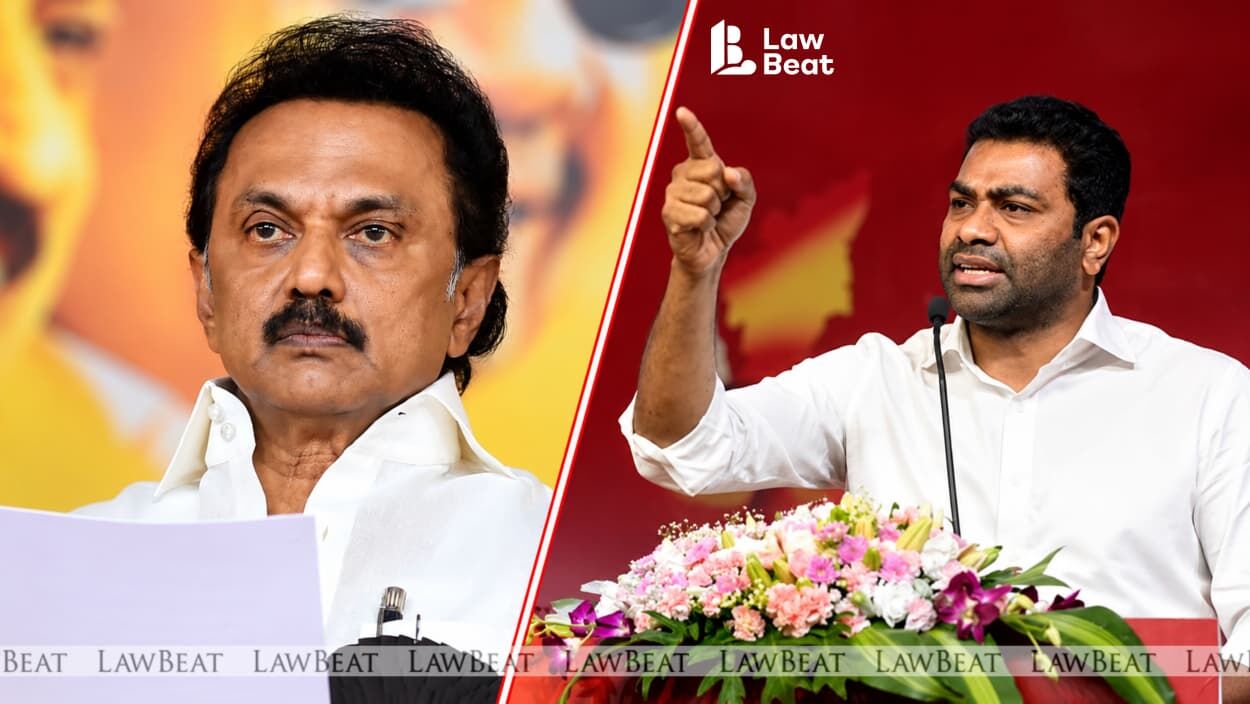
Madras High Court: M K Stalin DMK Social Media Liability Examined
Summary
- Tamil Nadu Minister Aadhav Arjuna has filed a ₹1-crore defamation suit against DMK president and former Chief Minister of Tamil Nadu M.K. Stalin and the DMK IT Wing.
- The suit stems from a June 8, 2026 social media post that allegedly linked Arjuna to an individual accused in a ₹258-crore drug-trafficking case.
- M.K. Stalin denies direct involvement in the post and argues against vicarious liability for content published by party wings.
- Stalin's defense also highlights Arjuna's own and his family members' past criminal investigations and cases, arguing the suit suppresses material facts.
- The case raises critical questions about the scope of vicarious liability for political leaders and organizations regarding social media content.
The Genesis of the Defamation Claim
A central pillar of Stalin’s defense challenges the concept of M K Stalin DMK social media liability, particularly the attempt to hold him vicariously liable simply due to his position as DMK president.
Tamil Nadu Minister and TVK leader Aadhav Arjuna has initiated a significant defamation lawsuit against Dravida Munnetra Kazhagam (DMK) president and former Chief Minister of Tamil Nadu M.K. Stalin and the party’s Information Technology Wing. The legal action, filed in the Madras High Court, seeks ₹1 crore in damages, alleging severe reputational harm, personal injury, and mental anguish stemming from a social media post.
The contentious post, published on the DMK IT Wing’s X account on June 8, 2026, purportedly linked Arjuna to an individual named John Britto. According to Arjuna’s complaint, Britto was described as the alleged mastermind behind a major drug-trafficking operation, involving narcotics valued at ₹258 crore, which were seized in Chennai and Ramanathapuram. Arjuna vehemently denies any connection to the accused individual or the alleged criminal activity, asserting the falsity of the claims.
Following the publication, Arjuna issued a legal notice to both M.K. Stalin and the DMK IT Wing, demanding an unconditional apology for the alleged defamatory content. When no satisfactory resolution was reached, he escalated the matter to the Madras High Court. Beyond monetary compensation, Arjuna is seeking various reliefs, including the immediate removal of the impugned posts and a permanent injunction to prevent the publication of similar content in the future. The Madras High Court acknowledged the seriousness of the allegations by issuing notices to Stalin and the DMK IT Wing in August. The case was subsequently heard on September 22, 2026, after Stalin's legal counsel filed their counter-affidavit, and has been listed for further hearing on October 26, 2026.
M.K. Stalin's Robust Defense
In response to the defamation suit, M.K. Stalin has presented a comprehensive defense to the Madras High Court, seeking the dismissal of the ₹1-crore claim. He categorically denies any personal involvement in the creation, direction, approval, or even knowledge of the specific social media post. Stalin further stated that he was unable to access the hyperlink provided by Arjuna, as the alleged post was no longer available online. He explicitly refutes the notion that the publication was part of any orchestrated political campaign under his direction.
A central pillar of Stalin’s defense challenges the concept of M K Stalin DMK social media liability, particularly the attempt to hold him vicariously liable simply due to his position as DMK president. While acknowledging his administrative oversight of party office-bearers, he argues that this authority does not extend to making him legally accountable for the individual actions or social media content generated by various party wings or members. He asserts that the suit is not maintainable, lacks a cause of action against him, and suppresses crucial material facts, invoking Article 19(1)(a) in defense of free expression while disputing liability.
Stalin also contests the very premise of defamation in this context. He argues that even if the post were published as alleged, it did not claim Arjuna himself had committed any crime. According to Stalin, merely stating a person is related to an alleged offender does not constitute defamation unless a direct link between Arjuna and the criminal activity is established. Furthermore, Stalin's written statement highlights several criminal cases and investigations involving Arjuna and his family members, which he claims were suppressed in Arjuna's original complaint. These include a CBI investigation concerning the Karur stampede case, disclosed in Arjuna’s 2026 election affidavit, and four criminal cases, three investigated by the Enforcement Directorate, disclosed in his mother-in-law Leemarose Martin’s election affidavit. Stalin also points to Case No. 533 of 2018 before the Special Court, Ernakulam, where Arjuna’s wife, mother-in-law, and John Britto are listed as accused, arguing that Arjuna has not demonstrated how associating him with individuals facing criminal proceedings damaged his reputation. He also cited a political protest on March 12, 2026, where Arjuna allegedly referred to him as a "foolish Chief Minister" twice, characterizing these remarks as a personal and derogatory attack rather than legitimate political criticism.
Broader Implications for Political Accountability
This ongoing legal battle in the Madras High Court defamation context carries significant implications for the evolving scope of vicarious liability political leaders India and the accountability of political organizations for content disseminated by their DMK IT Wing social media liability and other digital channels. The case directly challenges how far a party leader can be held responsible for every post made by their affiliates, especially in the fast-paced and often decentralized world of online political communication.
Stalin's defense, particularly his reliance on Article 19(1)(a) and his arguments against blanket vicarious liability, underscores a critical legal debate. It questions the extent to which the constitutional right to freedom of speech and expression applies to political parties and their leaders when content from their wings is challenged. The court's eventual decision will likely set an important precedent for how political parties manage their online presence and the legal risks associated with social media engagement, influencing internal policies and risk mitigation strategies for political entities across the nation.
Practical Implications
This case is critical for understanding the evolving scope of vicarious liability for political leaders and organizations regarding social media content generated by their affiliates. Lawyers should advise clients on robust internal social media policies and risk mitigation strategies to avoid similar defamation claims, particularly where content is generated by decentralized teams.
Source
How does this affect you?
Get an AI analysis of this article grounded in your jurisdictions, practice areas, and any policy documents you've uploaded to Wansom.
Finish Reading the Full Story and the Expert Analysis.
Get the latest legal & regulatory intelligence in India
Wansom is AI and can make mistakes.