
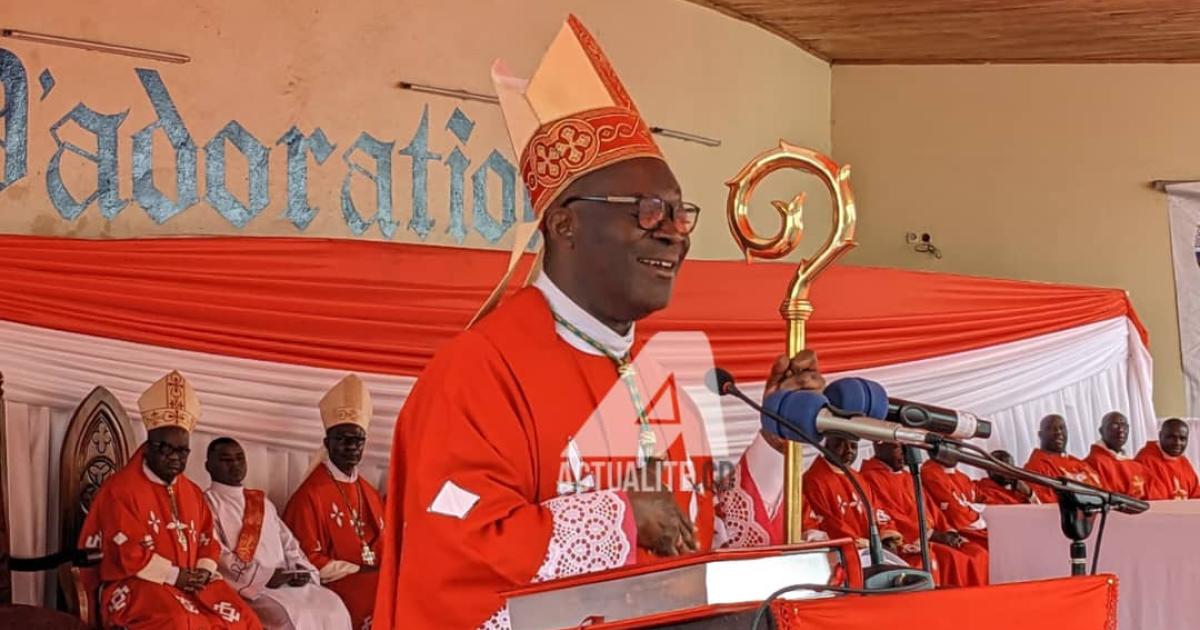
Lubumbashi Archbishop Recounts Long-Standing Land Dispute History
On Monday, November 23, 2026, in the Democratic Republic of Congo, Archbishop Fulgence Muteba, President of CENCO, recounted the historical background of a long-standing land dispute concerning the concession of the Grand Séminaire Saint-Paul.
This revelation by a prominent religious leader highlights the pervasive and often complex nature of land disputes in the DRC, particularly those involving historical claims and significant institutional properties. The legal significance of such a dispute lies in its potential to challenge established property rights, expose deficiencies in land administration, and underscore the difficulties in resolving historical grievances. For legal practitioners, it emphasizes the critical importance of thorough due diligence in any real estate transaction, especially those involving large tracts of land or properties with a long history of occupation or ownership. These disputes can be protracted, involve multiple stakeholders, and often carry significant social and political implications beyond their purely legal dimensions.
The legal context for land disputes in the DRC is primarily governed by the Land Law (Loi Foncière) of 1973, which nationalized all land, making the state the ultimate owner, and established a system of concessions for private and institutional use. However, the application of this law is often complicated by pre-existing customary land tenure systems, colonial-era concessions, and subsequent administrative decrees or informal arrangements. Resolution of such disputes typically involves navigating administrative processes through land registries and potentially litigation in the civil courts, including the Tribunaux de Grande Instance and Courts of Appeal, depending on the value and complexity of the claim. The involvement of the church, a powerful and historically significant institution, adds another layer of complexity, often bringing moral and social dimensions to the legal arguments.
The key parties explicitly mentioned are Archbishop Fulgence Muteba, representing the interests of the Grand Séminaire Saint-Paul and, by extension, the Catholic Church in the DRC. While the excerpt does not name the opposing party or parties in the dispute, it implies the existence of other claimants or entities challenging the concession. The state, as the ultimate custodian of land, is an implicit party in any significant land dispute, particularly those involving historical concessions. The public and media, as evidenced by the interview format, are also indirectly involved through their interest in such high-profile matters.
Practitioners advising on property law, real estate, or administrative law in the DRC should take note of the enduring nature of such land disputes. It is imperative to conduct exhaustive research into the historical chain of title, any prior administrative decisions, and potential customary claims when dealing with land transactions. The involvement of influential figures like Archbishop Muteba suggests that such cases can attract significant public attention and may require a nuanced approach that considers not only legal precedent but also social and political sensitivities. The excerpt does not provide details on the current status or any reported outcome of this specific land dispute.
How does this affect you?
Get an AI analysis of this article grounded in your jurisdictions, practice areas, and any policy documents you've uploaded to Wansom.
Finish Reading the Full Story and the Expert Analysis.
Get the latest legal & regulatory intelligence in DR Congo
Wansom is AI and can make mistakes.