
Trump Pardon: No Federal Power for Lindsay Clancy State Crime
Summary
- Defense attorney Kevin Reddington publicly requested former President Donald Trump to pardon his client, Lindsay Clancy.
- Clancy pleaded not guilty to three counts of first-degree murder in connection with her children's deaths.
- Her five-week trial concluded in a mistrial because the jury could not reach a unanimous verdict, meaning she was not convicted.
- Clancy's charges fall under Massachusetts state law, not federal jurisdiction.
- A U.S. President's pardon power is constitutionally limited to federal offenses and does not apply to state crimes.
A High-Profile Clemency Plea
The authority to grant pardons, as outlined in the U.S. Constitution, is explicitly limited to offenses against the United States.
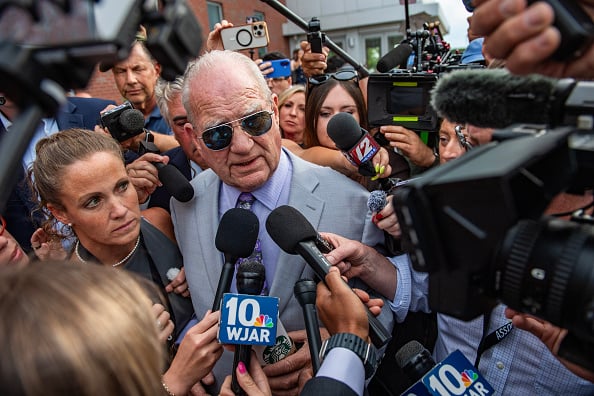
Defense attorney Kevin Reddington recently made an unusual public appeal for clemency on behalf of his client, Lindsay Clancy. Appearing on Good Morning America, Reddington directly addressed former President Donald Trump, expressing hope that Trump would "consider this young lady and the person she is, what she's been through, and consider a pardon." This direct plea for a **Lindsay Clancy Trump pardon state crime** case immediately drew attention due to its unconventional nature and the legal complexities involved.
Clancy is currently facing severe charges, having pleaded not guilty to three counts of first-degree murder. These accusations stem from the tragic deaths of her three children. Her trial, which spanned five weeks, concluded without a definitive outcome. The jury was unable to reach a unanimous verdict, resulting in a mistrial. Consequently, Clancy has not been convicted of any crime, a crucial detail in the context of any clemency discussion.
Reddington's public request, while perhaps intended to garner public sympathy or attention for his client, raised significant questions regarding the scope of presidential authority. The legal proceedings against Lindsay Clancy are unfolding under Massachusetts state law, placing them squarely within the jurisdiction of the Commonwealth's legal system, not the federal government. This jurisdictional distinction is paramount when discussing executive clemency.
Understanding Federal Pardon Power Limitations
The fundamental issue with the **Kevin Reddington pardon request** lies in the strict constitutional boundaries of the President's clemency powers. The authority to grant pardons, as outlined in the U.S. Constitution, is explicitly limited to offenses against the United States. This means a presidential pardon can only apply to federal crimes and convictions. It does not extend to state-level charges or convictions, regardless of the severity or public profile of the case.
For individuals facing charges under state statutes, such as Lindsay Clancy, who is accused under Massachusetts law, the avenue for clemency rests solely with the state's executive authority, typically the governor. The concept of **Presidential pardon state offenses** is a legal impossibility, as the President of the United States holds no jurisdiction over state judicial processes or their outcomes. This clear division of power is a cornerstone of the American federal system, ensuring that state sovereignty in criminal justice matters is maintained.
Therefore, despite the high-profile nature of the case and the emotional appeal made by Clancy's attorney, any request for a presidential pardon in this instance falls outside the established legal framework. The **Federal pardon power limitations** are not discretionary; they are constitutionally defined, preventing a President from intervening in state criminal matters. This distinction is critical for legal professionals to understand when advising clients on potential avenues for clemency.
Why Jurisdictional Clarity Matters
The public appeal for a presidential pardon in a state-level case underscores the vital importance of understanding **Executive clemency jurisdiction**. Such requests, while perhaps made with good intentions, highlight a common misconception about the reach of presidential authority. The fact that Lindsay Clancy's five-week trial ended in a **Massachusetts murder mistrial**, meaning no conviction was reached, further complicates the notion of a pardon, which traditionally applies to those who have been convicted.
This situation serves as a stark reminder that the powers of the President are not absolute and are carefully delineated by the Constitution. For legal practitioners, accurately conveying these limitations to clients and the public is essential to avoid raising false hopes or pursuing legally unfounded strategies. The clear separation between federal and state criminal justice systems, and thus their respective clemency powers, is a foundational principle that cannot be overlooked.
The request for a **Lindsay Clancy Trump pardon state crime** scenario, therefore, not only brought attention to a tragic case but also inadvertently illuminated a critical aspect of American constitutional law: the precise and limited scope of presidential pardon authority. It reinforces that clemency for state offenses must be sought from state authorities, not the federal executive.
Practical Implications
Legal professionals must be aware that presidential pardon power is strictly limited to federal offenses and does not apply to state-level charges or convictions. This distinction is critical for accurately advising clients on potential avenues for clemency and avoiding legally unfounded requests.
Source
How does this affect you?
Get an AI analysis of this article grounded in your jurisdictions, practice areas, and any policy documents you've uploaded to Wansom.
Finish Reading the Full Story and the Expert Analysis.
Wansom is AI and can make mistakes.