
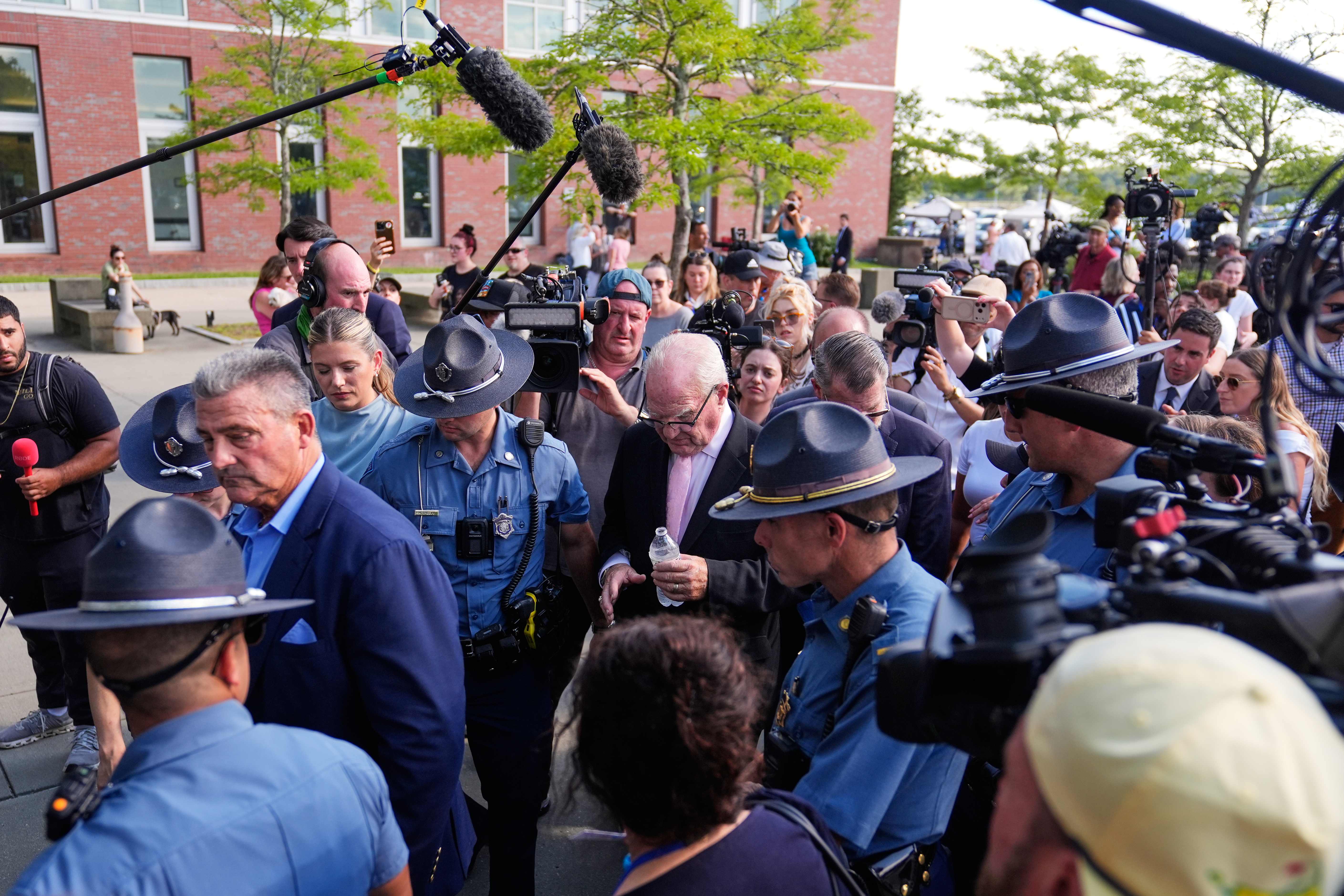
Lindsay Clancy Defense: Files Double Jeopardy Motion After Mistrial
Summary
- Lindsay Clancy's defense team filed a motion to dismiss charges, arguing a retrial would violate her double jeopardy rights after a mistrial.
- The defense claims the mistrial could have been avoided if juror Michael P. Desronvil's alleged bias and failure to follow instructions were addressed during voir dire.
- Clancy's lawyers are seeking Desronvil's phone records from jury deliberations, citing Massachusetts' prohibition on juror phone use.
- A fundraising website for juror Michael P. Desronvil has raised over $382,000 to cover legal, security, and lost work expenses.
Recent Legal Filings in Clancy Case
The defense contends that had the court and the state conducted a more thorough and effective voir dire process, specifically to ascertain any grounds for dismissing juror Michael P. Desronvil, the necessity for a mistrial could have been entirely averted.
Attorneys representing Lindsay Clancy, the former nurse accused of killing her three young children, have recently intensified their legal strategy following a mistrial. The defense team, led by Martin Weinberg and Kevin Reddington, submitted a motion seeking detailed information about the juror identified as the holdout, who some observers believe was responsible for the mistrial declaration. This initial filing was made on a Friday, signaling a new phase in the high-profile proceedings.
Just days after this initial request, Clancy's legal team filed a more substantial motion to dismiss the charges entirely. This motion asserts that a retrial would constitute a violation of Clancy's constitutional double jeopardy rights. The defense contends that had the court and the state conducted a more thorough and effective voir dire process, specifically to ascertain any grounds for dismissing juror Michael P. Desronvil, the necessity for a mistrial could have been entirely averted. This argument forms the core of their Lindsay Clancy double jeopardy motion.
Allegations of Juror Misconduct and Bias
The defense's filings stem from serious allegations regarding the conduct and impartiality of juror Michael P. Desronvil. According to a review of notes provided by the jury foreperson, Desronvil allegedly failed to apply the court's instructions concerning reasonable doubt during deliberations. Furthermore, the notes suggested that Desronvil harbored a bias against individuals suffering from serious mental illness, a factor potentially critical to Clancy's defense given the nature of the accusations against her. Marian Braccia, a professor at Temple University Beasley School of Law, commented on these details for Law & Crime.
In their Sept. 18 motion, Clancy's lawyers specifically requested that the court compel Desronvil to address questions regarding the truthfulness of his responses during both the jury questionnaire phase and the subsequent voir dire. A key component of the Clancy juror phone records request is the demand for any call or text message records from Desronvil's phone made between 8 a.m. and 4:30 p.m. during the jury's deliberation period. This request is particularly significant given that Massachusetts, the jurisdiction where Clancy was tried, explicitly prohibits phone use by jurors during deliberations, a fact reported by the Associated Press and the New York Times.
Legal Context of the Double Jeopardy Claim
The defense's motion to dismiss on double jeopardy grounds hinges on the argument that the mistrial was avoidable and, therefore, a subsequent trial would unfairly subject Clancy to prosecution for the same offenses twice. Their contention is that a more rigorous voir dire juror bias challenge could have identified and addressed the alleged issues with Michael P. Desronvil, thereby preventing the deadlock that led to the mistrial. By framing the mistrial as a consequence of inadequate judicial process rather than an unforeseen event, the defense seeks to establish a legal basis for preventing a retrial.
This legal maneuver highlights the critical importance of jury selection and the adherence to strict rules governing jury conduct, such as the prohibition against Massachusetts jury deliberation phone use. The defense's strategy aims to leverage the alleged juror misconduct and the court's initial handling of the jury selection process to argue that the state forfeited its right to retry Clancy. The outcome of this Clancy motion to dismiss double jeopardy will have significant implications for the continuation of the case.
Support for Juror Desronvil Emerges
Amidst the legal challenges, support has emerged for juror Michael P. Desronvil. On a Saturday, Edward Paltzik, Desronvil's attorney, publicly affirmed the legitimacy of a fundraising website established on his client's behalf. This platform was created to help cover various expenses, including security costs, legal fees for Desronvil, and compensation for lost income.
As of the following Tuesday, the fundraising initiative had successfully garnered over $382,000. This amount represents a substantial portion of its stated goal of $500,000, indicating a significant public response to Desronvil's situation following the Michael P. Desronvil mistrial.
Practical Implications
This case highlights the critical importance of rigorous voir dire and strict adherence to jury deliberation rules, such as prohibiting phone use. Lawyers should note the defense's strategy of challenging a mistrial based on alleged juror misconduct and subsequent double jeopardy claims, which could inform future defense tactics or arguments against such motions in similar high-profile cases.
Source
How does this affect you?
Get an AI analysis of this article grounded in your jurisdictions, practice areas, and any policy documents you've uploaded to Wansom.
Finish Reading the Full Story and the Expert Analysis.
Get the latest legal & regulatory intelligence in United States
Wansom is AI and can make mistakes.