
Liberian Women: Fast for War Crimes Court Amid Legislative Inaction
Summary
- Liberian women are undertaking a three-day fast and prayer from November 4-6, 2026, advocating for the establishment of War and Economic Crimes and National Anti-Corruption Courts.
- The initiative draws inspiration from the 2003 Women of Liberia Mass Action for Peace, which significantly contributed to ending the civil war.
- Liberia's civil wars (1989-2003) caused an estimated 250,000 deaths and led to recommendations for a special criminal court by the 2009 Truth and Reconciliation Commission.
- Despite a Senate vote in April 2024, legislative efforts for the courts remain stalled, even after President Boakai signed Executive Order 131 in May 2024 to establish an Office for the courts.
- The process has been complicated by rival bills and accusations from the Office of the War and Economic Crimes Court against senior government officials for obstructing progress.
A Renewed Call for Justice
This significant gathering, held at the Fish Market and Women Prayer Grounds, aims to exert pressure for the establishment of a War and Economic Crimes Court and a National Anti-Corruption Court, as legislative progress on these long-anticipated tribunals remains stalled.
Women from across Liberia are commencing a three-day period of fasting and prayer, beginning Wednesday, November 4, and concluding Friday, November 6, 2026. This significant gathering, held at the Fish Market and Women Prayer Grounds, aims to exert pressure for the establishment of a War and Economic Crimes Court and a National Anti-Corruption Court, as legislative progress on these long-anticipated tribunals remains stalled.
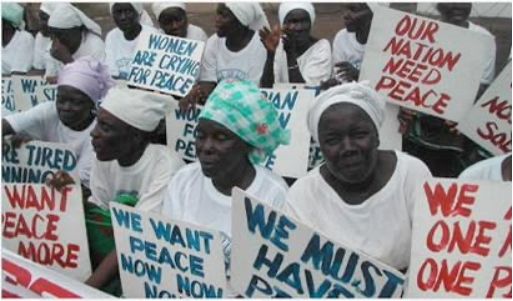
The chosen location carries profound historical resonance; the Fish Market on Tubman Boulevard was the site where the Women of Liberia Mass Action for Peace conducted daily sit-ins in 2003. Dressed in white T-shirts, these women prayed and advocated for an end to the civil war, a campaign widely credited with instrumentalizing the peace talks that ultimately resolved the conflict. The Liberia Women Mass Action for Peace is among the key organizers of this current event, which operates under the theme, "United in Prayer for Peace, Unity, Healing, and Transformation of Liberia through the Establishment of the War and Economic Crimes Court and the Anti-Corruption Court of Liberia."
According to a concept note issued by organizers on October 26, 2026, their objective is to seek divine intervention for the creation of both courts and to prompt the National Legislature to act on the relevant proposed bills. Beyond judicial reform, the program also seeks to foster reconciliation through truth-telling, promote peace and co-existence, and encourage women's active participation in peacebuilding initiatives. The three-day event will feature continuous fasting and prayer sessions, alongside praise, worship, and spiritual reflections, with specific prayers directed towards the President, the Legislature, victims, peace, and all actors involved in Liberia's transitional justice efforts.
The Unresolved Legacy of Conflict
Liberia's two devastating civil wars, which spanned from 1989 to 1996 and again from 1999 to 2003, resulted in an estimated 250,000 fatalities and displaced hundreds of thousands more. These conflicts were characterized by widespread atrocities, including massacres, the extensive use of child soldiers, pervasive mass rape, and the systematic plunder of the nation's natural resources. In the aftermath, the Truth and Reconciliation Commission (TRC), established under the 2003 Comprehensive Peace Agreement, concluded its work in 2009 with a crucial recommendation for an extraordinary criminal court to prosecute those bearing the greatest responsibility for these crimes.
Despite the TRC's clear directive, successive Liberian governments failed to act on this recommendation for over a decade, meaning no individual has been tried within Liberia for war-era atrocities. Accountability for these grave offenses has largely been pursued through international channels. Notably, former President Charles Taylor is currently serving a 50-year sentence for crimes committed in neighboring Sierra Leone, rather than Liberia. Furthermore, other former combatants have faced conviction in courts located in the United States and Europe, including Mohammed Jabateh, who was the first of five former warlords convicted for war-related crimes in these jurisdictions, with all appeals now exhausted.
Legislative Hurdles and Executive Action
Momentum for establishing these critical courts gained traction following President Joseph Boakai's assumption of office. In April 2024, the Senate overwhelmingly voted in favor of creating a War and Economic Crimes Court for Liberia. Subsequently, on May 2, 2024, President Boakai formalized this commitment by signing Executive Order No. 131, which officially established the Office of the War and Economic Crimes Court, under the leadership of Cllr. Jallah A. Barbu. The mandate of this office was later expanded to encompass an anti-corruption court, a decision that drew criticism from some advocates who argued it would divert focus from the long-overdue pursuit of wartime justice.
Under the office's proposed roadmap, the National Anti-Corruption Court is slated to commence full operations in November 2026, with the War and Economic Crimes Court projected to follow in 2027. However, the legislative path has been fraught with challenges, marked by the introduction of rival bills and internal friction. A coalition spearheaded by the Independent National Commission on Human Rights, for instance, submitted its own distinct war crimes bill, while advocates actively worked to block an earlier version co-sponsored by Senator Joseph Jallah and Senate Pro Tempore Nyonblee Karnga-Lawrence. In April, Cllr. Barbu's office publicly accused senior government officials, specifically naming the justice minister, the president's legal advisor, and the national security advisor, of deliberately impeding progress. President Boakai formally submitted the bill for the War and Economic Crimes Court to the Legislature in May 2026.
Practical Implications
Lawyers and compliance officers in Liberia should closely monitor the legislative progress and public advocacy for the establishment of the War and Economic Crimes Court and the National Anti-Corruption Court, as their eventual creation will introduce new legal risks and accountability mechanisms for past actions and ongoing economic activities. This development signals a persistent push for transitional justice and enhanced anti-corruption enforcement, requiring proactive risk assessment and legal preparedness.
Source
How does this affect you?
Get an AI analysis of this article grounded in your jurisdictions, practice areas, and any policy documents you've uploaded to Wansom.
Wansom is AI and can make mistakes.