
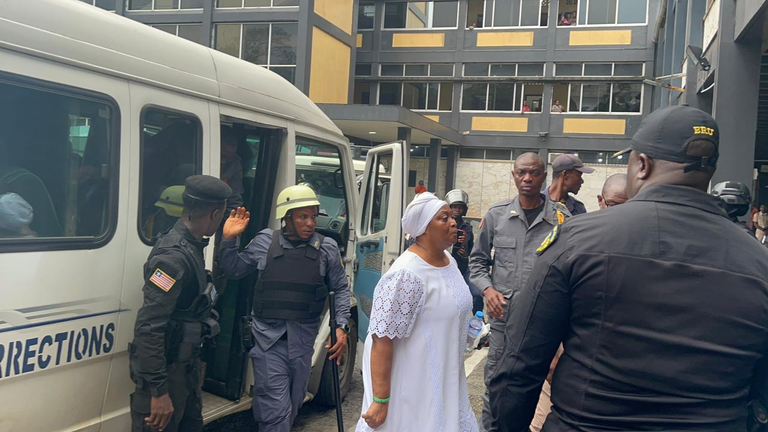
Liberian Court Orders Arrest of Former VP Howard-Taylor in Drug Case
A Liberian court, specifically Criminal Court C in Monrovia, on Wednesday ordered the arrest of former Vice President Jewel Howard-Taylor and more than 20 other individuals, including former security officials, senior police officers, and European nationals, following a grand jury indictment on charges of illicit drug trafficking and money laundering. This high-profile action, led by Judge Ousman F. Feika, marks one of the most significant criminal cases in the West African nation's recent history, targeting a former high-ranking official and others in connection with transnational organized crime.
This development carries substantial legal significance for practitioners, businesses, and the public in Liberia. The indictment and subsequent arrest warrant against a former Vice President and other senior officials signal a robust and potentially unprecedented commitment by the Liberian government to combat high-level corruption and transnational criminal enterprises. It underscores a potential strengthening of the rule of law and accountability, indicating that even politically powerful figures are not immune from prosecution. For businesses, particularly those involved in international trade or finance, this case highlights the heightened scrutiny on financial transactions and the imperative for stringent anti-money laundering (AML) and counter-terrorist financing (CTF) compliance measures to avoid complicity or association with illicit activities.
The legal context for this case is rooted in Liberia's criminal justice framework, specifically its statutes pertaining to drug control and financial crimes. The charges, including illicit drug trafficking, unlicensed importation, exportation, sale and transportation of controlled substances, criminal conspiracy, facilitation and solicitation, money laundering, and offenses involving objects allegedly intended for lethal use, fall under Liberia's penal code and specific drug enforcement legislation. The process involved a grand jury in Montserrado County returning an indictment, which then led to the issuance of an arrest warrant by a Criminal Court, demonstrating the formal procedural steps within the Liberian judicial system. The involvement of foreign nationals, such as Croatian and Ukrainian citizens, suggests potential international cooperation in the investigation or at least a transnational dimension to the alleged criminal network, which could invoke international legal instruments and agreements.
Key parties involved in this unfolding legal drama include the Criminal Court C in Monrovia, presided over by Judge Ousman F. Feika, and the Grand Jury in Montserrado County responsible for the indictment. The defendants named are prominent figures such as former Vice President Jewel Howard-Taylor, Gerald Foley Smith (former deputy director of Liberia's National Security Agency), Mark Quiah (former deputy director of operations at the Liberia Civil Aviation Authority), and senior police officers Deputy Commissioner Anthony T. Blaye and Assistant Commissioner Wadell W. Kwarbo. Additionally, foreign nationals Nikola Ivancic and Mihovil Vrovac from Croatia, along with unnamed Ukrainian nationals, are implicated. The County Sheriff has been directed to execute the arrest warrants.
Practitioners in Liberia should closely monitor the progression of this case, as it will undoubtedly set precedents for future high-profile prosecutions involving public officials and transnational crime. Attorneys advising clients, particularly those in sectors vulnerable to money laundering or drug trafficking, must emphasize the critical importance of enhanced due diligence, robust compliance frameworks, and ethical business practices. The aggressive pursuit of such cases indicates a reduced tolerance for illicit activities and a potential increase in enforcement actions. While the outcome of this specific matter is not yet reported, its development will provide valuable insights into the Liberian judiciary's capacity to handle complex, politically sensitive cases and its commitment to upholding the rule of law.
How does this affect you?
Get an AI analysis of this article grounded in your jurisdictions, practice areas, and any policy documents you've uploaded to Wansom.
Finish Reading the Full Story and the Expert Analysis.
Get the latest legal & regulatory intelligence in Liberia
Wansom is AI and can make mistakes.