
Liberian Government: Amujae Initiative Funding Sparks Debate Over Priorities
Summary
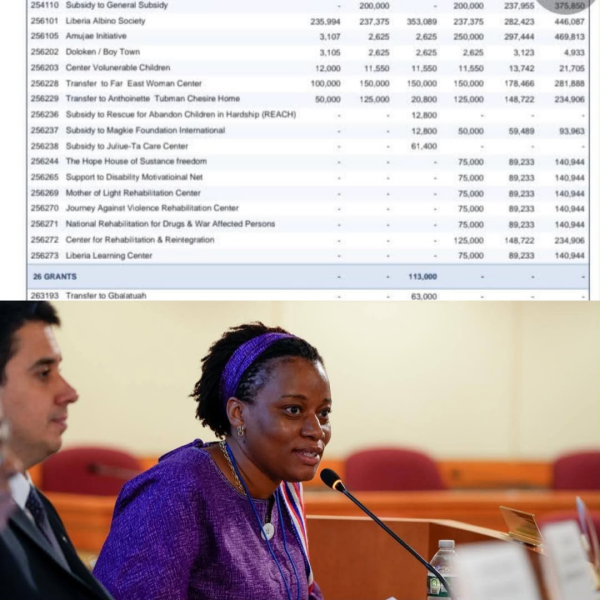
- The Liberian government allocated US$250,000 in public funds to the Amujae Initiative, associated with former President Ellen Johnson-Sirleaf.
- This funding decision has raised concerns among women-led organizations struggling to secure resources for their grassroots programs.
- The Women NGOs Secretariat of Liberia (WONGOSOL) exemplifies local groups providing direct support and advocacy across six counties.
- Medica Liberia's Regional Project Manager/Advocacy Lead, Fenny Louise Taylor-Diggs, publicly questioned the allocation, calling it a misplacement of public priorities.
- Critics argue that initiatives linked to former presidents should seek private funding rather than taxpayer money, especially when grassroots groups face severe financial challenges.
Government Funding Decision Sparks Controversy
Why are taxpayers funding the Amujae Initiative?
The Liberian government's recent allocation of US$250,000 in public funds to the Amujae Initiative has ignited significant debate regarding national spending priorities. This substantial financial commitment to an initiative closely associated with former President Ellen Johnson-Sirleaf comes at a time when numerous women-led organizations across the country are struggling to secure essential funding. These local groups are dedicated to critical programs, including supporting survivors of gender-based violence, empowering women in rural areas, and actively advancing gender equality throughout Liberia.
The decision to provide such a significant sum of Liberia government Amujae Initiative funding has prompted widespread questions about the administration's strategic focus. Critics are asking whether adequate consideration is being given to the vital work performed by local women's rights organizations. These organizations operate directly within communities, addressing pressing social issues, yet frequently encounter severe financial challenges that hinder their operational capacity and outreach. The disparity in funding availability highlights a growing concern over the equitable distribution of public resources.
Grassroots Efforts Face Funding Shortfalls
The contrast between the Amujae Initiative government allocation and the financial plight of grassroots organizations is stark. Many local women's groups are at the forefront of community engagement, providing direct support to vulnerable women and girls, advocating for policy reforms, and creating opportunities despite persistent funding constraints. A prominent example of such an organization is the Women NGOs Secretariat of Liberia (WONGOSOL), a national network committed to advancing women's economic empowerment, gender equality, advocacy, and community-based development.
WONGOSOL's impactful work includes the Liberia Fight FGM Project, which receives support from the United Nations Trust Fund to End Violence Against Women. This initiative has been implemented across six counties: Bomi, Bong, Gbarpolu, Grand Cape Mount, Margibi, and Montserrado. Through this project, WONGOSOL has directly assisted 365 women by offering vocational skills development, business management training, and establishing Village Savings and Loan Association (VSLA) initiatives. Furthermore, their livelihood interventions have provided agricultural materials and tools to women farmers, particularly survivors in Bong County, alongside support for small businesses in soap-making, tailoring, and baking. Beyond these practical interventions, WONGOSOL actively advocates for women's access to land, agricultural resources, finance, markets, and technology, while also promoting women's leadership in climate justice, environmental protection, and sustainable livelihoods, underscoring the broad scope of Liberia women's rights funding needs.
Calls for Accountability in Public Spending
The allocation has drawn sharp criticism from figures like Madam Fenny Louise Taylor-Diggs, Regional Project Manager/Advocacy Lead at Medica Liberia, who publicly questioned the rationale behind the Liberia government Amujae Initiative funding. In a statement shared on her Facebook account, Taylor-Diggs directly challenged the decision to commit US$250,000 of taxpayers' money to the Amujae Initiative, especially when women's rights organizations continue to struggle for operational finance. She specifically asked, "Why are taxpayers funding the Amujae Initiative?" highlighting a perceived misplacement of public priorities.
Taylor-Diggs argued that women's rights organizations are indispensable in preventing and responding to sexual and gender-based violence (SGBV), advocating for women's rights, and promoting gender equality. Despite their critical role, many of these groups face significant difficulties in securing the necessary resources to sustain their vital work. She questioned the demonstrated impact of the Amujae Initiative on the lives of ordinary Liberian women and the justification for prioritizing it over organizations that work directly with women and girls. Taylor-Diggs further suggested that an initiative associated with a former president, such as the Ellen Johnson-Sirleaf initiative funding, should ideally be financed through private fundraising or other independent funding arrangements, rather than relying on Liberia public funds women's groups could desperately use. Her concerns extend beyond the specific amount to the broader issue of accountability in Medica Liberia public spending, particularly given the limited government resources available.
Practical Implications
This development highlights potential legal and reputational risks for government entities and recipient organizations regarding public fund allocation in Liberia, particularly concerning transparency and equitable distribution to grassroots initiatives versus high-profile projects. Lawyers should advise clients on compliance with public finance regulations and prepare for increased scrutiny on funding decisions, especially those perceived as misaligned with public priorities.
Source
How does this affect you?
Get an AI analysis of this article grounded in your jurisdictions, practice areas, and any policy documents you've uploaded to Wansom.
Finish Reading the Full Story and the Expert Analysis.
Get the latest legal & regulatory intelligence in Liberia
Wansom is AI and can make mistakes.