
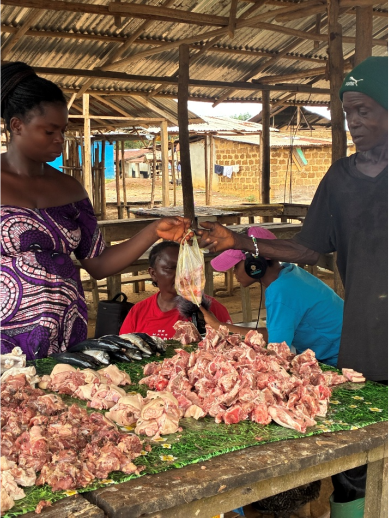
Liberia: Officials Indicted in Rural Women's Fund Corruption Case
Summary
- Seven individuals, including a former commerce minister, were indicted in Liberia for allegedly diverting US$493,000 and LRD 190 million (US$1.2 million) meant for vulnerable rural women.
- The funds were part of the 2023 Vulnerable Small Business Support Program and the Rural Women Empowerment Fund, intended to help women expand farms and educate children.
- Beneficiaries, like MissionMai Sam and Jestina Johnson, reported receiving no aid and expressed anger and frustration over the alleged misappropriation.
- Local officials, including a Gender Ministry coordinator, were reportedly unaware of the fund's existence until informed by a reporter.
- The case tests President Joseph Boakai's anti-corruption drive, whose Asset Recovery Task Force has secured only one conviction in nearly two years, despite numerous indictments.
Allegations of Diverted Aid
For many rural women, the alleged diversion of these funds represents a profound betrayal, hindering their ability to achieve economic independence and secure their children's futures.
A significant corruption case has emerged in Liberia, centered on allegations that funds intended for vulnerable rural women were instead misappropriated. The 2023 Vulnerable Small Business Support Program, which included the crucial Rural Women Empowerment Fund, was designed to provide financial assistance to women like MissionMai Sam, a 48-year-old mother of eight from Tarkun Town, River Cess County. Sam, who cultivates coconuts and palms, had hoped such support would enable her to expand her farm and ensure her children's education.
Court documents from June indicate that US$493,000 and more than LRD 190 million, equivalent to US$1.2 million, were allocated and disbursed for the program. However, these funds reportedly never reached their intended beneficiaries, allegedly being diverted for personal gain. In April, Liberia's Asset Recovery and Property Retrieval Task Force took action, indicting seven individuals in connection with the alleged scheme. Those charged include Mawine G. Diggs, who served as commerce minister under the previous Weah government, along with other officials linked to the ministry, the National Rural Women Structure of Liberia, and the Liberia Marketing Association. The charges brought against them encompass theft of property, economic sabotage, and criminal conspiracy.
The Human Impact of Misappropriation
The alleged diversion has left many rural women feeling betrayed and deprived of vital opportunities. Women in River Cess County expressed that the promised funds could have been transformative, enabling them to grow their agricultural ventures, keep their children enrolled in school, and reduce their reliance on others. Jestina Johnson, a vendor from Yarkpas Town who has sold dry and frozen goods for two decades to support her six children, recounted hearing only vague rumors about money designated for market women, yet she never received any assistance.
Johnson explained that she was informed an identification card was required, but the specific type was never clarified, despite her already possessing a business card. By the time she sought further information, the opportunity had vanished. She now seeks genuine justice, beyond mere arrests. The disconnect is further highlighted by Oretha W. Carlos, the Gender Ministry's coordinator in River Cess and an official with the Rural Women Empowerment Project, the local mechanism intended for fund distribution. Carlos stated she learned about the fund from a reporter, not from the government she serves, expressing dismay that money meant for rural women could be withheld. Even small amounts, such as the L$30,000 (US$176) Carlos received after a conference, can significantly aid women like Saikon Johnson Hiennis, who has operated a small shop in River Cess for over a decade.
Broader Anti-Corruption Efforts Under Scrutiny
This case serves as a critical test for President Joseph Boakai's administration and its commitment to combating corruption. President Boakai established the Asset Recovery and Property Retrieval Task Force in March 2024 with the explicit mandate to trace and reclaim stolen public assets. Since its inception, the Task Force has announced four rounds of indictments, covering more than 60 cases and involving tens of millions of dollars in alleged theft.
Despite these numerous indictments, the Task Force has secured only one conviction in nearly two years. This sole victory came in October, during the separate Saudi Rice corruption trial at Criminal Court “C.” In that case, a jury found eight of 13 defendants guilty, including former Foreign Affairs Minister Dee-Maxwell Saah Kemayah and former Internal Affairs Minister Varney A. Sirleaf. Three defendants were acquitted, while verdicts for two others remained inconclusive. The Saudi Rice case involved 29,412 bags of rice donated by Saudi Arabia, valued at approximately US$500,000, with prosecutors alleging that 25,054 bags had been diverted or improperly used. The Task Force has indicated its intention to defend these verdicts against any potential appeals.
Why It Matters
The ongoing legal proceedings underscore the significant challenge facing President Joseph Boakai's administration as it seeks to demonstrate tangible progress in its anti-corruption agenda. For many rural women, the alleged diversion of these funds represents a profound betrayal, hindering their ability to achieve economic independence and secure their children's futures. The lack of accountability in such cases erodes public trust and perpetuates a cycle of hardship for Liberia's most vulnerable populations.
The outcome of this particular case, alongside the broader performance of the Asset Recovery and Property Retrieval Task Force, will be closely watched as an indicator of the government's capacity to deliver on its promises of good governance and justice. The experiences of women like MissionMai Sam and Jestina Johnson highlight the urgent need for transparent and effective mechanisms to ensure that aid reaches those for whom it is intended, fostering development and empowering communities rather than enriching a few.
Source
How does this affect you?
Get an AI analysis of this article grounded in your jurisdictions, practice areas, and any policy documents you've uploaded to Wansom.
Finish Reading the Full Story and the Expert Analysis.
Wansom is AI and can make mistakes.