
Liberia Revenue Authority: Tax Modernization Drives $1.1B Revenue
Summary
- Liberia's Revenue Authority (LRA) is actively transitioning the nation from foreign aid dependency to self-funded development.
- Under Commissioner General James Dorbor Jallah, the LRA reported a significant increase in collections from US$612 million in 2023 to approximately US$1.139 billion currently.
- The LRA's modernization strategy includes five key pillars, emphasizing technology, compliance, and institutional integrity, which led to 46 employee dismissals for misconduct in 2025.
- New digital tools like the LRA public revenue dashboard offer near-real-time collection data, and the Fatu virtual taxpayer assistant provides guidance to citizens and businesses.
- These initiatives underscore a broader commitment to transparency, taxpayer engagement, and sustainable domestic resource mobilization beyond mere collection figures.
A New Fiscal Direction for Liberia
The LRA's comprehensive transformation, anchored by five strategic pillars, aims to sharpen performance, boost collections, strengthen enforcement, and foster greater public accountability within the revenue system.
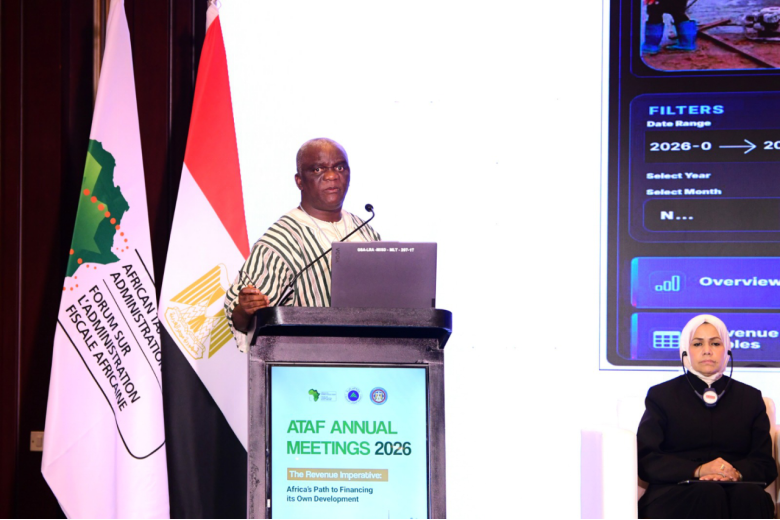
Liberia is actively pursuing a strategic shift away from its historical reliance on foreign aid, aiming instead to fund its national development through robust domestic resource mobilization. This significant policy direction was highlighted by Liberia Revenue Authority (LRA) Commissioner General James Dorbor Jallah during the African Tax Administration Forum (ATAF) 2026 Annual Meetings and General Assembly held in Cairo. Speaking at a session focused on diverse pathways for domestic resource mobilization across Africa, Jallah detailed the nation's recent fiscal achievements and its comprehensive plans for modernizing tax collection.
Since the current LRA management team assumed leadership in 2023, when collections stood at approximately US$612 million, Liberia has seen a substantial increase in its revenue. At that time, donor funding was diminishing, and both the national domestic revenue mobilization strategy and the LRA’s own corporate plan had lapsed. However, under the new leadership, collections rose to US$699 million in 2024 and further to US$848 million in 2025. The current reported figure for collections is about US$1.134 billion, which, when combined with US$5 million carried forward from the previous fiscal year, totals approximately US$1.139 billion. Jallah emphasized that these figures demonstrate Liberia's growing capacity to finance its own priorities, marking a crucial departure for a country long dependent on external support.
Pillars of Transformation and Digital Tools
The Liberia Revenue Authority's comprehensive transformation, anchored by five strategic pillars, aims to sharpen performance, boost collections, strengthen enforcement, and foster greater public accountability within the revenue system. These foundational elements include strategic leadership, technology and data, compliance and enforcement, customs and tax administration, and institutional integrity. A testament to the LRA's commitment to integrity, 46 employees were dismissed in 2025 due to fraud and related misconduct, which Jallah presented as evidence of the Authority's zero-tolerance policy for corruption, believing that a transparent institution builds public trust and encourages voluntary taxpayer compliance.
In a move to enhance transparency and taxpayer engagement, the LRA unveiled its public revenue dashboard, an online platform allowing citizens and other stakeholders to monitor government collections. This tool provides access to reported performance, monthly summaries, and detailed figures categorized by revenue type and tax. The platform currently updates in near-real time, with efforts underway to achieve fully real-time updates. Jallah noted that providing easy access to this data helps the public understand the nation's revenue landscape and how domestic funds are generated. This dashboard is part of a broader transparency initiative that also encompasses expanded electronic payment options and other online services.
Further demonstrating its commitment to Liberia Revenue Authority tax modernization, the LRA showcased its virtual contact center, featuring a virtual assistant named Fatu. This initiative aims to reduce wait times for taxpayer inquiries and clarify tax obligations. During a live demonstration, Fatu successfully addressed a mock query from a small business owner regarding applicable taxes, illustrating how the service can provide accessible tax guidance. Once fully operational, the center is expected to significantly support taxpayer education and offer individuals and companies advice without requiring physical visits to LRA offices.
Strategic Goals for Domestic Resource Mobilization
Commissioner General James Dorbor Jallah underscored that merely increasing revenue collections represents only one facet of the LRA's broader mission. Achieving sustainable Liberia domestic resource mobilization necessitates a multi-faceted approach that includes ongoing institutional reform, enhanced openness, robust accountability, active engagement with taxpayers, and the provision of dependable services. The LRA is actively engaged in modernizing its tax administration processes and simplifying compliance requirements, particularly for small enterprises.
This modernization effort also involves ensuring the smooth operation of existing systems as the LRA transitions to new digital platforms. The overarching goal is to foster an environment where tax compliance enforcement is effective, yet also supported by accessible information and services, ultimately strengthening the nation's financial independence and its capacity to fund its own development priorities.
Practical Implications
Lawyers and compliance officers advising clients in Liberia should note the Liberia Revenue Authority's intensified focus on domestic resource mobilization, tax compliance, and enforcement. This indicates a higher likelihood of audits and stricter penalties for non-compliance, necessitating a review of clients' tax strategies and internal controls. The introduction of digital tools like the public revenue dashboard and virtual assistant 'Fatu' also means new avenues for accessing tax information and engaging with the LRA, which should be integrated into compliance workflows.
Source
How does this affect you?
Get an AI analysis of this article grounded in your jurisdictions, practice areas, and any policy documents you've uploaded to Wansom.
Finish Reading the Full Story and the Expert Analysis.
Get the latest legal & regulatory intelligence in Liberia
Wansom is AI and can make mistakes.