
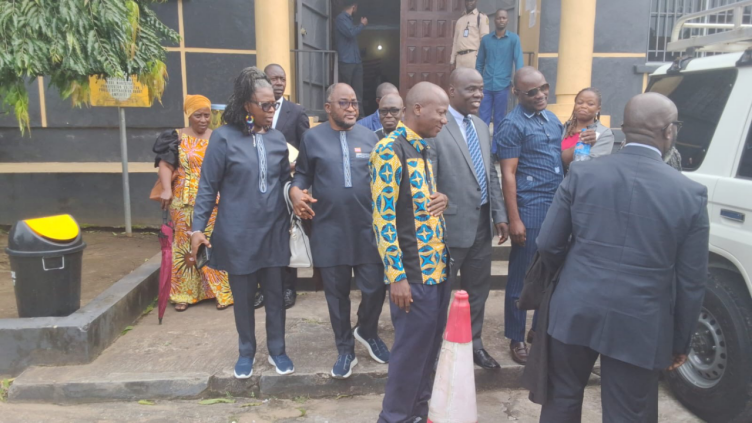
Liberia: Saudi Rice Trial Guilty Verdict for Ex-Ministers
Summary
- A jury in Monrovia's Criminal Court "C" delivered mixed verdicts in the Saudi-donated rice trial.
- Former Foreign Affairs Minister Dee-Maxwell Saah Kemayah and former Internal Affairs Minister Varney A. Sirleaf were found guilty on principal charges.
- Other defendants, including former NDMA Executive Director Henry O. Williams, were acquitted on all charges.
- The case involved charges of economic sabotage and theft related to 29,412 bags of humanitarian rice valued at approximately US$500,000.
- Judge Ousman F. Feika rejected a defense submission and controversially predicted a Supreme Court challenge before the jury's verdict.
What Happened
The successful prosecution of high-profile former government officials for corruption related to humanitarian aid in Liberia signals increased enforcement risk for public sector malfeasance.
A jury at Criminal Court "C" in Monrovia has delivered a complex set of verdicts in the high-profile case concerning the alleged mishandling of humanitarian rice donated by the Kingdom of Saudi Arabia to Liberia. The proceedings, which concluded with final arguments on Friday, saw several former high-ranking government officials face charges related to the distribution of the crucial commodity. The outcome included both convictions and acquittals, reflecting the jury's varied assessment of the evidence presented.
Among those found guilty on the primary charges were Dee-Maxwell Saah Kemayah, who previously served as Foreign Affairs Minister, and Varney A. Sirleaf, the former Internal Affairs Minister. Also convicted were Augustine Kollie, an official from the National Disaster Management Agency (NDMA) responsible for disaster victims, and Edris Idris Bility, formerly the Deputy Director of the General Services Agency (GSA). These individuals were implicated in charges such as economic sabotage, theft of property, misapplication of entrusted property, abuse of office, and criminal conspiracy, all stemming from the alleged diversion of the Saudi-donated rice.
Conversely, some defendants were fully exonerated. Henry O. Williams, the former Executive Director of the NDMA, and Memmie Davie Larmie, a former GSA official, were found not guilty on all five counts they faced. The jury's decisions were not uniform across the board; certain individuals received mixed verdicts, while other specific charges resulted in inconclusive or hung verdicts, indicating a lack of unanimous agreement among jurors. The trial has garnered significant national attention, largely due to the prominent positions held by the accused and the humanitarian nature of the aid involved.
Judicial Controversy
Adding a layer of procedural complexity to the trial, Judge Ousman F. Feika of Criminal Court "C" made a series of notable decisions and remarks. Prior to the commencement of the final arguments, Judge Feika reportedly rejected a submission from defense counsel Cllr. Jimmy Saah Bombo. The judge deemed the submission procedurally inappropriate at that late stage of the proceedings, stating it should have been presented earlier in the trial. This ruling effectively prevented the defense from introducing new arguments or evidence immediately before the jury was to hear closing statements.
More remarkably, Judge Feika made an astonishing assertion even before the jury had begun its deliberations or returned any verdicts. He reportedly stated that the defense lawyer would undoubtedly take the matter to the Supreme Court. This comment, made publicly and prematurely, raised significant questions among courtroom observers regarding the judge's impartiality and the timing of such a pronouncement, especially given that the jury's decisions were still pending. The precise wording of the defense's request, the court's specific ruling, and the applicable procedural rules would be crucial in any formal challenge to the judge's conduct.
The judge's actions and statements introduced an element of contention into an already high-stakes legal battle. While it remains to be seen whether this exchange will form the basis of a formal appeal, it certainly added to the drama of a case that had already captured considerable public interest. The episode highlights potential grounds for a procedural challenge, which legal practitioners will undoubtedly monitor closely.
Broader Context and Significance
The trial itself was marked by an unusual measure designed to protect the identities of those involved in rendering the verdict. Jurors were observed wearing masks throughout the proceedings, a clear indication of the sensitivity surrounding a prosecution that involved former government officials and allegations of corruption linked to humanitarian assistance. This precaution underscored the high stakes and potential public pressure associated with the case.
At the core of the prosecution's allegations was the diversion of 29,412 bags of rice, a donation from Saudi Arabia specifically intended to aid disaster-affected and vulnerable populations within Liberia. This substantial quantity of aid was valued at approximately US$500,000. The charges brought against the defendants, including economic sabotage and theft of property, reflected the gravity of misusing resources earmarked for the most vulnerable members of society. The successful prosecution of high-profile former government officials for corruption related to humanitarian aid in Liberia signals increased enforcement risk for public sector malfeasance.
The national attention garnered by this trial underscores the deep public concern over accountability for those entrusted with public office and humanitarian resources. The mixed verdicts, while providing some clarity, also highlight the complexities inherent in prosecuting such cases. The outcome serves as a significant development in Liberia's ongoing efforts to combat corruption, particularly when it involves essential aid meant for its citizens.
Practical Implications
Lawyers and compliance officers should note the successful prosecution of high-profile former government officials for corruption related to humanitarian aid in Liberia, signaling increased enforcement risk for public sector malfeasance. The judge's controversial remarks also suggest potential procedural grounds for appeal to the Supreme Court, which practitioners should monitor for precedent.
Source
How does this affect you?
Get an AI analysis of this article grounded in your jurisdictions, practice areas, and any policy documents you've uploaded to Wansom.
Finish Reading the Full Story and the Expert Analysis.
Get the latest legal & regulatory intelligence in Liberia
Wansom is AI and can make mistakes.