
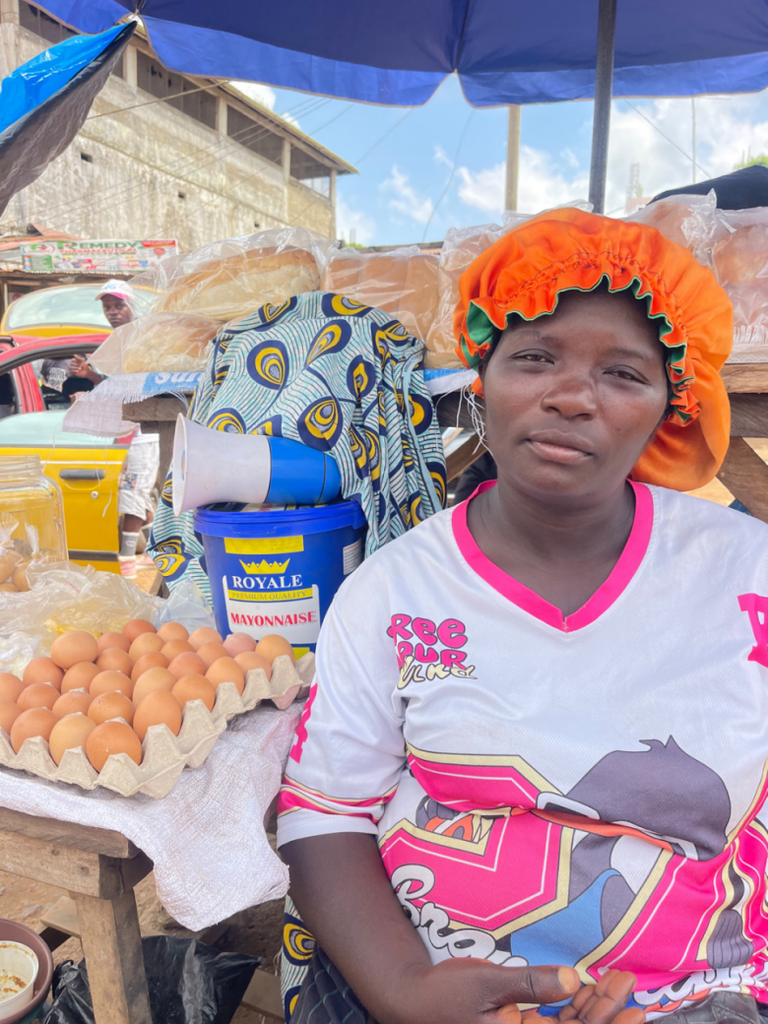
Liberia: Consumers Urge Easing of Egg Import Restrictions
Summary
- Liberian importers and consumers are reporting egg shortages and rising wholesale prices, urging the government to open the market to more suppliers.
- Executive Order 119 (2023) and its extensions, Executive Orders 135 (2024) and 156 (2025), imposed surcharges on imported eggs to protect local production.
- Concerns exist that these protective measures may create an uneven competitive environment, potentially favoring United Commodities Incorporated (UCI) and its affiliated businesses.
- Petty traders are experiencing significant financial strain due to increased wholesale egg prices, with cartons selling for US$70-$75 to them, up from about US$50 previously.
- Traders also report substantial losses from fragile shells of some locally produced eggs that crack or burst during boiling.
Market Challenges and Consumer Outcry
Concerns exist that government protective measures are creating an uneven competitive environment, particularly benefiting UCI, and limiting opportunities for other importers.
Liberian consumers and importers are expressing significant concern over a reported scarcity of eggs and a corresponding surge in their wholesale prices across the market. These stakeholders are advocating for government intervention to liberalize the market, allowing a greater number of suppliers to enter, and to foster equitable competition within the egg importation sector. They contend that current restrictions on egg imports, combined with a decline in domestic production, have led to critical supply shortages, driven up costs, and placed considerable financial strain on both small-scale traders and the general populace.
To alleviate these pressures, market participants are urging the government to streamline the process for issuing Import Permit Declarations (IPDs) and Import Notification Forms (INFs). This facilitation would enable both local and international companies interested in importing eggs into Liberia to secure the necessary documentation, potentially diversifying the supply chain and mitigating the current market imbalances. The prevailing conditions are making it increasingly difficult for ordinary citizens and small businesses to access this essential commodity at reasonable prices.
Regulatory Measures and Market Concentration
The current market dynamics are significantly influenced by a series of executive orders aimed at protecting local production. On June 6, 2023, former President George Manneh Weah enacted Executive Order 119, which introduced surcharges on imported eggs and other goods. This measure was designed to bolster domestic industries. Subsequently, President Joseph Nyuma Boakai reinforced these protective policies by extending them through Executive Order 135 in 2024 and Executive Order 156 in 2025, underscoring a continued commitment to local poultry development.
President Boakai's support for local poultry production was further highlighted by his visit to the Liberian American Poultry (LAP) Farm in Bomi County in May 2025. An August 2026 report from the International Finance Corporation (IFC) revealed that LAP, alongside Modern Mills of Liberia, is majority-owned by West African Premier Investment LLC (WAPI), an investment fund associated with the Siblani family. These entities operate within a broader commercial ecosystem that includes United Commodities Incorporated (UCI), a company with diverse interests spanning trading, manufacturing, and agriculture. However, questions are now being raised about whether the government's protective measures are inadvertently creating an unlevel playing field, potentially favoring UCI while limiting opportunities for other prospective egg importers, thereby contributing to concerns about unfair competition in the Liberian egg market.
Economic Strain on Petty Traders
The escalating wholesale prices for eggs are severely impacting the livelihoods of petty traders, who rely on egg sales to support their families. For instance, a carton of eggs is reportedly available at UCI for approximately US$65. However, local shops and stores in Monrovia and surrounding areas are selling these same cartons to petty traders for prices ranging between US$70 and US$75. At the retail level, individual eggs are now being sold for L$40 to L$50 in various locations, significantly eroding the already thin profit margins of these small business owners.
Sally Kiaweh, a mother of four from Brewerville who has sold eggs for over a decade, exemplifies the struggles faced by many. She now pays around US$70 for a carton of eggs, a notable increase from the approximately US$50 she paid several years ago. Despite the higher retail prices she must charge, her overall earnings have not improved due to the substantial rise in her purchasing costs. Kiaweh also notes that competition from larger, established stores further complicates her business, as some consumers prefer to buy directly from these outlets. Adding to her challenges, Kiaweh reports significant financial losses due to the fragile shells of some locally produced eggs, which frequently crack or burst during boiling, sometimes leading to the loss of more than half a carton, or even an entire carton, of her inventory.
Practical Implications
Lawyers advising import/export clients in Liberia should monitor the impact of Executive Orders 119, 135, and 156 on commodity imports, particularly eggs, and assess potential unfair competition claims. Compliance officers need to understand the process for obtaining Import Permit Declarations (IPDs) and Import Notification Forms (INFs) to ensure legal market entry and avoid supply chain disruptions caused by current market restrictions.
Source
How does this affect you?
Get an AI analysis of this article grounded in your jurisdictions, practice areas, and any policy documents you've uploaded to Wansom.
Wansom is AI and can make mistakes.