
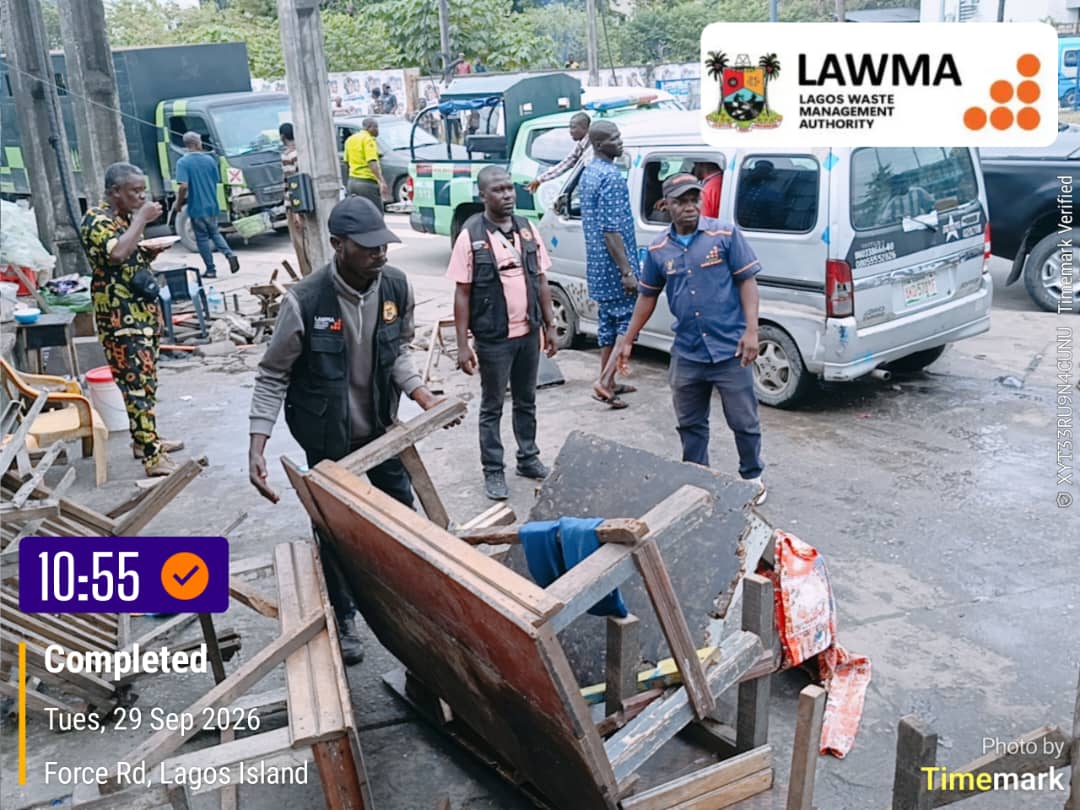
LAWMA Dislodges Traders: TBS, Costain Under Bridge Cleared
Summary
- The Lagos Waste Management Authority (LAWMA) recently conducted an enforcement operation.
- The operation aimed to dislodge illegal street traders occupying road corridors and walkways.
- Key areas targeted included Tafawa Balewa Square (TBS) and the Costain Under Bridge/National Theatre axis.
- LAWMA collaborated with the Lagos State Environmental Sanitation Corps (LAGESC), popularly known as KAI Corps, during this clearance.
- This action signals ongoing efforts to enforce urban planning and environmental regulations in Lagos.
Enforcement Action Unfolds
The operation reinforces the message that occupying road corridors and walkways for commercial purposes will not be tolerated, signaling increased regulatory scrutiny and enforcement risk for informal businesses operating without proper permits.
The Lagos Waste Management Authority (LAWMA) has initiated a significant enforcement drive, targeting individuals engaged in unauthorized street trading across key public thoroughfares in the metropolis. This recent operation specifically focused on clearing illegal vendors who had established themselves on road corridors and pedestrian walkways. The areas impacted by this clearance effort include the vicinity of Tafawa Balewa Square (TBS) and the stretch encompassing the Costain Under Bridge and National Theatre axis.
This comprehensive dislodgement was executed through a collaborative effort, with LAWMA working in conjunction with the Lagos State Environmental Sanitation Corps (LAGESC), popularly known as KAI Corps. The joint operation underscores a concerted push to reclaim public spaces from informal commercial activities that obstruct movement and contribute to environmental degradation. The presence of these traders on critical infrastructure like road corridors and walkways often impedes traffic flow and pedestrian safety, necessitating such regulatory interventions.
Regulatory Framework and Compliance
The recent action by the Lagos Waste Management Authority (LAWMA) and the Lagos State Environmental Sanitation Corps (LAGESC), popularly known as KAI Corps, is a direct manifestation of the state's commitment to upholding Lagos environmental compliance and urban planning regulations. These agencies operate under mandates designed to ensure public spaces remain accessible, safe, and free from unauthorized commercial encroachments. Street trading enforcement in Lagos is a persistent challenge, reflecting the complexities of managing a rapidly expanding urban population and the significant informal economy that thrives within it. The dislodgement of traders from road corridors and walkways is a critical component of these ongoing efforts.
Operations such as the Tafawa Balewa Square clearance and the Costain Under Bridge KAI operation are integral to maintaining public order and sanitation standards across the metropolis. They serve as a clear signal of the authorities' resolve to enforce rules designed to prevent environmental nuisances, mitigate traffic congestion, and ensure the efficient and safe use of public infrastructure by all citizens. LAWMA's mandate specifically extends to comprehensive waste management and environmental sanitation, while LAGESC (KAI) focuses on maintaining discipline and order in public areas, making their joint efforts a strategic and necessary approach to addressing these persistent urban issues.
Implications for Urban Management
This latest enforcement action carries significant implications for urban management strategies within Lagos, particularly concerning the regulation of informal commerce. The sustained focus on dislodging traders from high-profile and strategically important locations like Tafawa Balewa Square and the Costain Under Bridge area highlights a proactive and firm stance by regulatory bodies against the proliferation of informal markets in unauthorized zones. Such interventions are crucial not only for enhancing public safety and improving traffic circulation but also for preserving the aesthetic and functional integrity of the city's vital infrastructure.
The operation reinforces the message that occupying road corridors and walkways for commercial purposes will not be tolerated, signaling increased regulatory scrutiny and enforcement risk for informal businesses operating without proper permits. It underscores the ongoing challenge for Lagos authorities to balance the socio-economic needs of informal traders with the imperative of maintaining urban order, environmental standards, and the free flow of movement. The consistent application of street trading enforcement in Lagos is therefore vital for the long-term sustainability, planned development, and overall liveability of the city's public spaces.
Practical Implications
This action signals increased regulatory enforcement risk for businesses operating informally or without proper permits in public spaces in Lagos. Lawyers should advise clients on compliance with environmental and urban planning regulations to mitigate exposure to similar dislodgement operations, especially in high-profile areas.
Source
How does this affect you?
Get an AI analysis of this article grounded in your jurisdictions, practice areas, and any policy documents you've uploaded to Wansom.
Finish Reading the Full Story and the Expert Analysis.
Get the latest legal & regulatory intelligence in Nigeria
Wansom is AI and can make mistakes.