
Burkina Faso: Land-At-Scale Project Closure Marks End of 3-Year Initiative
Summary
- The Land-At-Scale project, focused on strengthening land governance for food security in Burkina Faso, has officially concluded after three years of implementation.
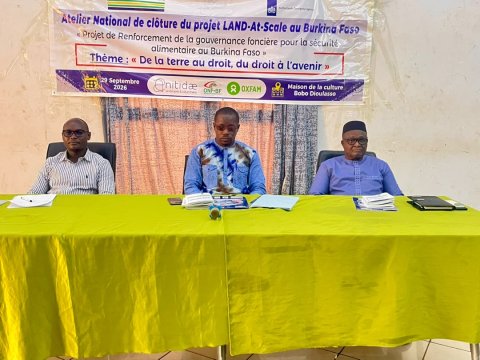
- A national closing ceremony was held in Bobo-Dioulasso on Tuesday, September 29, 2026, under the theme "From land to right, from right to future."
- The initiative was implemented by a consortium comprising Nitidæ, Oxfam, and the Observatoire national du foncier au Burkina Faso (ONF-BF).
- Funding for the project's three-year duration was provided by the Ministry of Foreign Affairs of the Netherlands, through the Netherlands Enterprise Agency (RVO).
Project Concludes in Burkina Faso
The conclusion of the Land-At-Scale project Burkina Faso closure represents a pivotal moment for stakeholders involved in land reform and food security initiatives across the nation.
The "Land-At-Scale" initiative, officially known as the "Projet de renforcement de la gouvernance foncière pour la sécurité alimentaire au Burkina Faso" (Project for strengthening land governance for food security in Burkina Faso), has officially concluded its three-year implementation period. This significant Burkina Faso land governance project marked its formal end with a national closing ceremony held in Bobo-Dioulasso. The event, which took place on Tuesday, September 29, 2026, underscored the project's achievements and future aspirations.
The ceremony was framed by the evocative theme, "De la terre au droit, du droit à l'avenir" (From land to right, from right to future), highlighting the fundamental connection between secure land tenure and the prospects for sustainable development and individual well-being. This theme encapsulates the core philosophy behind efforts to improve land rights in the region, emphasizing that formal recognition of land ownership or usage rights is a critical step towards a more stable and prosperous future for communities. The conclusion of the Land-At-Scale project Burkina Faso closure represents a pivotal moment for stakeholders involved in land reform and food security initiatives across the nation.
Collaborative Implementation and Objectives
The comprehensive Land-At-Scale project was brought to fruition through the collaborative efforts of a dedicated consortium. This partnership included Nitidæ, an organization focused on sustainable development; Oxfam, a global confederation working to alleviate poverty; and the Observatoire national du foncier au Burkina Faso (ONF-BF), the national land observatory for Burkina Faso. This multi-organizational approach, often seen in complex development initiatives, allowed for a blend of international expertise and local knowledge, crucial for addressing the nuanced challenges of land governance. The ONF-BF Land-At-Scale collaboration aimed to leverage diverse strengths to achieve its ambitious goals.
The primary objective of the "Projet de renforcement de la gouvernance foncière pour la sécurité alimentaire au Burkina Faso" was to bolster the frameworks and practices surrounding land management within the country. By strengthening land governance, the project sought to create more equitable, transparent, and secure land tenure systems. Such improvements are directly linked to enhancing food security land rights Burkina, as clear and recognized rights to land empower farmers and communities, encouraging investment in agricultural productivity and sustainable land use practices. The funding for this three-year endeavor was provided by the Ministry of Foreign Affairs of the Netherlands, through the Netherlands Enterprise Agency (RVO), enabling the consortium to execute its planned activities and interventions.
Impact on Food Security and Future Prospects
The overarching goal of the Land-At-Scale project was deeply intertwined with the critical issue of food security in Burkina Faso. By working to secure land rights, the initiative directly addressed one of the foundational elements required for communities to cultivate food reliably and sustainably. When individuals and communities have clear, legally recognized rights to their land, they are more likely to invest in long-term agricultural improvements, such as soil conservation, irrigation, and improved farming techniques, which are essential for increasing yields and ensuring consistent food supply. This focus on food security land rights Burkina is vital for the nation's long-term stability.
The project's closing theme, "From land to right, from right to future," powerfully articulates the transformative potential of secure land tenure. It suggests that the formalization of land rights is not merely a bureaucratic process but a fundamental step towards unlocking human potential and fostering a more secure and prosperous future. For a country like Burkina Faso, where agriculture is a cornerstone of the economy and livelihoods, establishing robust land governance mechanisms is paramount. The conclusion of this Nitidæ Oxfam Burkina land initiative marks the end of a specific phase, but the principles and objectives it championed continue to be relevant for ongoing development efforts in the region, laying groundwork for future interventions aimed at reinforcing land tenure security.
Source
How does this affect you?
Get an AI analysis of this article grounded in your jurisdictions, practice areas, and any policy documents you've uploaded to Wansom.
Finish Reading the Full Story and the Expert Analysis.
Get the latest legal & regulatory intelligence in Burkina Faso
Wansom is AI and can make mistakes.