
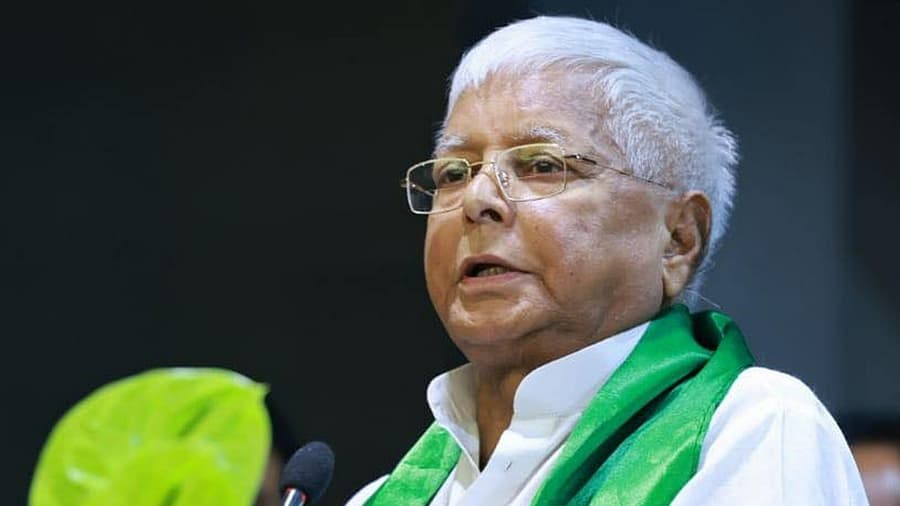
Delhi High Court: Issues Notice on Lalu Yadav ED Money Laundering IRCTC Plea
Summary
- The Delhi High Court has sought a response from the Enforcement Directorate regarding Lalu Prasad Yadav's challenge to money laundering charges.
- Yadav, his wife Rabri Devi, and son Tejashwi Yadav were charged by a trial court on September 10 in connection with the alleged IRCTC scam.
- The charges stem from allegations that Yadav, as Union Railway Minister between 2004 and 2009, accepted land and shares as bribes for awarding IRCTC hotel contracts.
- The alleged scheme involved leasing two IRCTC hotels to Sujata Hotels through a manipulated tender process, with land subsequently transferred to Yadav's family at a reduced price.
- The High Court will next hear the matter on December 3, while the trial court proceeding is scheduled for October 30.
High Court Takes Up Challenge
The Delhi High Court recently intervened in a significant legal matter, issuing a notice to the Enforcement Directorate (ED) regarding a petition submitted by Rashtriya Janata Dal (RJD) president Lalu Prasad Yadav, which specifically challenges a trial court's determination to formally accuse him of money laundering within the context of the alleged IRCTC case.
The Delhi High Court recently intervened in a significant legal matter, issuing a notice to the Enforcement Directorate (ED) regarding a petition submitted by Rashtriya Janata Dal (RJD) president Lalu Prasad Yadav, which specifically challenges a trial court's determination to formally accuse him of money laundering within the context of the alleged IRCTC case. Justice Sachin Datta, presiding over the High Court, indicated that Mr. Yadav retains the option to request an adjournment from the trial court, where proceedings are slated for October 30. The High Court itself has scheduled its next hearing on this particular matter for December 3.
This development follows the framing of charges against Mr. Yadav and several members of his family, including his son Tejashwi Yadav and wife Rabri Devi, by Special Judge (PC Act) Vishal Gogne of the Rouse Avenue courts on September 10. These charges encompass money laundering allegations. Separately, on October 13, 2025, the court had also charged Mr. Yadav and others with offenses such as corruption, criminal conspiracy, and cheating in connection with the same case, laying the groundwork for the ongoing legal battle.
Allegations of Quid Pro Quo
The core of the accusations against Mr. Yadav and his family originates from allegations made by the Central Bureau of Investigation (CBI). The CBI contends that during his tenure as the Union Railway Minister, Mr. Yadav and his relatives accepted valuable assets, specifically prime land and shares, as illicit payments. These alleged bribes were purportedly in exchange for granting contracts to a private entity.
Further details within the allegations specify that between 2004 and 2009, while Mr. Yadav served as Railway Minister, two hotels operated by the Indian Railway Catering and Tourism Corporation (IRCTC) in Ranchi and Puri were leased to a company identified as Sujata Hotels. This leasing process is alleged to have been executed through a manipulated tender, circumventing standard procedures. In what is described as a quid pro quo arrangement, land valued at crores of rupees was subsequently transferred to a company reportedly associated with Mr. Yadav's wife, Rabri Devi, and son, Tejashwi Yadav. Crucially, this transfer is said to have occurred at a significantly reduced price, representing only a fraction of its actual market worth. The Enforcement Directorate's PMLA case was subsequently initiated based on the initial FIR filed by the CBI.
Legal Context and Future Proceedings
The current High Court intervention underscores the complex legal challenges confronting Lalu Prasad Yadav and his family, particularly concerning the Prevention of Money Laundering Act (PMLA). The RJD president's petition directly questions the legal basis for the money laundering charges framed against him, aiming to overturn the trial court's decision. The upcoming hearings, both at the trial court level on October 30 and the High Court on December 3, will be critical in determining the trajectory of this high-profile case.
The legal proceedings involve multiple layers of accusations, ranging from corruption and criminal conspiracy to cheating, alongside the more recent money laundering charges. The Delhi High Court's request for a response from the ED signifies a formal review of the trial court's decision, potentially impacting how such charges are assessed in similar cases involving public officials and alleged illicit gains. The outcome of this challenge could set important precedents regarding the scope of money laundering prosecutions in India.
Practical Implications
Lawyers advising clients on anti-money laundering compliance or defending clients in PMLA cases should monitor the Delhi High Court's proceedings for potential precedents regarding the framing of charges and the scope of the ED's powers, especially concerning alleged quid pro quo arrangements involving public officials. The outcome could influence future defense strategies or compliance risk assessments.
Source
How does this affect you?
Get an AI analysis of this article grounded in your jurisdictions, practice areas, and any policy documents you've uploaded to Wansom.
Finish Reading the Full Story and the Expert Analysis.
Wansom is AI and can make mistakes.