
Greater Accra REGSEC: Laboma Beach Resort Demolition Ghana Enforced
Summary
- An ongoing demolition exercise is forcing business owners and residents to evacuate the Laboma Beach Resort in Ghana.
- The action follows a 21-day ultimatum issued by the Greater Accra Regional Security Council (REGSEC) on August 7.
- Authorities aim to reclaim the Kpeshie Lagoon's protected buffer zone, remove unauthorized structures, and address regional flooding concerns.
- The Director of Laboma, Daniel M. K. Okpoti, appealed to the government, citing over 3,000 jobs provided by businesses in the area.
What Happened
The impact of the demolition on the local economy and individual livelihoods at Laboma Beach Resort is profound, leading to widespread frustration among affected business owners.
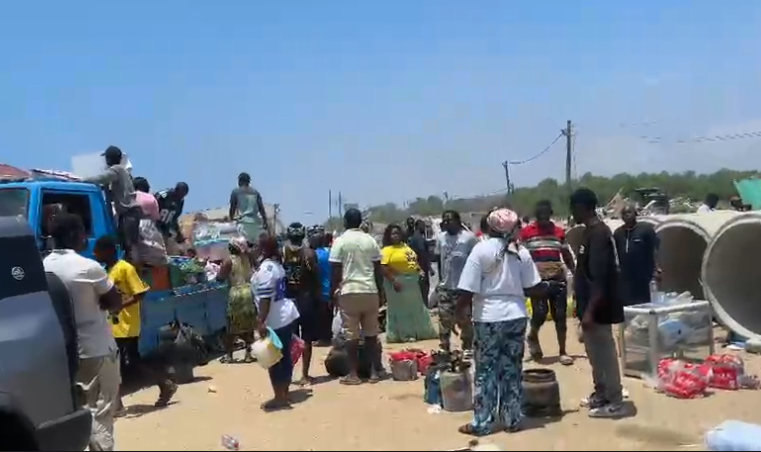
An extensive demolition exercise is currently underway at the Laboma Beach Resort in Ghana, compelling numerous business owners and residents to rapidly pack up their belongings and vacate the premises. The atmosphere across the resort is notably tense, as individuals work feverishly to salvage what they can, including personal items, furniture, and even entire structures, before the demolition crews reach their specific locations.
This widespread removal of property and forced evacuation stems from a stringent 21-day ultimatum issued by the Greater Accra Regional Security Council (REGSEC) on August 7. This directive specifically ordered all occupants situated within the protected buffer zone of the Kpeshie Lagoon to clear the area, setting the stage for the current large-scale operation affecting the Laboma Beach Resort.
Legal and Environmental Context
The authorities responsible for the ongoing demolition have articulated clear objectives for the operation, which targets the Laboma Beach Resort and surrounding areas. The primary goal is the reclamation of the vital buffer zone around the Kpeshie Lagoon, a critical environmental area. This initiative specifically aims to remove structures that have been identified as unauthorized, thereby restoring the ecological integrity of the zone.
Beyond environmental protection, officials also highlight the broader public interest in addressing persistent flooding issues that plague various communities within the Greater Accra Region. The presence of unauthorized structures in the buffer zone is considered a contributing factor to these flood risks, making their removal a key component of regional flood mitigation strategies. The ultimatum from the Greater Accra Regional Security Council (REGSEC) underscores a firm commitment to enforcing land use regulations and environmental mandates in Ghana, particularly concerning sensitive ecological areas like lagoon buffer zones.
Economic Fallout and Appeals
The impact of the demolition on the local economy and individual livelihoods at Laboma Beach Resort is profound, leading to widespread frustration among affected business owners. Many report having invested substantial capital and years of effort into their operations, now facing the immediate and devastating prospect of losing everything.
Daniel M. K. Okpoti, the Director of Laboma, had previously made a direct appeal to the government, urging a halt to the demolition exercise. He underscored the significant socio-economic contribution of the businesses in the area, claiming they collectively provided employment for more than 3,000 people. Okpoti characterized the demolition as "really disturbing" and implored the authorities to consider alternative, less destructive measures to address concerns regarding the Kpeshie Lagoon, rather than dismantling established enterprises and jeopardizing the livelihoods of thousands. Despite these appeals, the exercise continues, leaving business owners and residents with no practical alternative but to evacuate and remove their possessions from the structures slated for demolition.
Practical Implications
This development highlights the significant enforcement risk for businesses operating on land designated as environmental buffer zones in Ghana, particularly around lagoons. Lawyers should advise clients to conduct thorough due diligence on land titles and permits, and be prepared for potential government-mandated evictions or demolitions if structures are deemed unauthorized, especially following short ultimatums from authorities like REGSEC.
Source
How does this affect you?
Get an AI analysis of this article grounded in your jurisdictions, practice areas, and any policy documents you've uploaded to Wansom.
Finish Reading the Full Story and the Expert Analysis.
Get the latest legal & regulatory intelligence in Ghana
Wansom is AI and can make mistakes.