
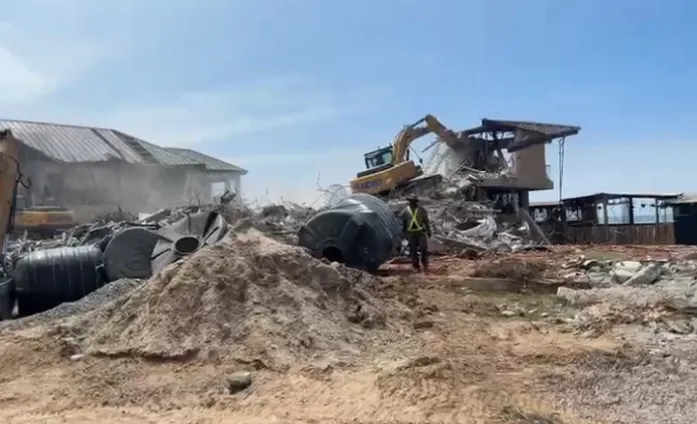
48 Engineer Regiment: Laboma Beach Demolition Clears Blocked Waterways
Summary
- The 48 Engineer Regiment led a demolition exercise at Laboma Beach Resort on Sunday, September 13, 2026, after a 21-day deadline expired.
- This action is part of the Post-Flood Mitigating Task Force's efforts to mitigate flooding in Accra, following severe floods in June and July.
- Structures at Laboma Beach were demolished because they obstructed the Teshie Lagoon, contributing to significant flooding.
- Lieutenant Colonel Frank Osei Amponsah stated that the 48 Engineer Regiment rescued over 121 victims during the June 29 floods.
- Beyond demolition, the task force plans to dredge and expand the waterway to ensure free water flow and prevent future flood impacts.
Enforcement Action at Laboma Beach
The government's intensified enforcement actions, as demonstrated by this operation, signal a heightened regulatory risk for properties located in coastal or flood-prone areas, particularly those deemed to be obstructing natural water paths.
On Sunday, September 13, 2026, the 48 Engineer Regiment initiated a significant demolition exercise at the Laboma Beach Resort. This action followed the expiration of a 21-day ultimatum previously issued by the Greater Accra Regional Minister, signaling a firm stance against structures deemed non-compliant. The operation, which saw the 48 Engineer Regiment Laboma Beach demolition, is a direct component of broader governmental efforts aimed at mitigating the severe impact of flooding across Accra.
Lieutenant Colonel Frank Osei Amponsah, who serves as the Commanding Officer of the 48 Engineer Regiment, confirmed that this particular Ghana Laboma Beach resort demolition falls under the purview of the Post-Flood Mitigating Task Force. This specialized task force was established by the government in response to widespread floods recorded throughout the country during June and July, with a clear mandate to address the root causes of such environmental disasters and prevent future occurrences.
Addressing Flood Risk in Accra
The primary objective behind the demolition at Laboma Beach is to alleviate the devastating effects of flooding, particularly in the wake of the severe June 29 floods. Lieutenant Colonel Amponsah highlighted that the Post-Flood Mitigating Task Force was specifically created to reduce the impact of these floods and to ensure that structures no longer impede the natural flow of water through critical waterways. The task force's activities encompass a range of interventions, including the desilting of water bodies, extensive dredging operations, and, when absolutely necessary, the demolition of any structures that obstruct water flow.
The necessity of the Teshie Lagoon blocked waterways demolition at Laboma was underscored by the fact that the Teshie Lagoon traverses this area before emptying into the sea. Structures erected along this vital waterway were identified as significant contributors to the recurring flood events. During the June 29 floods, the 48 Engineer Regiment played a crucial role, rescuing more than 121 individuals, a testament to the catastrophic scale of the disaster that necessitated such drastic preventative measures.
Ongoing Mitigation and Regulatory Stance
Lieutenant Colonel Frank Osei Amponsah emphasized that the demolition of these structures was an essential step to diminish the severity of future flooding incidents caused by blocked waterways. He further clarified that the current exercise is not the final phase of the intervention. The task force intends to proceed with dredging the waterway and expanding its width, thereby ensuring an unimpeded flow of water.
This Ghana flood mitigation property demolition at Laboma Beach is part of the larger, ongoing work of the Accra Post-Flood Mitigating Task Force. The government's intensified enforcement actions, as demonstrated by this operation, signal a heightened regulatory risk for properties located in coastal or flood-prone areas, particularly those deemed to be obstructing natural water paths. The comprehensive strategy aims to enhance the region's resilience against environmental challenges and safeguard communities from the impact of future floods.
Practical Implications
Lawyers advising property owners in Ghana, particularly in coastal or flood-prone areas, should be aware of the government's intensified enforcement actions regarding structures obstructing waterways. This development signals increased regulatory risk for properties deemed non-compliant with environmental and land-use regulations, potentially leading to demolition orders and necessitating proactive legal counsel on property rights and compliance.
Source
How does this affect you?
Get an AI analysis of this article grounded in your jurisdictions, practice areas, and any policy documents you've uploaded to Wansom.
Finish Reading the Full Story and the Expert Analysis.
Get the latest legal & regulatory intelligence in Ghana
Wansom is AI and can make mistakes.