
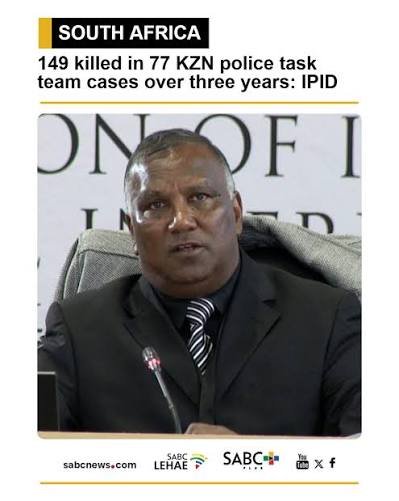
KwaZulu-Natal Task Team Killings: No Convictions Despite 77 IPID Investigations
Summary
- 149 people died during 77 KwaZulu-Natal task team operations investigated by the IPID.
- No police officer has been convicted despite 77 investigations into task team operations.
- IPID Deputy Director for Investigations in KwaZulu-Natal, Len John, accused task team members of targeting suspects for killing and failing to properly investigate or arrest suspects before using deadly force.
Task Team Killings in KwaZulu-Natal: A Pattern of Deadly Force
All suspects and occupants present when the shooting takes place are killed by the Task Team, leaving no witnesses to the operation other than the members of the Task Team itself.
The Independent Police Investigative Directorate (IPID) has investigated 77 task team operations in KwaZulu-Natal, resulting in the deaths of 149 people. Despite these investigations, no police officer has been convicted. IPID Deputy Director for Investigations in KwaZulu-Natal, Len John, testified before the Madlanga Commission that the task team members often targeted suspects for killing, but admitted that there was no evidence to support this claim. In fact, investigators found cases where the evidence did not match the police version of events. According to John, all suspects and occupants present during shootings were killed by the Task Team, leaving only the team members as witnesses.
Legal Context: Task Team Operations and Police Accountability
The IPID investigated over 300 cases between April 2023 and May 2026, including the 77 task team operations in KwaZulu-Natal. The investigations found that police often reported suspects had opened fire first, forcing officers to return fire. However, investigators discovered evidence that did not support this claim. John suggested that some of those killed may have been improperly linked to the crimes being investigated. He also questioned how the task team linked unknown individuals to cash-in-transit robbery cases.
The IPID deputy's testimony has significant implications for police accountability in South Africa. The fact that no officers have been convicted despite 77 investigations raises concerns about the use of deadly force by police and the need for greater transparency and oversight.
Why It Matters: Liability Exposure for Police Forces
The IPID deputy's testimony has far-reaching implications for lawyers and compliance officers. The lack of convictions in 77 investigations into task team operations highlights potential liability exposure for police forces in South Africa. Lawyers should be aware that the use of deadly force by police, particularly in cases where suspects are killed without proper investigation or arrest, may lead to liability claims. Compliance officers should also take note of the need for greater transparency and oversight in police operations.
The case serves as a reminder that police accountability is essential in preventing human rights abuses and ensuring public trust in law enforcement agencies.
Practical Implications
Lawyers and compliance officers should watch for potential liability exposure for police forces in South Africa, particularly with regards to investigations into task team operations and the use of deadly force against suspects.
Source
How does this affect you?
Get an AI analysis of this article grounded in your jurisdictions, practice areas, and any policy documents you've uploaded to Wansom.
Wansom is AI and can make mistakes.