
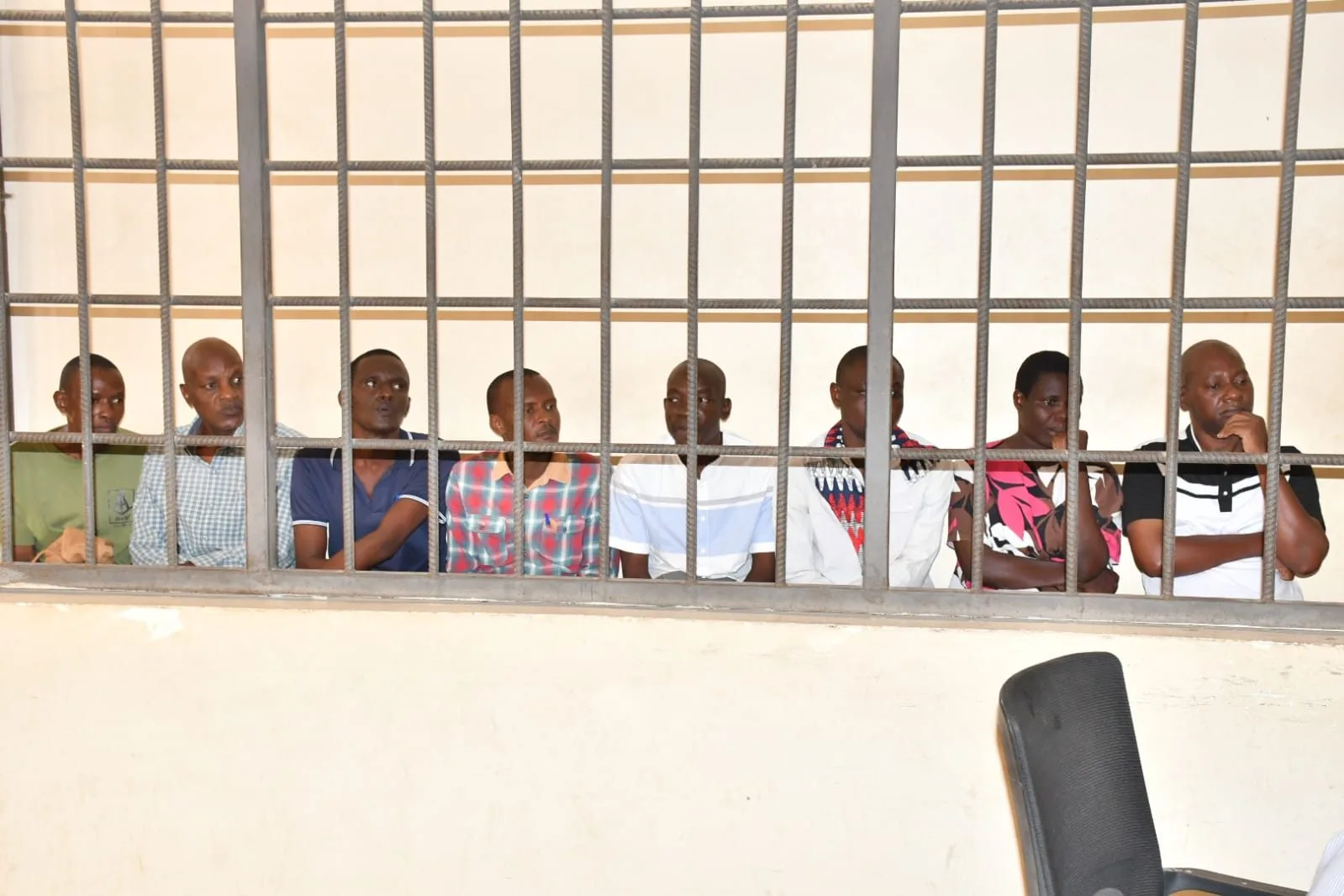
Kenya DPP: Kwa Binzaro Trial Witness Testimony Links Fasting To Disappearances
Summary
- Five prosecution witnesses testified in the Kwa Binzaro trial, linking religious teachings, radicalization, and prolonged fasting to family disappearances in the Malindi area.
- Police officer Isaiah Barasa Syakilo described discovering a deserted compound on July 18, 2025, where followers were allegedly subjected to starvation disguised as religious fasting by accused Shallyne Anindo.
- Witness Meresia Adhiambo Juma recounted her son Stephen Ochieng Juma's disappearance after visitors in February 2025 preached against education and medical care, encouraging followers to "go to Jesus" in the Malindi wilderness.
- The Director of Public Prosecutions is presenting this evidence against eight suspects, including Paul Mackenzie, who face charges related to 52 deaths and radicalization.
- The testimony details how individuals allegedly came under the influence of radical religious teachings before their disappearances, forming a key part of the prosecution's case.
Unveiling Radicalization in the Kwa Binzaro Trial
The Director of Public Prosecutions (DPP) in Kenya has presented compelling new testimony in the ongoing Kwa Binzaro trial, aiming to establish a direct link between specific religious teachings, radicalization, prolonged fasting, and the subsequent disappearance of multiple families.
The Director of Public Prosecutions (DPP) in Kenya has presented compelling new testimony in the ongoing Kwa Binzaro trial, aiming to establish a direct link between specific religious teachings, radicalization, prolonged fasting, and the subsequent disappearance of multiple families. These families reportedly traveled to the Malindi area in the months leading up to the alleged deaths at Kwa Binzaro. The proceedings, overseen by Shanzu Senior Principal Magistrate Mwanamkuu Sudi, heard from five prosecution witnesses who detailed alleged religious indoctrination, the abandonment of formal education and medical care, and extended periods of fasting, all preceding the disappearance of individuals said to have been influenced by these doctrines.
This crucial evidence forms a central part of the prosecution's case against eight suspects, including the controversial preacher Paul Mackenzie. The defendants face serious charges stemming from the deaths of 52 individuals and allegations of religious radicalization. Principal Prosecution Counsel Betty Rubia is leading the prosecution's efforts in this high-profile case, which sheds light on the grave consequences of extremist religious ideologies in Kenya.
The Deserted Compound and Its Clues
Among the witnesses was Kenya Police officer Isaiah Barasa Syakilo, who recounted how authorities were alerted to a suspicious compound located in the Binzaro area of Makongeni Sub-location, Chakama Location. According to Syakilo, followers were allegedly being subjected to radicalization and starvation, disguised as prolonged religious fasting, within its confines. Officer Barasa, attached to the Langobaya Police Station, testified to visiting the premises on July 18, 2025, accompanied by the Officer Commanding Station, the Assistant County Commissioner for Langobaya Division, and the area chief.
Their team was later joined by Makongeni Assistant Chief John Baya and local villagers, who guided them to what was suspected to be a crime scene connected to accused person Shallyne Anindo. The police had received intelligence that Ms. Anindo was allegedly radicalizing followers and enforcing starvation through extended fasting. Barasa described the compound as being secured by barbed wire and thorny shrubs, with its gate locked from the inside. A villager named Gona Charo attempted to persuade Ms. Anindo to open the gate, but she refused, claiming the keys were misplaced. Authorities ultimately forced their way in, only to discover the compound deserted. Inside, officers recovered a blue motorcycle, a blue bicycle, a wheelbarrow, and various items of clothing from several houses.
Personal Accounts of Disappearances and Radical Teachings
Further testimony came from Meresia Adhiambo Juma, who shared a poignant account of her son, Stephen Ochieng Juma, disappearing after a group of individuals visited their family home for what she described as a religious preaching session. Ms. Juma informed the court that five people—four men and one woman—visited their residence in February 2025. She identified the woman as Ann and one of the men as Kahindi. Ann reportedly encouraged the family to allow their children to "go to Jesus," asserting that she had already sacrificed her own children to Jesus.
The visiting group allegedly urged followers to journey into the wilderness in Malindi, to pray for death, and subsequently to ascend to heaven. The witness further testified that these visitors preached against formal education, seeking medical treatment, and attending traditional churches. Weeks after this visit, Stephen and two other individuals vanished for approximately three days. Then, in March 2025, Stephen disappeared again, this time accompanied by his wife Rehema, his brother-in-law Vivian, and Vivian's ten-year-old son. Their phones were subsequently switched off, preventing the family from determining their whereabouts. The family later discovered that they had traveled to Malindi. The prosecution also presented evidence from Titus Omondi Olum and Japheth Lenox Karim concerning the disappearance of another family.
The Prosecution's Evidentiary Strategy
The Kwa Binzaro trial witness testimony, including these detailed accounts, forms a critical part of the Director of Public Prosecutions Kenya's strategy to demonstrate the circumstances under which individuals allegedly fell under the influence of radical religious teachings before their disappearances. The evidence presented aims to connect the dots between the indoctrination, the forced fasting disappearances trial elements, and the ultimate charges faced by the eight suspects, including Paul Mackenzie. The court is meticulously examining how these teachings allegedly led to the abandonment of societal norms, health practices, and ultimately, the tragic loss of life associated with the Shakahola trial.
This legal proceeding highlights the challenges in prosecuting cases involving Kenya religious radicalization charges, where the line between faith and criminal manipulation becomes blurred. The detailed witness accounts are crucial for establishing the pattern of influence and control exerted over the victims, providing insight into the evidentiary hurdles faced in such complex cases.
Practical Implications
This update provides critical insight into the prosecution's evidentiary strategy and the types of witness testimony being admitted in high-profile criminal cases involving religious radicalization and mass deaths in Kenya. Criminal defense lawyers should analyze these proceedings for potential precedents and challenges in defending similar charges, while human rights lawyers can observe the balancing act between religious freedom and public safety.
Source
How does this affect you?
Get an AI analysis of this article grounded in your jurisdictions, practice areas, and any policy documents you've uploaded to Wansom.
Finish Reading the Full Story and the Expert Analysis.
Wansom is AI and can make mistakes.