
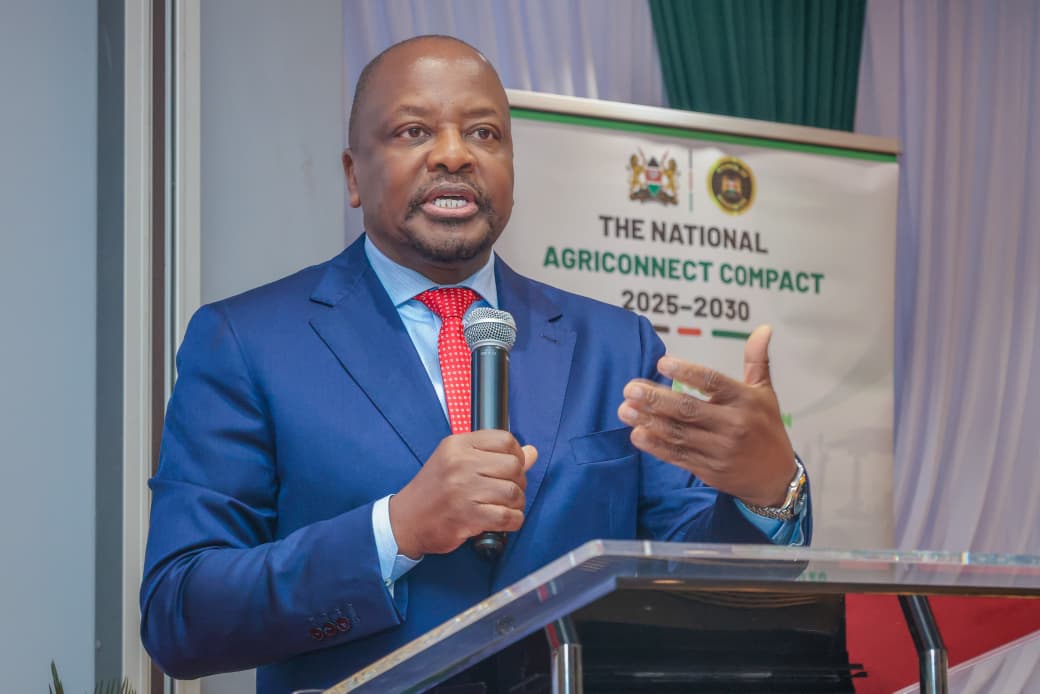
Kagwe: Kenya Sugar Board Elections Postponed Amid Court Cases
Summary
- Agriculture Cabinet Secretary Mutahi Kagwe has indefinitely postponed Kenya's sugar board directors' elections, originally set for September 5th.
- The postponement was attributed to several pending court cases affecting the electoral process.
- Cane farmers from western Kenya, led by Monica Mong’ala, Geoffrey Etiang’, and Hamis Mumia, welcomed the decision, citing the necessity of resolving court petitions.
- The farmers expressed their support outside the Busia law courts, emphasizing the importance of legal clarity for future board legitimacy.
- The delay creates uncertainty for the governance and operational stability of sugar boards, pending the resolution of the ongoing legal disputes.
Election Postponement Announced
For lawyers advising clients in the Kenyan sugar industry, monitoring the resolution of these pending court cases is crucial.
Kenya's Agriculture Cabinet Secretary, Mutahi Kagwe, has issued a directive postponing the highly anticipated sugar board directors' elections. Originally slated for September 5th, the electoral process has been delayed indefinitely, with the CS citing the existence of several pending court cases as the primary reason for the decision. This move introduces a period of uncertainty regarding the future leadership and operational stability within the nation's vital sugar industry.
The postponement means that the governance structure for sugar boards across the country will remain in flux until these legal challenges are resolved. The directive from the Agriculture CS underscores the significant impact that judicial proceedings can have on administrative and electoral processes, particularly in sectors critical to the national economy. Stakeholders are now left awaiting further communication from the ministry regarding a revised timeline for the elections, contingent upon the outcomes of the ongoing litigation.
Farmers Applaud Delay
The decision by Agriculture CS Mutahi Kagwe to defer the sugar board elections has been met with approval from cane farmers in western Kenya. These farmers, who are key stakeholders in the sugar industry, publicly expressed their support for the postponement, emphasizing the necessity of addressing the underlying legal issues before proceeding with new leadership. Their endorsement highlights a broader sentiment within the agricultural community that resolving existing disputes is paramount to ensuring fair and effective governance.
Speaking from outside the Busia law courts, a group of prominent farmer representatives, including Monica Mong’ala, Geoffrey Etiang’, and Hamis Mumia, articulated their backing for the CS's directive. They specifically pointed to the unresolved court petitions as a compelling reason for the delay, indicating that proceeding with elections amidst such legal uncertainties could compromise the legitimacy and functionality of the newly elected boards. This collective stance from the farming community suggests a desire for stability and a clear legal framework to underpin the industry's leadership.
Legal Challenges Undermine Electoral Process
The core justification for the postponement of the Kenya sugar director elections lies in a series of unresolved legal challenges. These court cases, described as 'pending' and 'court petitions' by both the Agriculture CS and the supporting cane farmers, represent significant hurdles to the electoral process. While the specific details of these cases were not elaborated upon, their existence is deemed substantial enough to warrant an indefinite delay in the selection of new sugar board leadership.
The presence of ongoing litigation often creates a complex environment for administrative actions, as decisions made during such periods can be subject to legal challenge or even nullification. For lawyers advising clients in the Kenyan sugar industry, monitoring the resolution of these pending court cases is crucial. The outcomes will not only dictate when the elections can eventually proceed but will also fundamentally determine the future governance structure and operational stability of sugar boards, impacting everything from policy implementation to resource allocation.
Implications for Industry Governance
The indefinite postponement of the sugar board elections carries significant implications for the governance and operational continuity of Kenya's sugar sector. Without new leadership in place, critical decisions regarding policy, resource management, and farmer welfare may face delays or be made under interim arrangements, potentially affecting the industry's efficiency and growth. The stability of sugar boards is essential for ensuring fair trade practices, supporting cane farmers, and maintaining the overall health of the sugar economy.
This delay underscores the intricate relationship between legal processes and administrative functions within key economic sectors. The resolution of the court cases that led to this Kagwe sugar board election postponement Kenya will be a pivotal moment, as it will clear the path for a legitimate electoral process and allow for the establishment of fully empowered boards. Until then, the industry operates under a cloud of uncertainty, highlighting the need for robust legal frameworks that can withstand challenges without unduly disrupting essential governance structures.
Practical Implications
Lawyers advising clients in the Kenyan sugar industry should monitor the resolution of the pending court cases that led to this postponement, as the outcome will determine the future governance structure and operational stability of sugar boards.
Source
How does this affect you?
Get an AI analysis of this article grounded in your jurisdictions, practice areas, and any policy documents you've uploaded to Wansom.
Finish Reading the Full Story and the Expert Analysis.
Wansom is AI and can make mistakes.