
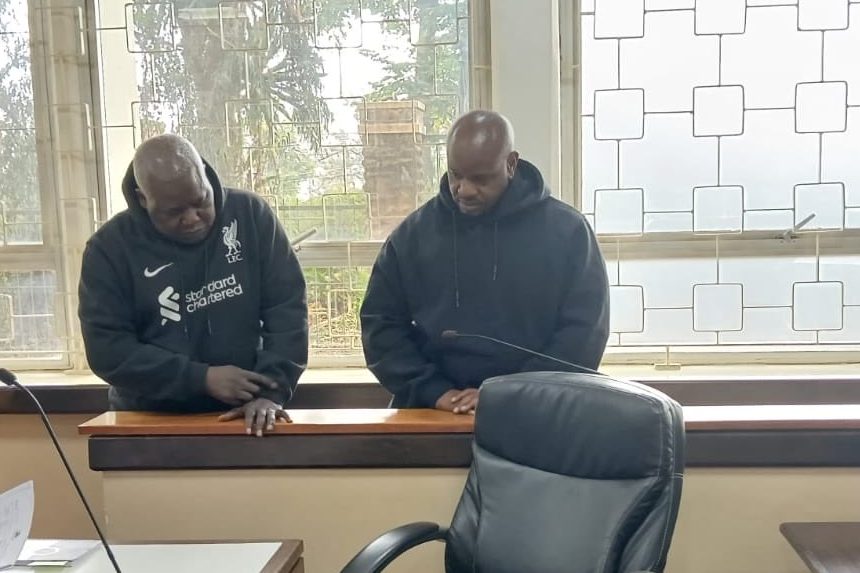
Kenya Anti-Corruption Court: Ksh1.5B PROFIT Programme Fraud Charges
Summary
- Two additional suspects, Paul Mukasiali Shilaho and Billy Otieno Obango, have been charged in connection with an alleged Ksh1.5 billion fraud.
- The fraud allegations pertain to the Programme for Rural Outreach of Financial Innovations and Technologies, known as PROFIT.
- Paul Mukasiali Shilaho is identified as the sole proprietor of Shilal Supplies and Kemula Agencies, while Billy Otieno Obango served as a Project Accountant at PROFIT.
- Both individuals were arraigned before the Anti-Corruption Court in Kenya.
- The charges highlight ongoing efforts to combat financial irregularities within large-scale government-funded programs in Kenya.
Recent Charges in Major Fraud Case
The alleged Ksh1.5B PROFIT programme fraud charges Kenya are part of a broader investigation into financial irregularities that have reportedly plagued the initiative.
Two additional individuals have been formally charged in connection with an alleged fraud scheme totaling Ksh1.5 billion. The charges relate to the Programme for Rural Outreach of Financial Innovations and Technologies, widely known as PROFIT, a significant initiative aimed at fostering financial inclusion in rural areas. This development underscores ongoing efforts by Kenyan authorities to address financial impropriety within large-scale government-funded projects.
Paul Mukasiali Shilaho, identified as the sole proprietor of both Shilal Supplies and Kemula Agencies, was among those brought before the court. Also charged was Billy Otieno Obango, who held the position of Project Accountant within the PROFIT programme. Their arraignment occurred at the Anti-Corruption Court, signaling the serious nature of the allegations and the specialized judicial focus on such cases.
The alleged Ksh1.5B PROFIT programme fraud charges Kenya are part of a broader investigation into financial irregularities that have reportedly plagued the initiative.
Legal and Regulatory Context
The Anti-Corruption Court in Kenya serves as a dedicated judicial body established to expedite and effectively prosecute cases involving corruption and economic crimes. Its role is crucial in the nation's fight against graft, particularly in instances where public funds or large-scale development programs are implicated. The decision to arraign the suspects in this specialized court emphasizes the gravity with which the Kenyan legal system views the alleged Ksh1.5B PROFIT programme fraud charges Kenya.
Such high-value fraud allegations, especially those impacting programs like the Programme for Rural Outreach of Financial Innovations and Technologies, often trigger extensive investigations by various anti-graft agencies. The legal framework in Kenya provides for stringent penalties for individuals found guilty of defrauding public programs, reflecting a national commitment to safeguarding taxpayer money and ensuring the integrity of development initiatives. The charges against Paul Mukasiali Shilaho and Billy Otieno Obango are a testament to this robust enforcement environment.
This case falls within a broader pattern of increased scrutiny on government-funded projects, particularly those involving significant financial outlays and complex operational structures. The legal and regulatory environment in Kenya is increasingly geared towards detecting and prosecuting financial misconduct, sending a clear message to individuals and entities involved in public sector contracts about the potential consequences of fraudulent activities.
Implications for Public Programs
The ongoing prosecution related to the alleged Ksh1.5B PROFIT programme fraud charges Kenya carries significant implications for the management and oversight of future public programs. The involvement of a project accountant, Billy Otieno Obango, alongside an external proprietor, Paul Mukasiali Shilaho, underscores the need for rigorous internal controls and external auditing mechanisms within large-scale initiatives like the Programme for Rural Outreach of Financial Innovations and Technologies.
For legal professionals advising clients engaged in government-funded projects in Kenya, these developments signal a heightened enforcement landscape. The continued focus of the Kenya Anti-Corruption Court on such cases indicates that authorities are committed to pursuing fraud allegations vigorously, regardless of the alleged perpetrators' positions. This necessitates a proactive approach to compliance, ensuring that all financial transactions and operational procedures within these programs are transparent and adhere strictly to regulatory requirements.
Compliance officers, particularly those overseeing financial innovation projects, should take note of these charges as a critical reminder to review and strengthen internal controls. Mitigating fraud risks in complex programs requires continuous vigilance, robust financial oversight, and clear accountability structures. The PROFIT programme Kenya fraud case serves as a stark example of the potential vulnerabilities that can arise when these safeguards are compromised, reinforcing the imperative for stringent governance in all public sector engagements.
Practical Implications
Lawyers advising clients involved in large-scale government-funded programs in Kenya should note the continued enforcement against fraud, signaling heightened scrutiny and potential for prosecution in similar schemes. Compliance officers should review internal controls for financial innovation projects to mitigate fraud risks.
Source
How does this affect you?
Get an AI analysis of this article grounded in your jurisdictions, practice areas, and any policy documents you've uploaded to Wansom.
Finish Reading the Full Story and the Expert Analysis.
Wansom is AI and can make mistakes.