
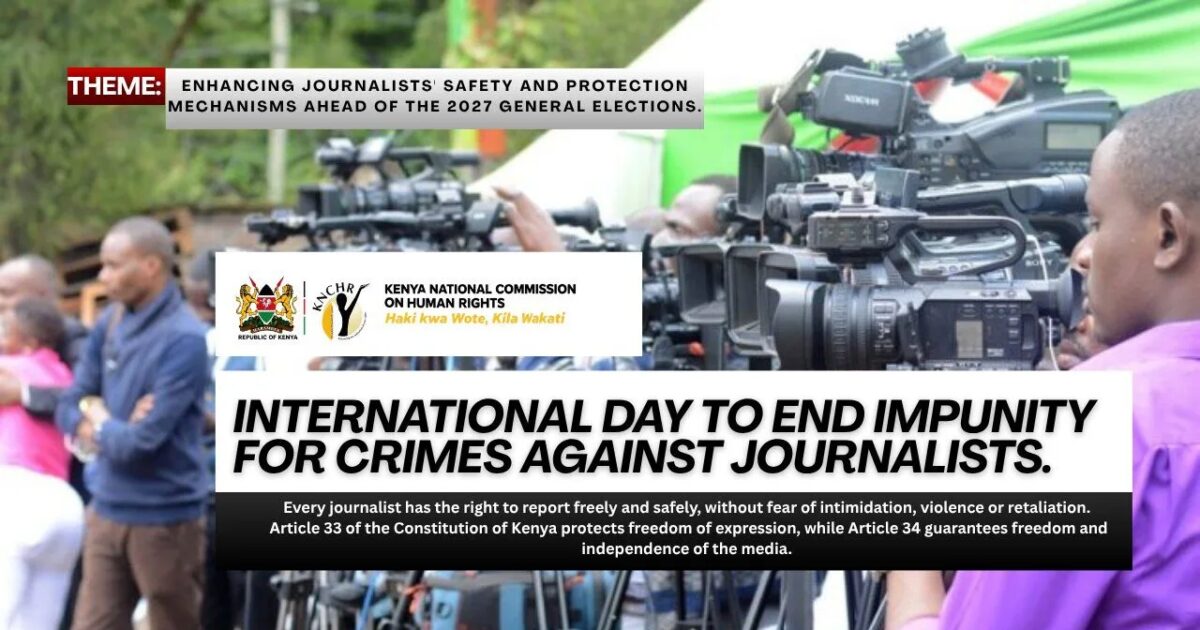
KNCHR Kenya Journalist Attacks 2025: Commission Warns of 92 Violations
Summary
- The Kenya National Commission on Human Rights (KNCHR) reported 92 verified press freedom violations in Kenya during 2025.
- Physical assaults constituted 67% of these violations, as detailed in the Media Council of Kenya's 2026 report.
- KNCHR warned that attacks on journalists threaten public information access and democratic accountability.
- The commission called for prompt, impartial investigations and accountability for all involved in attacks on media practitioners.
- KNCHR urged the government to protect journalists from physical, digital, and legal harassment to ensure a free press.
Escalating Threats to Press Freedom in Kenya
When journalists are targeted for pursuing the truth, the fundamental right of citizens to be informed is jeopardized.
The Kenya National Commission on Human Rights (KNCHR) has issued a stark warning regarding the increasing dangers faced by journalists, highlighting that violence and intimidation against media professionals pose a direct threat to the public's right to information and undermine the foundations of democratic accountability. The commission revealed that Kenya documented 92 verified press freedom violations during 2025, with physical assaults constituting a significant majority, accounting for 67 percent of all reported incidents. These alarming statistics, which underscore the persistent risks confronting journalists in their professional duties, were detailed in the Media Council of Kenya's comprehensive State of Media Freedom in Kenya 2026 report.
In a statement released on Monday, the KNCHR emphasized that such KNCHR Kenya journalist attacks 2025 are not merely assaults on individuals but represent a broader assault on freedom of expression, thereby restricting the public's capacity to access crucial information. The commission firmly asserted that when journalists are targeted for pursuing the truth, the fundamental right of citizens to be informed is jeopardized. This KNCHR press freedom warning underscores the urgent need for robust protective measures and a commitment to upholding media rights across the nation.
Calls for Accountability and Protection
Responding to the documented Kenya press freedom violations, the KNCHR has strongly advocated for the immediate initiation of prompt, impartial, and effective investigations into all crimes committed against journalists. The human rights body urged authorities to ensure that all individuals found responsible for these acts are held fully accountable under the law. Furthermore, the commission extended its call for accountability to include those who plan, facilitate, or orchestrate attacks on media practitioners Kenya, stressing that justice must reach beyond the direct perpetrators of physical assaults.
The KNCHR also pressed the government and other relevant institutions to actively safeguard journalists from various forms of harassment, including physical violence, digital intimidation, and legal challenges. It underscored the critical necessity for Kenya to cultivate a secure and supportive environment where independent journalists can perform their essential work without fear of reprisal or undue pressure. Protecting journalists, the commission argued, is paramount for upholding freedom of expression, safeguarding human rights, and ensuring sound democratic governance.
Undermining Democracy and Public Information
The appeal from the KNCHR arrives amidst growing concerns over journalist safety Kenya and the wider implications that Kenya press freedom violations have for public access to information and governmental accountability. The various forms of aggression—ranging from physical attacks to digital harassment and legal intimidation—severely impede journalists' capacity to thoroughly investigate and report on matters of significant public interest. This chilling effect ultimately deprives citizens of the crucial insights needed to make informed decisions and hold power to account.
A free and unhindered press, as highlighted by the KNCHR, remains an indispensable pillar of any functioning democracy and a cornerstone of accountability. The commission's powerful message, "Protect journalists. Defend freedom of expression. End impunity," encapsulates its urgent plea for action. It calls for the implementation of concrete measures that will enable journalists to operate independently and securely, thereby reinforcing the democratic fabric of the nation and ensuring that the public's right to know is consistently upheld, as detailed in the Media Council Kenya 2026 report.
Practical Implications
Lawyers should note the KNCHR's call for prompt and effective investigations into press freedom violations, indicating potential for increased litigation or advocacy concerning freedom of expression and media rights in Kenya. Compliance officers should review corporate policies regarding media engagement and internal reporting mechanisms for harassment, ensuring alignment with human rights standards and protection for individuals interacting with the press.
Source
How does this affect you?
Get an AI analysis of this article grounded in your jurisdictions, practice areas, and any policy documents you've uploaded to Wansom.
Wansom is AI and can make mistakes.