
KMPDU Demands Kenya Ebola Health Worker Protection After Death
Summary
- The Kenya Medical Practitioners, Pharmacists and Dentists’ Union (KMPDU) demanded urgent protection for healthcare workers following Kenya's first confirmed imported Ebola case and subsequent fatality.
- KMPDU called for immediate identification, monitoring, and psychological support for exposed staff, alongside rigorous contact tracing and transparent public information.
- The union urged the government to ensure regional isolation facilities are operational, adequately equipped, and staffed, and to provide specialized PPE and training.
- The confirmed Bundibugyo Ebola case involved a patient who traveled from the Democratic Republic of Congo through Uganda, arriving in Nairobi on October 3, after living in the DRC for seven years.
- KMPDU also advocated for the inclusion of healthcare workers and their unions in national and county emergency response structures, emphasizing their role in identifying systemic risks and protecting the nation.
Urgent Calls for Healthcare Worker Protection
KMPDU stressed that effective preparedness must extend beyond mere policy documents, cautioning authorities against delaying the identification of gaps in isolation, treatment, and infection prevention capabilities until additional cases emerge.
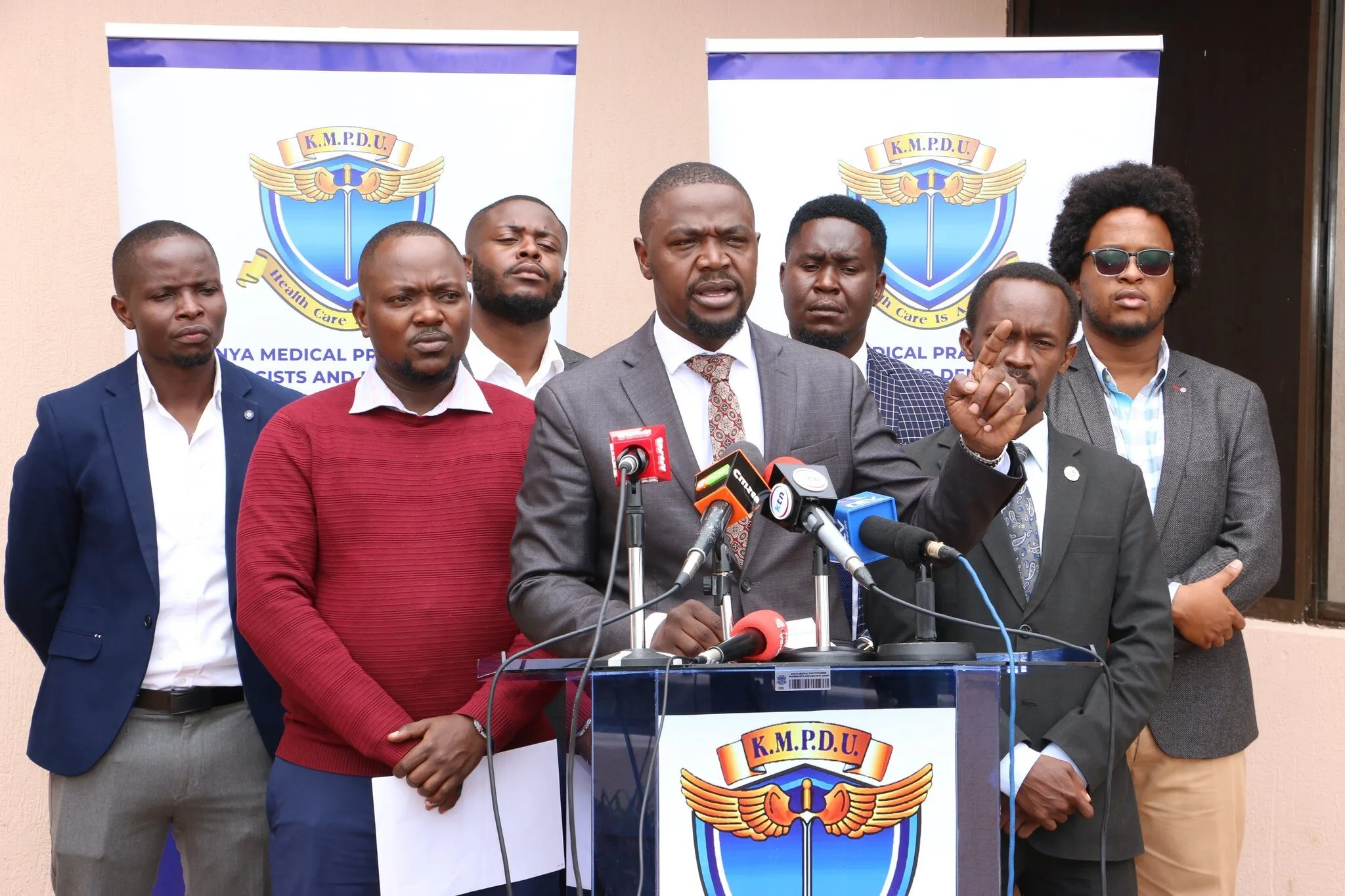
The Kenya Medical Practitioners, Pharmacists and Dentists’ Union (KMPDU) issued an urgent appeal on October 6 for enhanced safeguards for healthcare professionals across the nation. This demand followed the confirmation of Kenya's inaugural imported case of the Bundibugyo Ebola virus disease, which tragically resulted in the patient's death in Nairobi. KMPDU Secretary-General and CEO, Dr. Davji Bhimji Atellah, underscored the critical need for the government to prioritize the safety of frontline workers, asserting that their protection is a national imperative.
Dr. Atellah emphasized that healthcare workers must not be the weakest link in the country's response strategy but rather its primary line of defense. The union specifically called for the immediate identification, medical monitoring, and provision of psychological support and follow-up for any healthcare personnel who may have come into contact with the deceased patient at Nairobi Hospital or other medical facilities. Furthermore, KMPDU advocated for rigorous, timely, and transparent contact tracing efforts, urging authorities to disseminate regular and accurate information to both healthcare providers and the general public, warning that information vacuums could foster misinformation and undermine containment initiatives.
Strengthening Preparedness and Infrastructure
Beyond immediate contact tracing, KMPDU outlined comprehensive demands aimed at bolstering Kenya's long-term preparedness for infectious disease outbreaks. The union specifically sought confirmation that isolation and high-consequence infectious disease treatment facilities within regional referral hospitals are fully operational, adequately equipped, and staffed by appropriately trained personnel. KMPDU stressed that effective preparedness must extend beyond mere policy documents, cautioning authorities against delaying the identification of gaps in isolation, treatment, and infection prevention capabilities until additional cases emerge.
The union also called for the provision of specialized personal protective equipment (PPE), robust infection-prevention protocols, and targeted training for all health facilities likely to manage suspected cases. Addressing broader welfare concerns, KMPDU urged county governments to ensure that healthcare workers possess adequate medical cover. Additionally, the union pressed the Social Health Authority (SHA) to resolve delays in service access, which it attributed to overdue employer remittances, highlighting a systemic issue impacting worker benefits.
Tracing the Outbreak and Regional Context
The government, through Health Cabinet Secretary Aden Duale, confirmed on Tuesday that the patient had traveled from the Democratic Republic of Congo (DRC) through Uganda before arriving in Nairobi. Duale detailed that the patient landed at Jomo Kenyatta International Airport (JKIA) on Saturday, October 3, aboard a flight carrying 23 other passengers, having journeyed by road from the DRC via Uganda. The patient had reportedly resided in the DRC for approximately seven years and began experiencing symptoms about a month prior to seeking medical attention at multiple health facilities.
KMPDU highlighted that the patient's movement across various points of care underscores the urgent necessity to ascertain the full extent of potential exposure among healthcare workers and other contacts. This imported case emerges amidst an ongoing Ebola outbreak in the DRC, where the Bundibugyo strain has affected several provinces. The development has intensified concerns regarding cross-border transmission within East Africa, particularly given the extensive movement of people between the DRC, Uganda, and Kenya. Notably, Uganda was declared Ebola-free in July, following its 2026 outbreak which recorded 20 confirmed cases.
Advocating for Systemic Inclusion
A key demand from KMPDU is the inclusion of healthcare workers and their representative unions within national and county emergency response structures. The union argues that frontline personnel are uniquely positioned to identify operational shortcomings and inherent risks within the health system, making their input invaluable during crisis management. KMPDU articulated its core philosophy by stating that safeguarding healthcare workers ultimately protects the entire nation. The union affirmed its commitment to continuously monitor the situation and engage with relevant authorities to ensure that all necessary safeguards for healthcare professionals are effectively implemented.
Practical Implications
This development signals heightened scrutiny and potential legal challenges regarding employer obligations for healthcare worker safety, provision of adequate PPE, and adherence to infectious disease protocols in Kenya. Lawyers should advise healthcare provider clients on compliance with KMPDU's demands and government directives to mitigate liability risks and ensure worker protection during infectious disease outbreaks.
Source
How does this affect you?
Get an AI analysis of this article grounded in your jurisdictions, practice areas, and any policy documents you've uploaded to Wansom.
Finish Reading the Full Story and the Expert Analysis.
Get the latest legal & regulatory intelligence in Kenya
Wansom is AI and can make mistakes.