
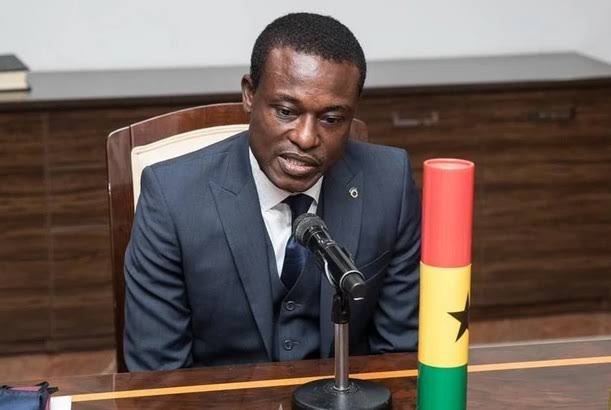
Kissi Agyebeng: OSP Institutional Independence Crucial for Ghana
Summary
- Special Prosecutor Kissi Agyebeng warned that Ghana's anti-corruption efforts will falter without stronger institutional independence.
- He specifically called for the Office of the Special Prosecutor (OSP) to be constitutionally entrenched to protect its autonomy.
- Agyebeng emphasized the need for both constitutional and financial independence for anti-corruption bodies.
- These remarks were made during the second National Anti-Corruption Dialogue held in Accra.
A Call for Robust Independence
He emphasized that the OSP, irrespective of any future structural changes or nomenclature, requires constitutional entrenchment.
Ghana's Special Prosecutor, Kissi Agyebeng, has issued a significant warning regarding the nation's ongoing struggle against corruption. Speaking at the second annual National Anti-Corruption Dialogue held in Accra, Mr. Agyebeng asserted that the fight would remain ineffective unless anti-corruption bodies are granted enhanced constitutional and financial autonomy. His remarks underscored a critical challenge facing the country's integrity institutions.
Central to Mr. Agyebeng's address was a specific recommendation concerning the Office of the Special Prosecutor (OSP), the very institution he leads. He emphasized that the OSP, irrespective of any future structural changes or nomenclature, requires constitutional entrenchment. This measure, he argued, is indispensable for safeguarding the institution's operational independence and ensuring its long-term effectiveness in prosecuting corruption cases.
The Imperative of Constitutional and Financial Autonomy
The concept of constitutional entrenchment for an institution like the OSP signifies a higher degree of legal protection than mere statutory creation. By embedding its existence and core functions within the nation's supreme law, the OSP would gain a more robust shield against political interference and arbitrary dissolution or weakening by legislative or executive action. This foundational stability is crucial for any body tasked with investigating and prosecuting powerful individuals, as it insulates them from pressures that might otherwise compromise their mandate.
Beyond constitutional safeguards, Mr. Agyebeng also highlighted the necessity of financial independence. This implies that anti-corruption institutions should have guaranteed funding mechanisms that are not subject to the whims of annual budgetary allocations, which can be manipulated to curtail operations or exert undue influence. Adequate and predictable financial resources are essential for staffing, training, and equipping investigators and prosecutors, enabling them to pursue complex cases without resource constraints. Without such autonomy, even a constitutionally entrenched body could find its effectiveness hampered by a lack of operational funds, rendering its independence largely theoretical.
Impact on Ghana's Anti-Corruption Landscape
Special Prosecutor Agyebeng's warning carries profound implications for Ghana's broader anti-corruption reforms. His assertion that the fight will "struggle" without these fundamental protections suggests that current frameworks may be insufficient to foster truly independent and effective institutions. The OSP, established as a key component of Ghana's efforts to combat graft, is positioned to play a pivotal role, but its success hinges on its ability to operate without fear or favor.
The call for constitutional entrenchment and financial independence, articulated during a high-profile national dialogue, underscores a perceived vulnerability in the current institutional setup. Achieving these reforms would not only bolster the OSP's capacity but also send a strong signal about Ghana's commitment to good governance and the rule of law. Conversely, a failure to address these concerns could perpetuate a cycle where anti-corruption efforts are undermined by structural weaknesses, ultimately impacting public trust and the nation's development trajectory.
Practical Implications
Lawyers and compliance officers in Ghana should monitor legislative developments regarding the Office of the Special Prosecutor's constitutional and financial independence, as these reforms could significantly impact the effectiveness and enforcement of anti-corruption measures and influence future risk assessments.
Source
Source: Original reporting via GhanaWeb
How does this affect you?
Get an AI analysis of this article grounded in your jurisdictions, practice areas, and any policy documents you've uploaded to Wansom.
Finish Reading the Full Story and the Expert Analysis.
Get the latest legal & regulatory intelligence in Ghana
Wansom is AI and can make mistakes.