
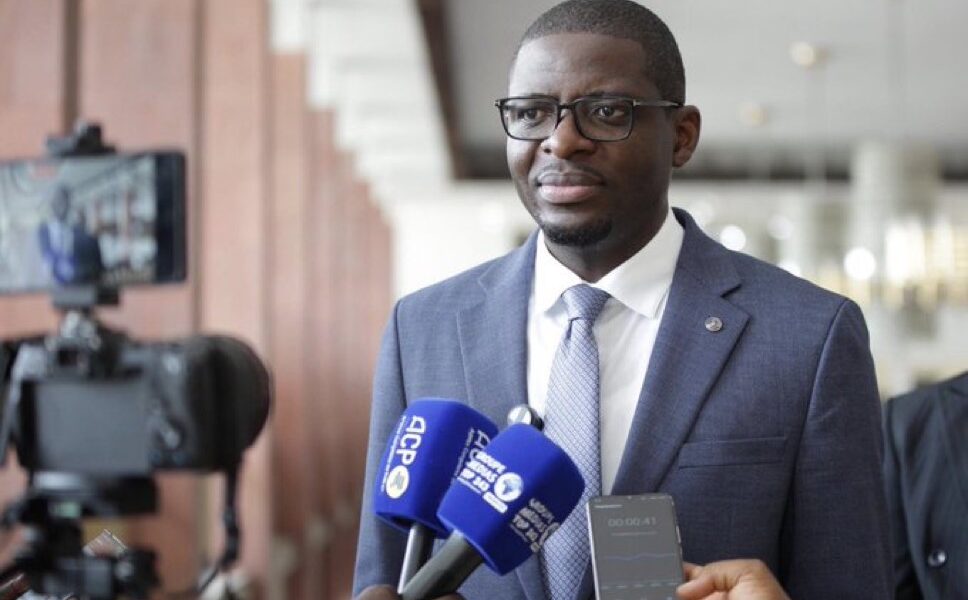
Éric Tshikuma: Interpellation Sécurité Kinshasa Demands Police Resources
Summary
- National Deputy Éric Tshikuma has formally interpellated the government regarding security and sanitation in Kinshasa.
- He sent a letter to Vice-Prime Minister Jacquemain Shabani, who oversees Interior, Security, Decentralization, and Customary Affairs.
- Tshikuma's interpellation specifically highlights concerns about the operational capacities of the police and local leaders.
- The deputy, representing Bandalungwa, calls for immediate governmental intervention to address these issues.
Legislative Scrutiny in Kinshasa
This parliamentary maneuver signals a clear demand for enhanced accountability and more efficient public service delivery from both central government ministries and local administrative bodies.
National Deputy Éric Tshikuma, an elected representative for the Bandalungwa constituency within Kinshasa, has formally initiated a parliamentary interpellation directed at the government. This action follows his return from the parliamentary recess, signaling a renewed focus on critical urban issues. The Éric Tshikuma interpellation sécurité Kinshasa specifically addresses the urgent need for increased resources dedicated to improving both public sanitation and the overall security landscape across the capital city. His intervention highlights a legislative commitment to ensuring the well-being and safety of Kinshasa's inhabitants.
The Député Tshikuma police Kinshasa initiative was formally communicated through a letter dispatched to Jacquemain Shabani, who holds the influential position of Vice-Prime Minister and Minister of Interior, Security, Decentralization, and Customary Affairs. This direct appeal to a senior government official underscores the gravity with which Deputy Tshikuma views the current state of affairs. The correspondence serves as a clear parliamentary demand, urging the executive branch to undertake immediate and decisive intervention to rectify the identified deficiencies in public services and security provisions.
Challenges to Operational Effectiveness
At the heart of Deputy Tshikuma's communication to Vice-Prime Minister Jacquemain Shabani lies a pointed critique concerning the operational effectiveness of both law enforcement agencies and local administrative leadership. This Jacquemain Shabani interpellation brings to the forefront questions about the adequacy of existing resources and the overall capability of the police force and local officials to effectively manage public order and deliver essential services throughout Kinshasa. The deputy's letter explicitly advocates for a robust and comprehensive response aimed at significantly bolstering these critical capacities.
The concerns articulated by Tshikuma extend beyond a simple call for more funding; they delve into the fundamental ability of these key institutions to fulfill their mandated responsibilities. The Capacités opérationnelles police RDC are thus placed under intense scrutiny, with the national deputy suggesting that current frameworks and operational readiness may be insufficient to guarantee the safety, security, and general welfare of the citizenry. This legislative challenge is designed to catalyze a thorough governmental review and subsequent strategic strengthening of the mechanisms tasked with maintaining peace, enforcing laws, and ensuring a hygienic urban environment for all residents.
Broader Governance Implications for the Capital
The interpellation initiated by Deputy Éric Tshikuma carries substantial implications for the broader governance framework of Kinshasa, directly addressing critical aspects of RDC sécurité publique Kinshasa. By formally challenging the government on its provision of fundamental services like security and sanitation, Tshikuma is effectively drawing widespread attention to areas that are paramount for the daily lives of the capital's residents and for the city's overall functionality and reputation. This parliamentary maneuver signals a clear demand for enhanced accountability and more efficient public service delivery from both central government ministries and local administrative bodies.
This legislative action, originating from an elected representative, serves as a vital instrument of democratic oversight, compelling the executive branch to acknowledge and address perceived systemic shortcomings. The direct appeal for intervention to the Vice-Prime Minister, who is specifically responsible for internal affairs and security, indicates a recognition that comprehensive and strategic improvements are essential to meet the legitimate expectations of the populace. The ultimate outcomes of this interpellation could significantly influence future policy decisions concerning urban planning, the equitable distribution of resources, and the strategic deployment and enhancement of security forces throughout Kinshasa, potentially shaping the city's trajectory for years to come.
Practical Implications
This interpellation highlights potential weaknesses in public security and local governance in Kinshasa, prompting lawyers to advise clients on reassessing operational risks and monitoring government responses for policy changes affecting business and compliance.
Source
How does this affect you?
Get an AI analysis of this article grounded in your jurisdictions, practice areas, and any policy documents you've uploaded to Wansom.
Finish Reading the Full Story and the Expert Analysis.
Get the latest legal & regulatory intelligence in DR Congo
Wansom is AI and can make mistakes.