
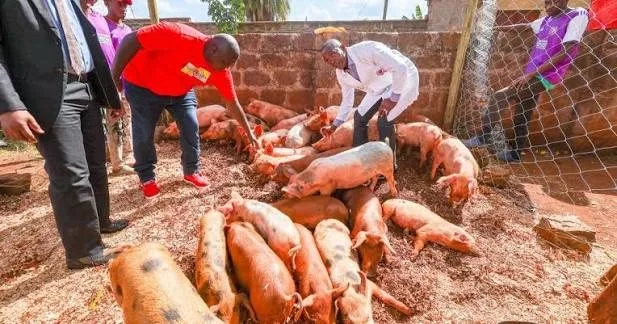
Kiambu County: Denies Piglet Program Caused African Swine Fever Outbreak
Summary
- An African Swine Fever outbreak has killed approximately 1,470 pigs on over 20 farms in Kiambu County since mid-May.
- Kiambu County officials deny claims linking their piglet distribution program, which sources animals from KALRO, to the outbreak.
- Farmers, including one who lost 156 pigs valued at nearly Sh3 million, face business collapse due to the highly contagious disease.
- The outbreak highlights a national challenge, with other Kenyan counties also reporting significant African Swine Fever cases.
- Experts emphasize biosecurity as the primary defense, while the incident brings renewed focus to farmer compensation and support for livestock losses.
Kiambu County Denies Link to Swine Fever Outbreak
The devastating economic impact on individual farmers, coupled with the absence of a commercially available vaccine or cure for African Swine Fever, underscores critical gaps in support mechanisms for those who lose their livelihoods to such outbreaks.
Kiambu County authorities have vehemently rejected allegations connecting their flagship piglet distribution initiative to a devastating African Swine Fever (ASF) outbreak that has claimed the lives of approximately 1,470 pigs across more than 20 farms since mid-May. The county government, through an official statement, asserted that the disease represents a national animal health concern, not one exclusive to Kiambu, thereby seeking to distance Governor Kimani Wamatangi's program from the escalating crisis.
The highly contagious disease has inflicted severe losses on local pig farmers, with some experiencing mortality rates as high as 100 percent within their herds. The primary areas affected by the outbreak include Juja, Thika, and Ruiru. This widespread devastation has pushed many farmers to the brink of financial ruin, jeopardizing businesses meticulously built over several years. One particularly stark example involves Peter Gitonga Kimani, a farmer in neighboring Ruai, who reported losing his entire stock of 156 pigs within roughly 72 hours on June 24, 2026, estimating his financial loss at nearly Sh3 million. Kimani emphasized that this herd represented years of dedicated investment and served as his family's principal source of income.
Program Sourcing and County's Defense
In response to accusations that animals supplied through its program might have contributed to the outbreak, Kiambu County clarified that all piglets provided to beneficiaries are procured from the Kenya Agricultural and Livestock Research Organisation (KALRO). KALRO, a government-owned agricultural research body, is described as a partner in the Governor Wamatangi-led initiative, ensuring that animals are sourced in adherence to established animal health and breeding standards.
The county's statement explicitly argued that attempts to link its piglet program to the ASF outbreak would implicitly accuse KALRO, a national government parastatal, of breeding and distributing infected piglets, a claim it labeled as unequivocally false. The program, designed to empower youth and households, has reportedly benefited over 70,000 individuals across Kiambu, enabling them to enter commercial pig farming and enhance their livelihoods. Kiambu County maintains that any assertions connecting the program to the African Swine Fever outbreak are both false and misleading.
National Scope of African Swine Fever
The Kiambu outbreak is not an isolated incident but rather part of a broader national challenge, with African Swine Fever affecting multiple regions across Kenya. Significant outbreaks have also been documented in Tharaka-Nithi, Busia, Embu, Kakamega, Homa Bay, and Migori counties. For instance, the Department of Veterinary Services reported 108 cases and 97 deaths in Tharaka-Nithi between January 5 and 11, illustrating the disease's pervasive threat.
African Swine Fever is particularly devastating due to the absence of any commercially available vaccine or cure, allowing it to spread rapidly among pigs and, in severe instances, decimate entire herds. Allan Azegele, the Director of Veterinary Services, has underscored that robust biosecurity measures remain the primary defense against the disease. Farmers are strongly advised to implement strict controls on the movement of people, animals, and equipment between farms, and to promptly report any suspected cases. In response to the escalating crisis, the government has intensified its surveillance and response efforts, alongside monitoring livestock movement to curb further spread of the disease.
Farmer Losses and Policy Implications
For farmers who have endured the complete loss of their herds, the immediate challenge of containing the disease is quickly followed by the daunting task of recovery. This includes the substantial financial burden of replacing breeding stock, recouping investments in housing and feed, and re-establishing an income stream that may have vanished within days. The devastating economic impact on individual farmers, coupled with the absence of a commercially available vaccine or cure for African Swine Fever, underscores critical gaps in support mechanisms for those who lose their livelihoods to such outbreaks.
Consequently, the current outbreak has brought renewed attention to the critical importance of effective disease surveillance, stringent farm biosecurity protocols, and the establishment of comprehensive compensation or other support mechanisms for farmers suffering livestock losses. This incident highlights the urgent need for clear legal frameworks in Kenya to address farmer compensation and support following devastating animal disease losses, ensuring that agricultural clients are adequately protected and advised on biosecurity compliance and potential liability.
Practical Implications
Lawyers advising agricultural clients in Kenya should review biosecurity compliance and potential liability for disease outbreaks, especially concerning government-backed livestock distribution programs. This incident underscores the need for clear legal frameworks for farmer compensation and support following devastating animal disease losses.
Source
How does this affect you?
Get an AI analysis of this article grounded in your jurisdictions, practice areas, and any policy documents you've uploaded to Wansom.
Finish Reading the Full Story and the Expert Analysis.
Get the latest legal & regulatory intelligence in Kenya
Wansom is AI and can make mistakes.