
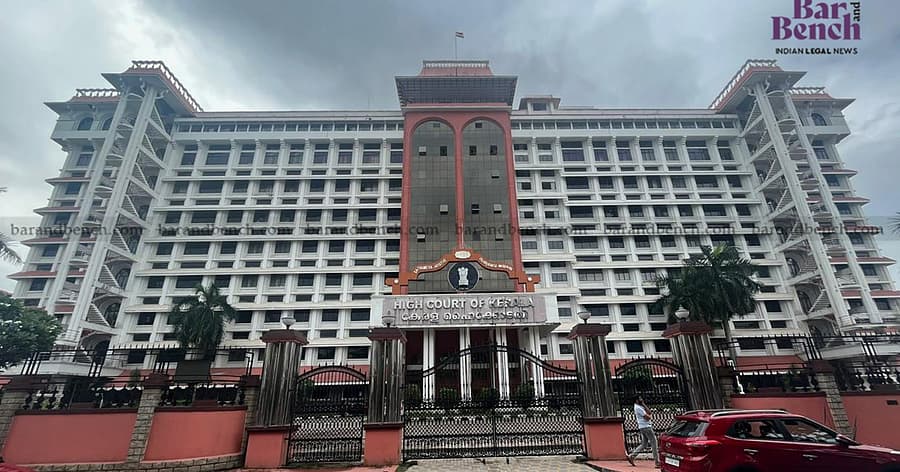
Kerala High Court: Rejects Abhimanyu Murder In-Camera Trial, Upholds Open Court Rule
Summary
- The Kerala High Court rejected a plea for an in-camera trial in the SFI leader Abhimanyu murder case.
- Justice CS Dias upheld the Ernakulam Principal Sessions Court's decision against the 13 accused, identified as Mohammed JI & ors.
- The court referenced Section 366 of the Bharatiya Nagarik Suraksha Sanhita, 2023 (BNSS), which mandates open court criminal proceedings.
- While denying a full in-camera trial, the court directed prevention of photography/videography and allowed for potential public exclusion during specific eyewitness testimony.
- The murder of SFI leader Abhimanyu occurred at Maharajas College in 2018.
What Happened
This nuanced approach demonstrates the judiciary's commitment to balancing the constitutional right to public access with the practical demands of justice, particularly concerning vulnerable witnesses.
The Kerala High Court recently affirmed the principle of open court proceedings in a significant criminal case, rejecting a request for an in-camera trial. The ruling, delivered by Justice CS Dias on Wednesday, concerned the high-profile murder of Students' Federation of India (SFI) leader Abhimanyu, which tragically occurred at Maharajas College in 2018. Thirteen individuals accused in the case, identified in court records as Mohammed JI & ors, had sought to have their trial conducted entirely behind closed doors, away from public scrutiny.
Their plea for an in-camera hearing was initially denied by the Ernakulam Principal Sessions Court, which found no compelling reason to deviate from standard procedure. The accused subsequently appealed this decision to the High Court, arguing for a private trial. However, Justice Dias upheld the lower court's stance, reinforcing the standard practice of public access to criminal proceedings and emphasizing the importance of transparency in the judicial process.
Legal Framework and Judicial Discretion
Central to the High Court's decision was a detailed interpretation of Section 366 of the Bharatiya Nagarik Suraksha Sanhita, 2023 (BNSS). The court explicitly noted that this provision mandates criminal proceedings to be conducted, as a general rule, in open court, thereby ensuring public accessibility. This observation underscores a fundamental tenet of India's judicial system, promoting transparency and public confidence in the administration of justice by allowing the public to witness legal proceedings firsthand. The court's pronouncement made it abundantly clear that criminal proceedings are ordinarily to be conducted in open court, where the public generally have access, setting a high bar for any deviation.
While emphasizing the default requirement for open trials, the court also acknowledged a crucial proviso within Section 366. This clause grants the presiding judge the inherent authority to exclude the public or specific individuals from the courtroom at any stage of the trial, should circumstances necessitate it. This discretion allows for flexibility in exceptional situations, balancing the need for transparency with other critical considerations such as witness safety, the protection of sensitive information, or the overall integrity of the proceedings.
Specific Directives and Precedential Impact
Despite rejecting the overarching request for a fully in-camera trial for the accused, the High Court issued specific directives aimed at maintaining order and ensuring a fair process. It instructed both the trial court and law enforcement to ensure that no photography or video recording of the proceedings or the accused takes place inside the courtroom. This measure aims to prevent undue publicity, potential intimidation of participants, or any actions that could compromise the sanctity of the judicial environment.
Furthermore, the ruling clarified that the trial court retains the option to consider restricting public access during the examination of particular eyewitnesses, if such a step is deemed essential to guarantee a fair trial. This nuanced approach demonstrates the judiciary's commitment to balancing the constitutional right to public access with the practical demands of justice, particularly concerning vulnerable witnesses. This decision sets a significant precedent for how similar requests for closed-door proceedings might be handled under the new BNSS framework, highlighting the high threshold for granting such applications in India.
Practical Implications
This ruling clarifies the application of BNSS Section 366 regarding open court criminal proceedings, establishing a strong presumption against in-camera trials in India. Lawyers should note this precedent when advising clients on trial publicity or when considering applications for closed-door proceedings, understanding the high bar for such requests and the court's discretion to restrict access for specific purposes like witness protection.
Source
How does this affect you?
Get an AI analysis of this article grounded in your jurisdictions, practice areas, and any policy documents you've uploaded to Wansom.
Finish Reading the Full Story and the Expert Analysis.
Get the latest legal & regulatory intelligence in India
Wansom is AI and can make mistakes.