
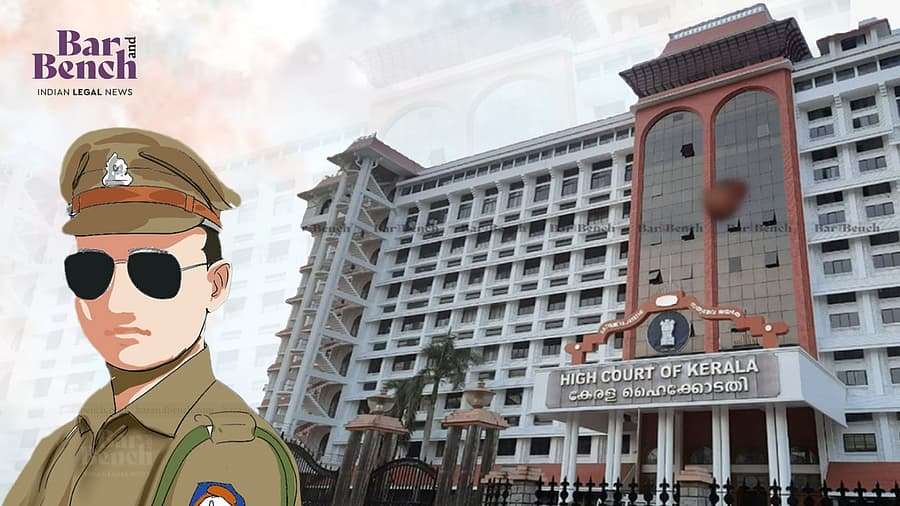
Kerala High Court: Quashes KPOA Abolition, Upholds Police Rights
Summary
- The Kerala High Court quashed the State government's decision to dissolve the Kerala Police Officers Association (KPOA).
- Justice Bechu Kurian Thomas ruled that the State lacked the power to restructure police associations in the manner attempted.
- The Court held that the State's action interfered with police officers' constitutional right to continue in their associations.
- Article 19(1)(c) freedom of association extends beyond forming an association to preserving its composition and existence.
- The ruling in `Kerala Police Officers Association v State of Kerala` confirms that recognized associations are protected from arbitrary governmental interference.
Court Reinstates Police Association
The freedom to form associations, as guaranteed under Article 19(1)(c) of the Constitution, is a continuous right.
The Kerala High Court recently intervened in a significant dispute concerning police associations, overturning the State government's directive to dissolve the Kerala Police Officers Association (KPOA). This pivotal ruling, delivered by Justice Bechu Kurian Thomas on Tuesday, effectively quashes the State Home Department's order that aimed to restructure various police personnel organizations across Kerala.
The State's initiative had sought to reorganize three distinct associations representing different ranks within the police force. As part of this broader restructuring effort, the Kerala Police Officers Association was slated for dissolution, while the other two associations were intended to be retained, albeit in a modified form. The KPOA promptly challenged this decision before the High Court, arguing against the State's authority to implement such a measure.
In its judgment in the case of `Kerala Police Officers Association v State of Kerala & connected cases`, the High Court sided with the KPOA. The court determined that the State government lacked the inherent power to restructure the three police associations in the manner it had attempted. This decision underscores a critical limitation on governmental interference with established employee organizations.
Upholding Freedom of Association
A central tenet of the High Court's ruling was its affirmation of the constitutional right to freedom of association for police officers. Justice Thomas explicitly stated that the State's dissolution order directly infringed upon the police officers' fundamental right to maintain their membership and participation in their existing associations. This interpretation highlights that the constitutional protection afforded by Article 19(1)(c) is not merely a right to *form* an association, but also encompasses the right to *continue* and *preserve* its structure and composition.
The Court further clarified that the recognition previously granted to members of the police force to establish associations had not been revoked by either the State Police Chief or the government itself. Consequently, the judiciary found no legitimate basis for the government to interfere with the established structure of these recognized police associations. This legal stance reinforces the principle that once an association is recognized, its existence and framework are protected from arbitrary governmental intervention.
This `KPOA High Court ruling` firmly establishes that the freedom to form associations, as guaranteed under Article 19(1)(c) of the Constitution, is a continuous right. It is not exhausted once an association is brought into existence but extends to safeguarding the association's ongoing existence and its internal makeup, providing a robust shield against unwarranted state actions.
Implications for Police Bodies
The `Kerala High Court quashes KPOA abolition` decision carries significant weight for police associations throughout the state and potentially beyond. By ruling that the State government could not arbitrarily dissolve or restructure the Kerala Police Officers Association, the court has set a precedent that reinforces the autonomy and constitutional protections afforded to such bodies. This judgment serves as a crucial reminder that the State's power to manage its uniformed services does not extend to undermining fundamental rights like the `freedom of association police Kerala`.
This outcome ensures that police officers in Kerala can continue to exercise their right to collective representation through their chosen organizations without fear of unilateral governmental dissolution. The ruling strengthens the position of `police associations Kerala` by affirming that their recognition implies a sustained right to exist and operate according to their established structure, unless specific legal grounds for revocation are met. It underscores the importance of Article 19(1)(c) as a safeguard against executive overreach in matters concerning employee organizations within public service.
Practical Implications
This ruling reinforces the constitutional protection of freedom of association (Article 19(1)(c)) for police officers, establishing that the State cannot arbitrarily interfere with or restructure recognized associations. Lawyers advising public sector unions or employee associations, particularly those in uniformed services, should note this precedent regarding the limits of state power over such bodies.
Source
Source: Original reporting via Live Law
How does this affect you?
Get an AI analysis of this article grounded in your jurisdictions, practice areas, and any policy documents you've uploaded to Wansom.
Finish Reading the Full Story and the Expert Analysis.
Get the latest legal & regulatory intelligence in India
Wansom is AI and can make mistakes.