
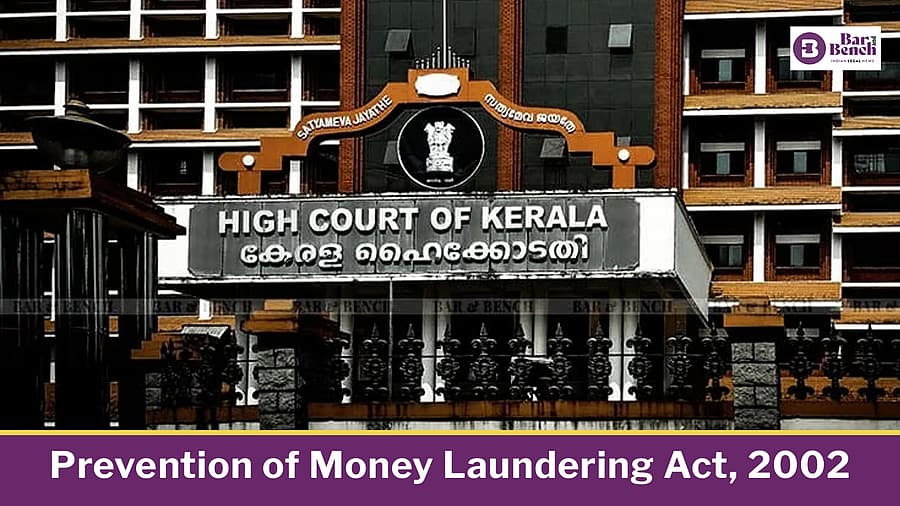
Kerala High Court: Repayment of Fraudulent Loan Does Not End PMLA Case
Summary
- The Kerala High Court ruled that repaying a fraudulently obtained loan does not absolve an accused of money laundering charges under the PMLA.
- Justice G Girish made this observation while dismissing petitions from an accused in a case linked to the Karuvannur Service Co-operative Bank.
- The accused and his relatives obtained five loans totaling ₹2.5 crore in violation of banking rules, using the funds for land, debt repayment, and hotel renovation.
- The Enforcement Directorate provisionally attached the accused's properties in October 2023, which was confirmed in March 2024.
- Despite repaying approximately ₹4.31 crore in November 2025, the court held this was not a reason to discharge the petitioner from the PMLA case.
Court Upholds PMLA Charges Despite Loan Repayment
The Kerala High Court recently ruled that an individual accused under the Prevention of Money Laundering Act (PMLA) cannot be discharged from charges simply by repaying a loan obtained through fraudulent means.
The Kerala High Court recently ruled that an individual accused under the Prevention of Money Laundering Act (PMLA) cannot be discharged from charges simply by repaying a loan obtained through fraudulent means. Justice G Girish delivered this significant observation while rejecting three separate petitions filed by an accused involved in a money laundering investigation. The case stems from alleged financial irregularities linked to the Karuvannur Service Co-operative Bank.
The petitioner had argued that since he and his family members had fully repaid the loan amount they received from the Karuvannoor Service Co-operative Bank Limited, there was no longer any outstanding financial obligation. Consequently, he contended that this repayment should lead to his discharge from the case initiated by the Enforcement Directorate. However, the court explicitly stated that such repayment does not constitute a valid basis for dismissing the charges.
The Legal Principle in Question
The core legal question addressed by the court revolved around whether the subsequent restitution of funds acquired through illicit means negates the original offense of money laundering under the PMLA, 2002. Justice Girish's ruling clarifies that the act of money laundering, once committed, is not automatically expunged by the repayment of the ill-gotten gains. This interpretation reinforces the stringent nature of PMLA provisions, which target the process of converting illegal proceeds into legitimate assets, rather than merely the recovery of funds.
The court's stance underscores that the offense under PMLA is distinct from the underlying predicate offense that generated the proceeds of crime. Even if the financial liability associated with the predicate offense is settled, the act of laundering those proceeds remains a separate and prosecutable offense. This distinction is crucial for the Enforcement Directorate's efforts to combat economic crimes and prevent the legitimization of illegally acquired wealth.
Details of the Alleged Fraud
The specific allegations in this case involve loans that were sanctioned in direct contravention of established banking regulations, reportedly with the active participation of bank officials. The accused, along with his relatives, secured five separate loans from the Karuvannur Service Co-operative Bank, amounting to a total of ₹2.5 crore. These funds were subsequently utilized for various purposes, including the acquisition of land, the settlement of existing debts, and the renovation of his hotel establishment.
In response to these alleged activities, the Enforcement Directorate took action by provisionally attaching the accused's properties in October 2023. This provisional attachment was later confirmed in March 2024, indicating the agency's belief in the illicit nature of the assets. Despite these actions, Paulson and his family proceeded to repay approximately ₹4.31 crore in November 2025, a payment that led the bank to conclude its recovery proceedings against them.
Broader Implications for PMLA Enforcement
This decision from the Kerala High Court carries significant weight for the enforcement of the Prevention of Money Laundering Act across India. It firmly establishes a precedent that the act of money laundering is not merely a debt that can be resolved through repayment. Instead, it is treated as a serious criminal offense with independent legal consequences, irrespective of whether the original financial liability has been settled.
The ruling reinforces the Enforcement Directorate's authority to pursue money laundering charges even after the underlying financial transactions have been rectified or the funds returned. This approach aims to deter individuals from engaging in financial irregularities by ensuring that the criminal aspect of laundering proceeds of crime is not overlooked. It sends a clear message that the legal system views the process of legitimizing illicit funds as a distinct and punishable act, separate from the recovery of the principal amount.
Source
How does this affect you?
Get an AI analysis of this article grounded in your jurisdictions, practice areas, and any policy documents you've uploaded to Wansom.
Finish Reading the Full Story and the Expert Analysis.
Get the latest legal & regulatory intelligence in India
Wansom is AI and can make mistakes.