
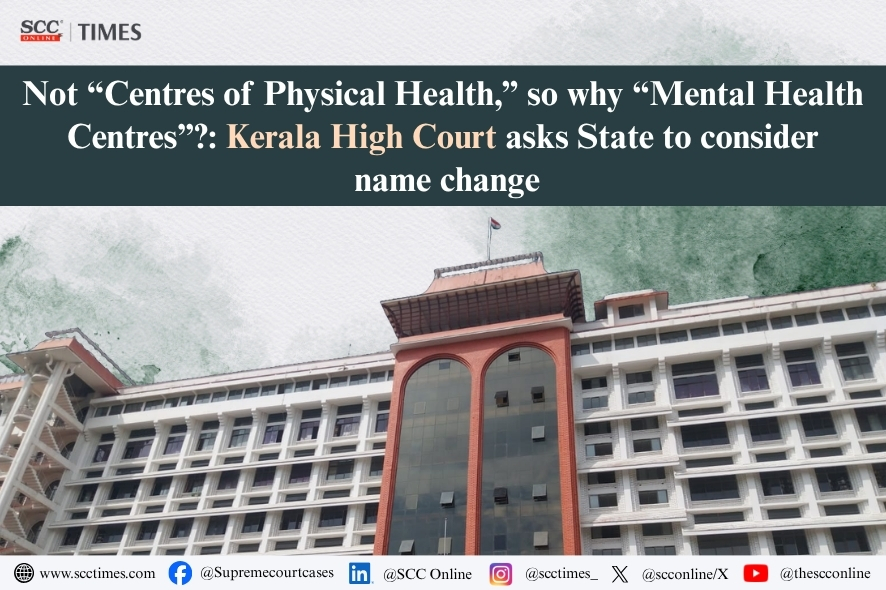
Kerala High Court: Mental Health Centres Renaming Urged
Summary
- The Kerala High Court has asked the State government to consider renaming mental health centres.
- An Amicus Curiae suggested "Institutes of Behavioural Management" or other appropriate designations for these facilities.
- The primary goal of this renaming initiative is to reduce the stigma associated with mental healthcare institutions.
- The court's consideration was prompted by the observation that physical health facilities are not similarly labeled as "centres of physical health."
Judicial Call for Renaming Mental Health Facilities
This initiative highlights a growing recognition within the judiciary of the profound impact language can have on public perception and access to essential health services.
The Kerala High Court has recently urged the State government to explore the possibility of renaming its mental health centres. This directive stems from a recommendation put forth by an Amicus Curiae appointed to assist the court. The core argument underpinning this judicial consideration is the perceived inconsistency in terminology: while general medical facilities are not typically designated as "centres of physical health," institutions dedicated to mental well-being are explicitly labeled "mental health centres."
The Amicus Curiae specifically proposed "Institutes of Behavioural Management" as a potential new designation. However, the suggestion also encompassed any other suitable nomenclature that could effectively diminish the societal stigma frequently linked with facilities providing mental healthcare. This initiative highlights a growing recognition within the judiciary of the profound impact language can have on public perception and access to essential health services.
Addressing Stigma Through Nomenclature
The intervention by the Kerala High Court, prompted by the Amicus Curiae, underscores a critical effort to combat the pervasive stigma surrounding mental health conditions in India. The role of an Amicus Curiae, or "friend of the court," is to offer impartial advice on matters of law or fact, often in cases of public interest. In this instance, the Amicus Curiae's recommendation to rename mental health centres in Kerala reflects a strategic approach to fostering a more inclusive and less stigmatizing environment for individuals seeking psychological support.
By suggesting alternatives like "Institutes of Behavioural Management Kerala," the court is implicitly acknowledging that current terminology might inadvertently contribute to negative perceptions. The aim is to shift public discourse away from labels that can isolate or marginalize, towards names that emphasize treatment, recovery, and holistic well-being. This move aligns with broader national and international efforts to integrate mental healthcare more seamlessly into general health frameworks, reducing the distinction that often leads to discrimination, thereby addressing Kerala High Court mental health stigma.
Implications for Mental Healthcare Policy
This judicial push from the Kerala High Court for mental health centres renaming carries significant implications for healthcare policy and public engagement with mental well-being. A change in institutional names, while seemingly cosmetic, can profoundly influence how individuals perceive these facilities and, consequently, their willingness to seek help. If the State acts on this suggestion, it could set a precedent for other regions in India to re-evaluate the naming conventions of their mental healthcare institutions, impacting mental health centres name change India more broadly.
The emphasis on reducing the stigma associated with mental healthcare institutions through renaming could encourage more people to access vital services without fear of judgment. This development, driven by the Amicus Curiae's insights into mental health stigma and the Amicus Curiae mental health renaming effort, signals a proactive stance by the judiciary in promoting a more compassionate and understanding approach to mental health. It highlights the potential for legal and judicial bodies to act as catalysts for social reform, particularly in sensitive areas like public health.
Practical Implications
Lawyers advising healthcare providers or involved in mental health policy in India should monitor developments from the Kerala High Court regarding the renaming of mental health centres. This signals a judicial push to reduce stigma, which could lead to future legislative changes or regulatory requirements for mental healthcare institutions.
Source
How does this affect you?
Get an AI analysis of this article grounded in your jurisdictions, practice areas, and any policy documents you've uploaded to Wansom.
Wansom is AI and can make mistakes.