
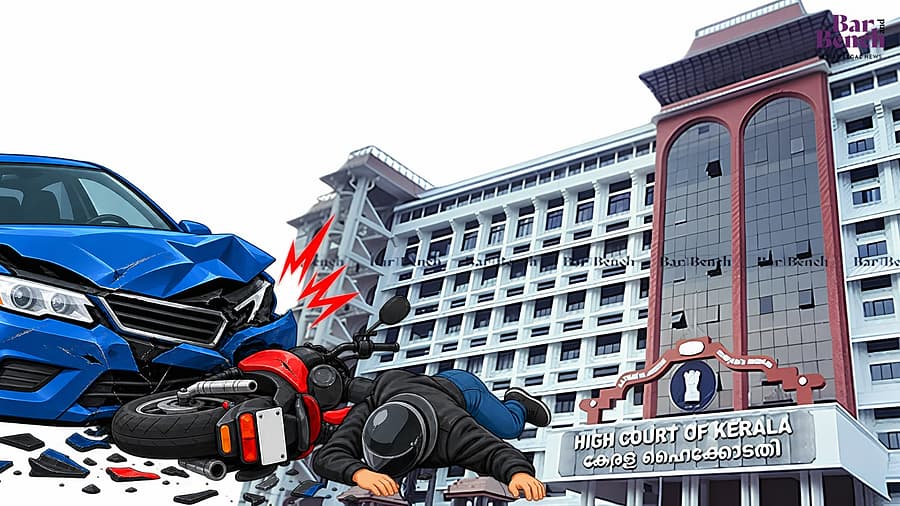
Kerala High Court Judge's Son Fatal Accident: Officer Accused Under MVA 199A
Summary
- A 55-year-old man died after his scooter was hit by a car driven by the minor son of a Kerala High Court additional sessions judge.
- The victim's family has filed a complaint with the Kerala High Court Chief Justice, seeking an inquiry into the judge's conduct.
- Police have named the judge as an accused under Section 199A of the Motor Vehicles Act, as he is the registered owner of the vehicle.
- The Kerala High Court's Administrative Committee met on October 27 but decided to defer any action, awaiting the police investigation's findings.
- Section 199A assigns liability to a guardian or vehicle owner when a minor commits a motor vehicle offense.
What Happened
The decision by the Kerala High Court administrative committee to defer action pending a police report sets a precedent for how similar high-profile cases, particularly those involving criminal investigations against judicial officers, might be managed in the future.
A tragic incident involving a minor driver, the son of a judicial officer, has prompted a formal complaint to the Kerala High Court. A 55-year-old man lost his life when his scooter was struck by a Mercedes-Benz car. The vehicle was being operated by the minor son of an additional sessions judge, who currently serves as a Motor Accidents Claims Tribunal judge in Irinjalakuda. Following the fatal accident, the victim's family, specifically his children, lodged a complaint with the Chief Justice of the Kerala High Court, requesting an investigation into the judicial officer's conduct.
Police authorities have already taken action, naming the judicial officer as an accused party under Section 199A of the Motor Vehicles Act. This legal designation stems from his status as the registered owner of the car involved in the collision. The invocation of this specific section highlights the legal framework that assigns responsibility to vehicle owners in certain circumstances, particularly when a minor is at the wheel. The family's complaint underscores the gravity of the situation and seeks accountability beyond the immediate criminal proceedings.
Legal Framework and Owner Liability
The legal basis for the judicial officer's arraignment lies in Section 199A of the Motor Vehicles Act. This crucial provision stipulates that in cases where a minor commits an offense involving a motor vehicle, liability can extend to the guardian or the registered owner of the vehicle. This section aims to ensure that adults with control over vehicles or minors are held responsible for the actions of underage drivers, especially when those actions lead to serious consequences like a fatal accident.
The application of Section 199A in this context means that even though the judge's minor son was driving, the judge, as the vehicle owner, faces legal repercussions. This aspect of the law is particularly relevant in the ongoing police investigation, which will determine the full extent of the judicial officer's culpability under this specific statute. The victim's family has specifically requested that the Chief Justice seek reports detailing the progress of the criminal case, with a particular focus on how Section 199A has been applied.
High Court's Administrative Response
In response to the complaint and the unfolding events, the Kerala High Court's Administrative Committee convened a preliminary meeting on October 27. This committee, which includes Chief Justice Soumen Sen and five of the High Court's most senior judges, reviewed the available information concerning the accident. Despite the seriousness of the allegations and the judicial officer's involvement, the committee decided against taking immediate administrative or disciplinary action.
The rationale behind this decision was the ongoing police investigation. The committee opted to await further material and findings from the investigating agency before making any definitive moves regarding the judicial officer's conduct. The victim's children, in their complaint, had specifically asked the Chief Justice to ascertain whether an administrative or disciplinary inquiry against the judicial officer was warranted, and to obtain reports on the criminal case's registration and progress, especially concerning Section 199A.
Implications for Judicial Accountability
This incident, involving the Kerala High Court judge's son and a fatal accident, carries significant implications for judicial accountability and the handling of disciplinary matters within the Indian judiciary. The decision by the Kerala High Court administrative committee to defer action pending a police report sets a precedent for how similar high-profile cases, particularly those involving criminal investigations against judicial officers, might be managed in the future. The focus on the police investigation's outcome before initiating internal disciplinary proceedings highlights a cautious approach to judicial officer disciplinary inquiry in India.
The case also brings into sharp focus the liability of a vehicle owner when a minor driver is involved in an accident, as outlined by Motor Vehicles Act Section 199A. Lawyers and legal observers will be closely monitoring the Kerala High Court's administrative committee's decision-making process, as it will illuminate the balance between criminal justice proceedings and internal judicial oversight. The outcome could influence future guidelines for judicial conduct and the administrative handling of incidents that cast a shadow on the judiciary.
Practical Implications
Lawyers should monitor the Kerala High Court's administrative committee's decision-making process regarding disciplinary action against judicial officers, particularly when criminal investigations are pending, as this case may set a precedent for handling similar high-profile incidents involving judicial conduct and vehicle owner liability under Section 199A of the Motor Vehicles Act.
Source
How does this affect you?
Get an AI analysis of this article grounded in your jurisdictions, practice areas, and any policy documents you've uploaded to Wansom.
Finish Reading the Full Story and the Expert Analysis.
Wansom is AI and can make mistakes.