
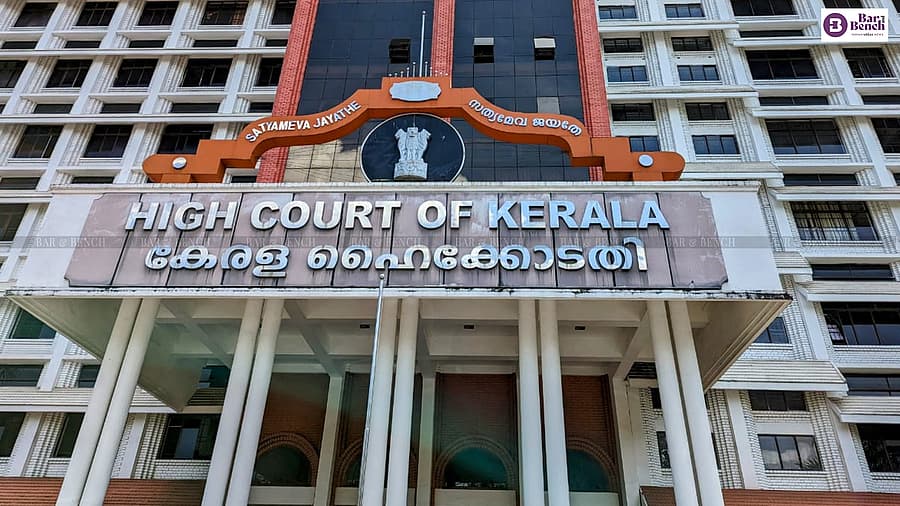
Kerala High Court: Guruvayur Temple Staff Must Respect Devotees
Summary
- The Kerala High Court mandated that Guruvayur temple staff must treat devotees with respect and avoid anger.
- This directive followed allegations of harassment against temple employees, addressed in "Suo Motu v State of Kerala & ors and connected case".
- A Division Bench, including Justice Devan Ramachandran and Justice Basant Balaji, issued the order on November 13.
- The court acknowledged crowd management challenges but insisted on employee composure and equanimity.
- Both temple staff and devotees share a mutual responsibility to maintain civility and the temple's sanctity.
Judicial Mandate for Temple Conduct
It further mandates that personnel at all levels within the temple administration must refrain from losing their temper or exhibiting anger towards any devotee.
The Kerala High Court has recently issued a significant directive emphasizing the imperative for staff at the Guruvayur temple to treat all devotees with utmost respect. This judicial pronouncement specifically instructs temple employees to avoid any display of anger, even when confronted with challenging circumstances. The court's intervention came in response to various allegations suggesting that pilgrims visiting the revered Guruvayur temple were experiencing harassment at the hands of its staff. This matter was addressed under the case title "Suo Motu v State of Kerala & ors and connected case", highlighting the court's proactive stance on public interest issues and the importance of ensuring proper Guruvayur temple devotee treatment. The ruling underscores a clear expectation for professional and courteous interaction within religious institutions, particularly those attracting large numbers of visitors.
Upholding Decorum and Equanimity
A Division Bench comprising Justice Devan Ramachandran and Justice Basant Balaji presided over the proceedings, acknowledging the inherent complexities involved in managing large crowds at a popular pilgrimage site like the Guruvayur temple. Despite these potential difficulties, the bench firmly asserted that temple employees are obligated to maintain their composure and act with a high degree of equanimity when interacting with devotees. The court's order, dated November 13, explicitly states that every individual visiting the temple is entitled to be cared for and treated with a degree of decorum and respect. It further mandates that personnel at all levels within the temple administration must refrain from losing their temper or exhibiting anger towards any devotee. This directive sets a clear standard for temple employee conduct Kerala, ensuring a respectful environment for all. The Justice Devan Ramachandran order thus establishes a benchmark for the expected demeanor of staff.
Mutual Civility and Sanctity
Beyond the conduct of staff, the Kerala High Court also stressed that the responsibility for maintaining a civil atmosphere is a mutual one, extending to both temple employees and the devotees themselves. The court underscored the importance of both parties ensuring that their actions do not negatively impact the sanctity of the sacred space. This mutual obligation for civility is crucial for preserving the spiritual integrity of the institution. The ruling cautioned that if heated situations are not managed effectively and allowed to spiral out of control, they possess the potential to lead to outcomes detrimental to the pious environment of the temple. Therefore, while placing a significant onus on the staff for their demeanor, the court also implicitly called for a collective effort to preserve the spiritual integrity and Kerala High Court temple decorum. This comprehensive approach aims to foster an environment of reverence and respect for everyone involved in the temple experience, reinforcing the importance of Kerala High Court Guruvayur temple staff respect.
Practical Implications
This ruling establishes a judicial expectation for the conduct of staff in religious institutions, particularly those under state purview, emphasizing decorum and respect towards the public. Lawyers advising temple trusts or similar public-facing organizations should review internal policies and staff training to ensure compliance with these judicial guidelines, mitigating potential disputes or reputational risks.
Source
How does this affect you?
Get an AI analysis of this article grounded in your jurisdictions, practice areas, and any policy documents you've uploaded to Wansom.
Finish Reading the Full Story and the Expert Analysis.
Get the latest legal & regulatory intelligence in India
Wansom is AI and can make mistakes.