
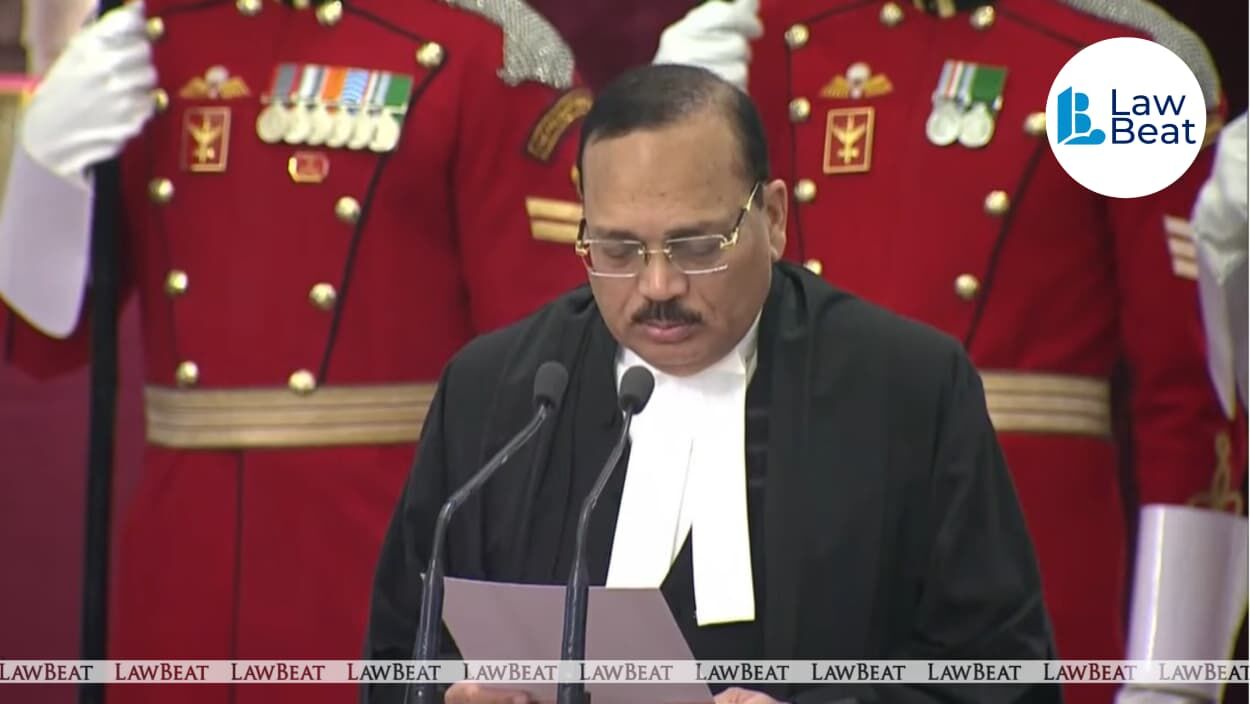
Kerala Congress President Receives Legal Notice From SCBA Joint Secretary Over "Resign Now" Post Against CJI S
Summary
- SCBA Joint Secretary Meenesh Dubey issued a legal notice to KPCC President Sunny Joseph over an X post demanding CJI Surya Kant's resignation.
- The controversial tweet, published on October 12, 2026, from the official Congress Kerala account, stated, "Dear Surya Kant, If law and order is not your domain, resign now."
- Dubey's notice questions the KPCC's response, which claimed the post was unauthorized and led to the removal of the responsible individual.
- The notice emphasizes that political expression must respect constitutional institutions, demanding a comprehensive written response from the KPCC within seven days.
- Separately, four Supreme Court advocates have sought a framework to prevent political protests near courts and requested contempt proceedings against opposition leaders, including those named in the PIL, following events on October 12.
Legal Action Initiated Over Social Media Criticism of CJI
Dubey's notice underscores a crucial principle: while freedom of political expression is recognized as a fundamental democratic right, it does not absolve political entities and their office-bearers of the responsibility to ensure that official communications are conducted with appropriate care and demonstrate respect for constitutional institutions.
On October 12, 2026, a significant legal development unfolded as Meenesh Dubey, the Joint Secretary of the Supreme Court Bar Association (SCBA), dispatched a formal legal notice to Sunny Joseph, who serves as the President of the Kerala Pradesh Congress Committee (KPCC). This action was prompted by a highly contentious statement published on the official and verified X account of Congress Kerala, @INCKerala, on the same date. The post directly targeted Chief Justice of India (CJI) Surya Kant, unequivocally demanding his resignation.
The specific message, which has since become the subject of this legal challenge, read: "Dear Surya Kant, If law and order is not your domain, resign now. We will find your replacement who can handle it." The notice from Dubey specifically calls upon the KPCC President to provide a comprehensive explanation for the absence of a public apology and any explicit reprimand concerning this objectionable tweet. This demand highlights the seriousness with which such public criticism of the judiciary is being viewed by legal bodies.
Accountability and the Limits of Political Expression
In response to the controversy, the KPCC President reportedly asserted that the offending post had been published without the prior knowledge, consent, or consultation of the state leadership. Furthermore, it was stated that the individual responsible for managing the account had been subsequently removed from their position. However, the legal notice from Meenesh Dubey challenges the sufficiency of these actions, arguing that merely disavowing the statement and dismissing the account manager does not fully address the concerns raised by the incident, especially if the tweet was indeed unauthorized and contrary to the party's official stance.
Dubey's notice underscores a crucial principle: while freedom of political expression is recognized as a fundamental democratic right, it does not absolve political entities and their office-bearers of the responsibility to ensure that official communications are conducted with appropriate care and demonstrate respect for constitutional institutions. The SCBA Joint Secretary emphasized that any determination of legal liability must be made strictly in accordance with the established facts and applicable legal frameworks. The KPCC President has been given a strict seven-day deadline from the receipt of the notice to furnish a detailed written response, clarifying the party's position on issuing a public apology, an express reprimand, and outlining any further appropriate actions.
Broader Judicial Scrutiny and Contempt Allegations
This incident involving the Kerala Congress legal notice CJI Surya Kant tweet is not isolated but forms part of a broader context of judicial concern regarding public discourse. In a related development, four advocates practicing before the Supreme Court have initiated a Public Interest Litigation (PIL). Their petition seeks the establishment of a party-neutral framework designed to prevent political processions, protests, and sloganeering from encroaching upon the precincts of constitutional courts. Additionally, these advocates have urged the Supreme Court to consider initiating suo motu criminal contempt proceedings against several prominent opposition leaders.
The call for contempt proceedings stems from events that transpired on Monday, October 12. On this day, an opposition march proceeded towards the Supreme Court, coinciding with the appearance of multiple posts on the X platform demanding the resignation of Chief Justice of India Surya Kant. The PIL names a wide array of respondents, including prominent figures such as Rahul Gandhi, Mallikarjun Kharge, Akhilesh Yadav, and Mahua Moitra, alongside the Indian National Congress and the Kerala Pradesh Congress Committee. The Union of India, the Delhi Police Commissioner, and the Supreme Court itself, through its Secretary General, are also listed as proforma respondents in this significant legal challenge.
The Precedent of Refused Meetings and Separation of Powers
The backdrop to the October 12 events, as detailed in the advocates' petition, includes an attempt by Opposition Leaders in both the Lok Sabha and the Rajya Sabha to meet with the Chief Justice. They had written to the CJI on October 10, requesting an appointment for October 12 to present a memorandum. The publicly announced demands associated with this memorandum, according to the petition, included a call for a halt to the Special Intensive Revision (SIR) of electoral rolls and the resignation of Chief Election Commissioner Gyanesh Kumar, whose decisions are currently under judicial challenge.
However, the Chief Justice declined the requested meeting via a letter dated October 11. The petition quotes the CJI's letter, which stated that the issues intended for discussion were "already sub judice before the Supreme Court of India." Furthermore, the letter explicitly noted that "convening a meeting to discuss pending cases would wholly contravene the principle of Separation of Powers, an intrinsic facet of the basic structure doctrine of the Constitution." This refusal underscores the judiciary's commitment to maintaining its independence and the constitutional separation of powers, setting a firm boundary against political interference in ongoing legal matters.
Practical Implications
Lawyers advising political entities or public figures should note the heightened scrutiny and potential legal challenges (e.g., legal notices, contempt proceedings) arising from public statements, particularly on social media, that criticize judicial officers or constitutional institutions. This case underscores the importance of stringent internal controls over official communication channels and careful consideration of the line between political expression and disrespect for the judiciary.
Source
How does this affect you?
Get an AI analysis of this article grounded in your jurisdictions, practice areas, and any policy documents you've uploaded to Wansom.
Finish Reading the Full Story and the Expert Analysis.
Get the latest legal & regulatory intelligence in India
Wansom is AI and can make mistakes.