
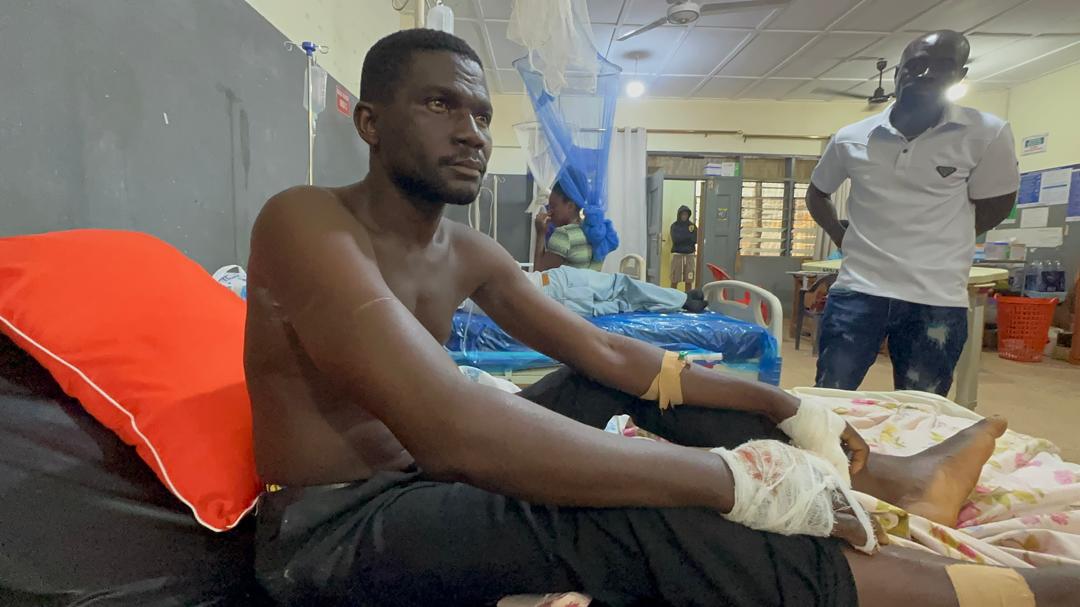
Kenyasi Prison Officers Civilian Attack: Opoku Afriyie Injured
Summary
- Civilian Opoku Afriyie is in serious condition at Asutifi North District Hospital following an alleged attack.
- The assault reportedly involved two prison officers and three inmates from the Kenyasi Settlement Camp Prison in the Ahafo Region.
- The attackers allegedly used machetes during the incident.
- Mr. Afriyie, a resident of Kenyasi No. 2, works as a sound system operator and commercial motorbike.
- This Kenyasi Prison officers civilian attack highlights potential state liability and human rights concerns within Ghana's correctional system.
What Happened
When state agents, such as prison officers, are implicated in assaults, the state itself can be held accountable for the actions of its employees, especially if negligence in training, supervision, or oversight is proven.
A civilian identified as Opoku Afriyie is presently in serious condition, receiving medical care at the Asutifi North District Hospital. Mr. Afriyie, a resident of Kenyasi No. 2 whose work involves operating a sound system and commercial motorbike, was reportedly attacked by a group comprising two prison officers and three inmates. The individuals implicated in this Kenyasi Prison officers civilian attack are associated with the Kenyasi Settlement Camp Prison, situated within the Ahafo Region.
The assault on Mr. Afriyie allegedly involved the use of machetes, leading to his severe injuries and subsequent hospitalization. This incident, which saw both correctional staff and incarcerated individuals from the Kenyasi Settlement Camp Prison involved in the alleged attack on a member of the public, underscores serious questions about security and conduct within the correctional system. The Opoku Afriyie attack has drawn attention to the potential for misconduct by state agents and inmate violence in Ghana's prison facilities.
Legal and Human Rights Implications
The alleged Kenyasi Prison officers civilian attack raises significant legal and human rights concerns, particularly regarding state liability. When state agents, such as prison officers, are implicated in assaults, the state itself can be held accountable for the actions of its employees, especially if negligence in training, supervision, or oversight is proven. This incident could potentially lead to civil claims for Mr. Afriyie, seeking compensation for his injuries and suffering, based on the misconduct of state agents. Such cases often highlight broader issues of Ghana human rights violations within the correctional system.
The involvement of both prison officers and inmates in the alleged Opoku Afriyie attack further complicates the legal landscape. It suggests a potential breakdown in discipline and control within the Kenyasi Settlement Camp Prison, which could constitute a failure of institutional oversight. Lawyers examining this case would likely consider the extent to which the Ghana Prison Service is responsible for ensuring the safety of civilians from its personnel and inmates, even outside prison walls. This type of Ghana prison officer assault incident often prompts a review of existing protocols and accountability mechanisms to prevent future occurrences and uphold the rights of citizens.
Broader Context and Oversight Concerns
The Kenyasi Settlement Camp Prison incident is not merely an isolated act of violence but signals deeper systemic challenges within Ghana's correctional facilities. The alleged involvement of both officers and inmates in the assault on Opoku Afriyie points to potential deficiencies in staff management, inmate supervision, and overall institutional governance. Such occurrences can erode public trust in law enforcement and correctional services, raising questions about the safety and security environment surrounding prison operations.
For compliance officers and human rights advocates, this incident necessitates a thorough review of institutional oversight mechanisms within the Ghana Prison Service. It underscores the critical need for robust training programs for prison officers, emphasizing de-escalation techniques, ethical conduct, and the appropriate use of force. Furthermore, the alleged inmate violence Ghana, particularly when facilitated or joined by officers, highlights the imperative for stringent internal investigations and accountability measures to address misconduct effectively. Ensuring justice for victims like Mr. Afriyie is paramount, alongside implementing reforms to prevent future Ghana human rights violations and uphold the integrity of the nation's justice system.
Practical Implications
This incident signals potential state liability and human rights violations within Ghana's correctional system, prompting lawyers to consider civil claims for victims of state agent misconduct and compliance officers to review institutional oversight.
Source
How does this affect you?
Get an AI analysis of this article grounded in your jurisdictions, practice areas, and any policy documents you've uploaded to Wansom.
Finish Reading the Full Story and the Expert Analysis.
Get the latest legal & regulatory intelligence in Ghana
Wansom is AI and can make mistakes.