
Kenya: Tax Laws Amendment Act 2026 Extends VAT, Revises Excise
Summary
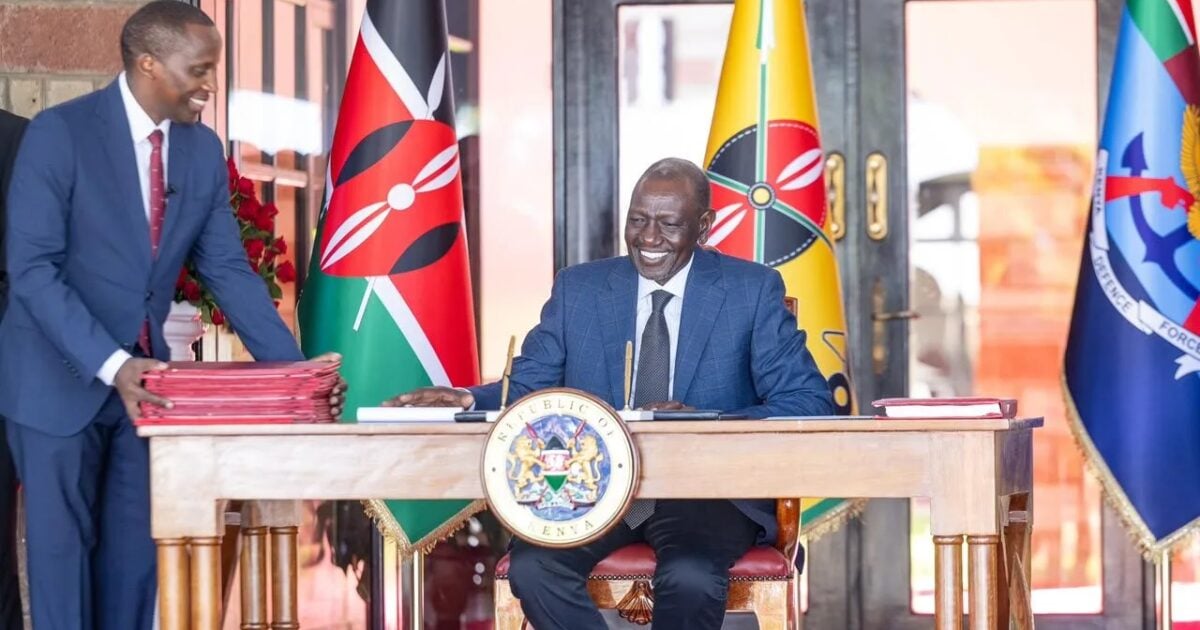
- President Ruto signed two new tax laws on October 16, 2026, affecting tax rates and KRA governance.
- The 8 percent VAT rate on petroleum products (petrol, diesel, kerosene) has been extended for an additional 90 days, with potential for further extension by the Treasury.
- Excise duty calculation for tiles changed from weight to size (Sh400 per square meter), and sanitary ware duty reduced from Sh50 to Sh30 per kilogramme.
- The Kenya Revenue Authority's board composition and funding framework have been altered, linking funding to revenue targets.
- These measures aim to cushion consumers, ease construction costs, and improve revenue collection without introducing new taxes.
Legislative Changes Enacted by President Ruto
The ultimate practical impact of these measures will largely hinge on their effective implementation and whether the intended benefits genuinely reach consumers and businesses across the country.
President William Ruto recently signed two pivotal pieces of legislation on October 16, introducing significant adjustments to Kenya's tax framework and the governance structure of the Kenya Revenue Authority (KRA). These new tax laws in Kenya, specifically the Tax Laws (Amendment) Act, 2026, and the Kenya Revenue Authority (Amendment) Act, 2026, aim to address various economic pressures and enhance revenue collection.
The Tax Laws (Amendment) Act, 2026, primarily focuses on extending a reduced Value Added Tax (VAT) rate for petroleum products and revising excise duties on certain construction materials. Concurrently, the Kenya Revenue Authority (Amendment) Act, 2026, overhauls the KRA's financial mechanisms and board composition, signaling a strategic move towards improved fiscal management and operational efficiency within the revenue body.
Key Provisions Affecting Petroleum and Construction Sectors
A central component of the Tax Laws (Amendment) Act, 2026, is the extension of the 8 percent VAT on petroleum products for an additional 90 days, effective from October 14, 2026. This measure applies to petrol, diesel, and kerosene, maintaining a rate significantly lower than the standard 16 percent. The Cabinet Secretary for the National Treasury retains the authority to prolong this reduced rate for a further 90-day period if deemed necessary. This extension follows the expiration of an earlier 180-day relief, which concluded on October 14, and was designed to buffer consumers against escalating international petroleum prices. Notably, the Energy and Petroleum Regulatory Authority (EPRA) had already factored this 8 percent VAT rate into its fuel price review announced on October 14, effective the following day, despite increases attributed to higher landed costs of imported refined products.
The legislation also introduces critical changes to the Kenya construction materials excise duty. For tiles, the basis for calculating excise duty has shifted from weight to size, with a new rate of Sh400 per square meter, correcting an issue where the previous weight-based system, introduced in June, had inflated costs. Excise duty on sanitary ware, encompassing items like ceramic sinks, wash basins, baths, bidets, water closet pans, flushing cisterns, and urinals, has been reduced from Sh50 to Sh30 per kilogramme. Furthermore, the Act addresses the excise duty treatment of glass products, including imported float glass from East African Community (EAC) countries, to ensure alignment with regional customs frameworks and prevent the imposition of excise duty contrary to the EAC Customs Protocol.
KRA Governance and Revenue Enhancement
The Kenya Revenue Authority (Amendment) Act, 2026, introduces a new framework for KRA's governance and funding. This includes alterations to the composition of the KRA's board, aimed at strengthening oversight and strategic direction. Crucially, the Act establishes a novel funding mechanism for the KRA, directly linking its financial resources to projected revenue and collections that exceed quarterly targets. This KRA Amendment Act 2026 governance model is designed to incentivize and improve overall revenue collection efforts without resorting to the introduction of new taxes.
Outlook and Economic Implications
The overarching goal of these legislative changes, including the Kenya Tax Laws Amendment Act 2026 implications, is multifaceted: to cushion consumers from high fuel prices, alleviate construction costs, and improve the efficiency of revenue collection. However, the ultimate practical impact of these measures will largely hinge on their effective implementation and whether the intended benefits genuinely reach consumers and businesses across the country. The government's stated aim is to prevent a sharper increase in fuel prices, thereby mitigating higher transport costs and the prices of essential goods and services for households.
Stakeholders, particularly motorists and those in the construction sector, will need to closely monitor several factors. For fuel consumers, the key will be whether the 8 percent VAT relief is maintained beyond the initial 90-day period and if the Treasury exercises its power for further extensions. Additionally, future EPRA reviews will be crucial in reflecting changes in international petroleum costs. For the construction industry, the revised excise duties are expected to ease financial burdens, but their full effect will depend on market responses and the pass-through of these savings to end-users.
Practical Implications
Lawyers and compliance officers must update their understanding of tax obligations for clients in the petroleum and construction sectors, specifically regarding the extended 8% VAT on fuel and revised excise duties on construction materials (tiles, sanitary ware, glass). They should also monitor potential further extensions of the fuel VAT rate and adapt to new KRA governance frameworks.
Source
How does this affect you?
Get an AI analysis of this article grounded in your jurisdictions, practice areas, and any policy documents you've uploaded to Wansom.
Finish Reading the Full Story and the Expert Analysis.
Get the latest legal & regulatory intelligence in Kenya
Wansom is AI and can make mistakes.