
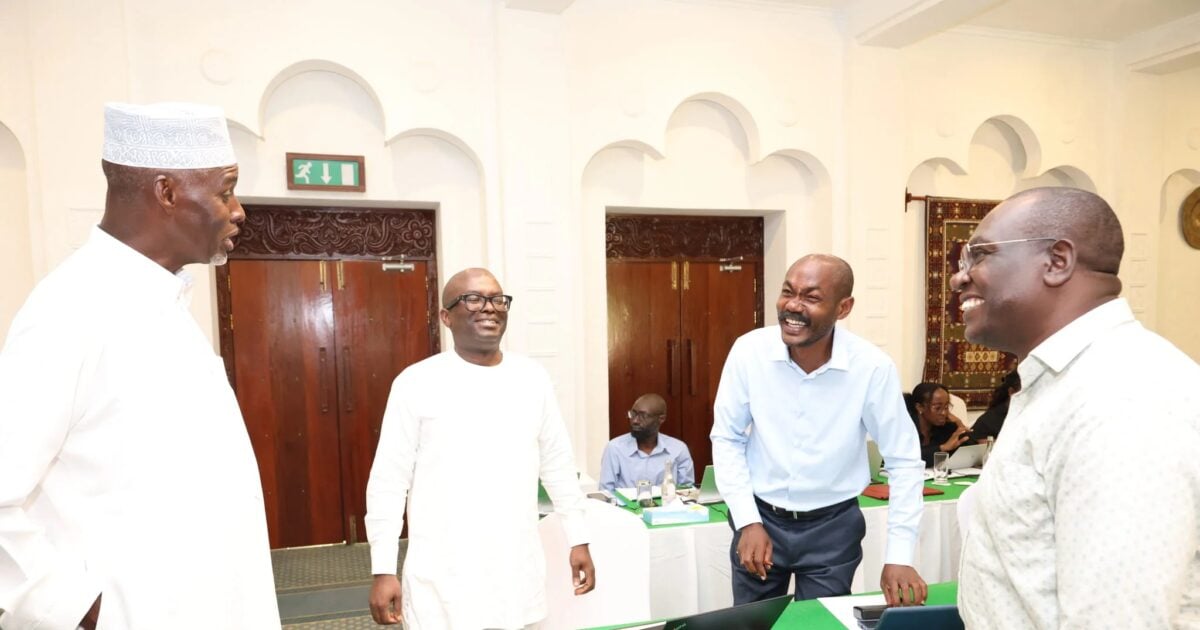
Kenya Supreme Court: Boosts 2027 Election Preparedness with Training
Summary
- Kenya's Supreme Court judges completed a two-day training on electoral dispute resolution to enhance preparedness for the 2027 General Election.
- The training, led by Chief Justice Martha Koome, focused on constitutional frameworks, case management, electoral evidence, and emerging issues like AI and misinformation.
- The Supreme Court holds exclusive original jurisdiction for presidential election petitions, which must be filed within seven days and determined within 14 days.
- This training is part of a continuous capacity-building program extending to all judicial personnel involved in electoral dispute resolution.
- The initiative aims to strengthen the Judiciary's ability to resolve all stages of electoral disputes independently, impartially, and expeditiously.
Judiciary's Proactive Stance
Lawyers advising political parties or candidates in Kenya should note this focus, indicating a need for meticulous case preparation, especially concerning these novel issues.
Kenya's Supreme Court judges recently concluded an intensive two-day training program focused on electoral dispute resolution, signaling the Judiciary's heightened Kenya Supreme Court 2027 election preparedness. This initiative forms a crucial part of a broader strategy to bolster institutional readiness for the timely, fair, and effective adjudication of electoral disputes leading up to the August 2027 General Election.
Chief Justice Martha Koome inaugurated the training, emphasizing the importance of leveraging judicial experience gleaned from the 2013, 2017, and 2022 electoral cycles. Her remarks underscored that robust judicial preparedness is fundamental to upholding electoral justice, maintaining the rule of law, and fostering public confidence in the Judiciary's role as an independent and impartial arbiter of electoral matters. This proactive approach aims to ensure consistent jurisprudence and efficient handling of future petitions.
Training Focus and Scope
The comprehensive training, held on November 9 and 10, was a collaborative effort between the Judiciary Committee on Elections (JCE) and the Kenya Judiciary Academy (KJA). Its curriculum delved into the intricate constitutional and legal framework governing Supreme Court presidential election petitions, alongside best practices for effective case management and the rigorous evaluation of electoral evidence.
Crucially, the program also addressed emerging legal and technological challenges that could impact Kenya electoral dispute resolution, including the implications of artificial intelligence, misinformation, and disinformation. Further topics covered included the scrutiny and recount of votes, interlocutory applications, and strategies for ensuring consistency in electoral jurisprudence, as well as effective judicial communication during the sensitive electoral period. Lawyers advising political parties or candidates in Kenya should note this focus, indicating a need for meticulous case preparation, especially concerning these novel issues.
Legal Framework and Timelines
The Supreme Court's pivotal role in presidential election disputes is enshrined in Article 163(3)(a) of the Constitution, which grants it exclusive original jurisdiction to hear and determine such matters. This constitutional mandate places a significant responsibility on the court to act decisively and impartially.
Article 140 further imposes strict timelines for these high-stakes petitions: they must be filed within seven days following the declaration of results and subsequently determined within 14 days of their filing. These stringent deadlines necessitate exceptional efficiency and preparedness from the Judiciary, reinforcing the importance of the recent training initiatives.
Broader Capacity Building Efforts
The training for Supreme Court judges is not an isolated event but rather an integral component of an ongoing, extensive capacity-building program coordinated by the JCE and KJA. This initiative is systematically being rolled out to a wider audience, encompassing judges, judicial officers, court clerks, and other relevant personnel across various courts and tribunals that exercise electoral dispute resolution jurisdiction.
This comprehensive program is designed to cover disputes arising at all stages of the electoral process, including political party nomination disputes, other pre-election disputes, and post-election petitions. The overarching goal is to fortify the capacity of courts and tribunals to resolve electoral disputes independently, impartially, fairly, and expeditiously, while simultaneously enhancing institutional coordination, operational readiness, and the strategic deployment of judicial personnel and technological systems in anticipation of the 2027 General Election Kenya.
Practical Implications
Lawyers advising political parties or candidates in Kenya should note the Supreme Court's enhanced preparedness for 2027 election petitions, indicating a focus on timely and consistent jurisprudence. This suggests a need for meticulous case preparation, especially concerning emerging issues like AI and misinformation, given the Judiciary's proactive training and capacity building.
Source
How does this affect you?
Get an AI analysis of this article grounded in your jurisdictions, practice areas, and any policy documents you've uploaded to Wansom.
Finish Reading the Full Story and the Expert Analysis.
Get the latest legal & regulatory intelligence in Kenya
Wansom is AI and can make mistakes.