
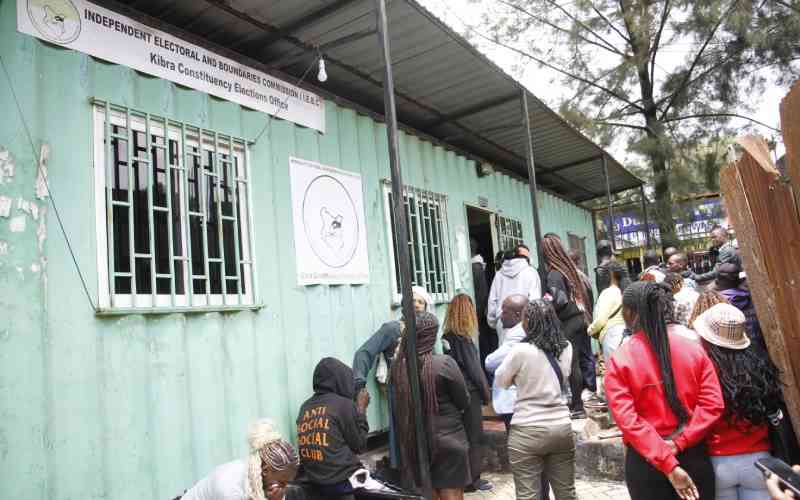
Kenya: Border Vote Smuggling Claims Threaten 2027 Election Integrity
Summary
- Allegations of irregular acquisition of Kenyan identity documents and voter registration are emerging along the Kenya-Uganda border.
- These claims are raising concerns about the integrity of the voters' roll as Kenya approaches the 2027 General Election.
- An investigation by The Standard uncovered testimonies and documents pointing to possible vulnerabilities in citizen identification and voter registration systems.
- Both the National Registration Bureau and the Independent Electoral and Boundaries Commission (IEBC) are under scrutiny due to these findings.
- The reported issues highlight potential challenges to the overall integrity of Kenya's electoral system.
Allegations of Voter Irregularities Emerge
The emerging claims of a vote smuggling ring and identity fraud along the Kenya-Uganda border carry profound implications for the Kenya 2027 election integrity.
As Kenya approaches its 2027 General Election, significant concerns are surfacing regarding the integrity of the national voters' roll, particularly along the Kenya-Uganda border. Reports indicate a pattern of alleged irregular acquisition of Kenyan identity documents and subsequent voter registration, casting a shadow over the electoral process. These claims suggest a potential scheme to manipulate the voter database through illicit means.
An investigation conducted by The Standard has brought these issues to light, compiling testimonies and documentary evidence that point to systemic weaknesses. The findings highlight possible vulnerabilities within the existing frameworks designed to identify citizens and register them as voters. This scrutiny extends directly to key government bodies responsible for these processes.
Both the National Registration Bureau, tasked with issuing national identity documents, and the Independent Electoral and Boundaries Commission (IEBC), responsible for voter registration and managing the electoral roll, are now facing intense examination. The revelations underscore the urgent need for a thorough review of their operational procedures and safeguards to prevent electoral fraud.
Scrutiny on National Registration and Electoral Systems
The core of the issue lies in the alleged exploitation of vulnerabilities within the systems managed by the National Registration Bureau and the IEBC. The investigation suggests that these weaknesses could be allowing individuals to improperly obtain Kenyan identity documents, which are then used to register as voters. This process, if widespread, could significantly compromise the accuracy and legitimacy of the voter registration scrutiny Kenya is currently undergoing.
The integrity of the voters' roll is paramount for any democratic election, and these allegations directly challenge its reliability. The reported incidents of identity fraud along the Kenya-Uganda border raise questions about the robustness of identity verification mechanisms and the potential for non-citizens or individuals without proper documentation to gain electoral access. Such actions could undermine public confidence in the electoral system's ability to accurately reflect the will of legitimate voters.
Addressing these National Registration Bureau vulnerabilities and ensuring stringent oversight of the IEBC voter registration process are critical steps. The testimonies and documents gathered by the investigation provide concrete indications that the current safeguards may be insufficient to prevent sophisticated attempts at electoral manipulation, necessitating immediate and comprehensive reforms.
Implications for the 2027 General Election
The emerging claims of a vote smuggling ring and identity fraud along the Kenya-Uganda border carry profound implications for the Kenya 2027 election integrity. If left unaddressed, these alleged irregularities could lead to a compromised voters' roll, potentially influencing election outcomes and sparking widespread disputes. The focus on the border region highlights a specific area where electoral system challenges may be more pronounced due to geographical and demographic factors.
Ensuring the credibility of the electoral process requires that every registered voter is a legitimate citizen with a valid claim to participate. The current allegations suggest a potential for significant distortion of the voter base, which could erode trust in the entire Kenyan electoral system. Political parties, candidates, and election observers will undoubtedly be closely monitoring how these claims are investigated and resolved, as they could form the basis for future legal challenges.
The integrity of the upcoming general election hinges on the ability of the relevant institutions to swiftly and transparently address these vulnerabilities. The findings of The Standard's investigation serve as a critical warning, emphasizing the need for enhanced security measures, improved verification processes, and greater accountability within both the National Registration Bureau and the Independent Electoral and Boundaries Commission to safeguard the democratic process.
Practical Implications
Lawyers advising political parties, candidates, or involved in election monitoring and petitions should closely track these allegations, as they could form the basis for future electoral disputes or challenges to the integrity of the 2027 General Election voter roll.
Source
How does this affect you?
Get an AI analysis of this article grounded in your jurisdictions, practice areas, and any policy documents you've uploaded to Wansom.
Finish Reading the Full Story and the Expert Analysis.
Get the latest legal & regulatory intelligence in Kenya
Wansom is AI and can make mistakes.