
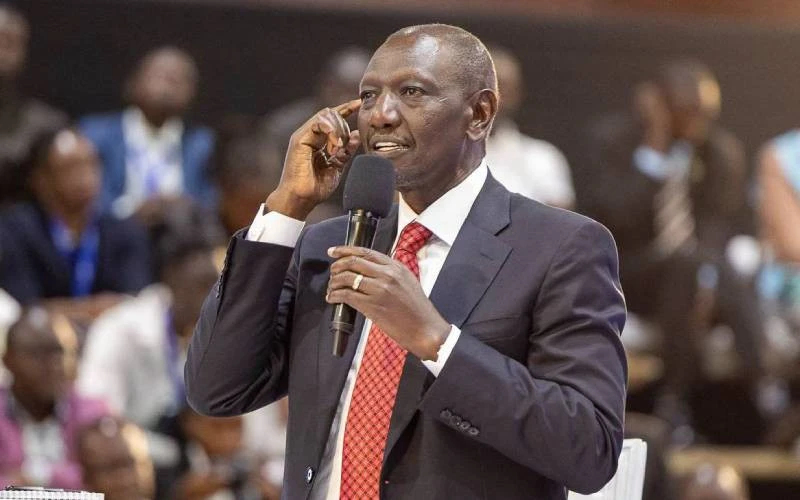
Kenya Ruto: Foreign Informal Trader Crackdown Targets Hawkers
Summary
- President William Ruto has ordered a crackdown on foreign nationals working as hawkers and in petty retail in Kenya, aiming to reserve these low-capital businesses primarily for citizens.
- The enforcement, which began on September 7, is supported by a proposed parliamentary bill and seeks to protect Kenya's economy by prioritizing large-scale foreign investors over small traders.
- While the government assures legally documented foreign traders are protected, the policy has raised concerns about xenophobia and its potential impact on foreign investment.
- Expert analysis suggests the crackdown may be a populist measure ahead of elections, with little evidence it will directly create more opportunities for Kenyans.
Kenya Initiates Crackdown on Foreign Informal Traders
Political economist Sheila Owigo Olang suggests that the timing of this new policy, coinciding with the period leading up to elections, appears "convenient" and may be driven by populist motivations.
President William Ruto has initiated a significant crackdown targeting foreign nationals engaged in informal retail and hawking across Kenya, sparking concerns about potential xenophobia. The directive, which began enforcement on Monday, September 7, aims to reserve small-scale business activities, particularly those requiring minimal capital, primarily for Kenyan citizens. Authorities are actively moving against foreign individuals operating within the country's vast informal economy.
President Ruto articulated this policy as a crucial measure to safeguard Kenya's economic interests. He emphasized that the nation's economic development strategy should prioritize foreign investors who contribute substantial capital, generate employment opportunities, and bolster local production, rather than small-time traders. He explicitly stated that the investor confidence cultivated by his administration is intended for significant investors, not for hawkers or petty retailers, and urged those involved in such small businesses to cease operations. This move follows a notable increase in informal traders from China operating within Kenya.
Government Stance and Public Reactions
While the government has commenced this enforcement, it maintains that foreign traders who are legally documented and compliant with existing regulations will remain protected. However, President Ruto highlighted the existence of a parliamentary bill designed to restrict certain trading activities exclusively to Kenyan citizens, underscoring the legislative intent behind the current actions. This legislative push aims to prevent foreign nationals from competing with citizens in business sectors that require little initial investment.
The Kenya Ruto foreign informal trader crackdown has elicited diverse reactions among Kenyans. Many have expressed support, viewing the measure as a necessary step to reclaim job opportunities in a challenging economic climate. For instance, Nairobi resident James Mwaurah welcomed the president's initiative, noting the high unemployment rate among Kenyans who often find themselves competing with foreign workers willing to accept lower wages.
Conversely, others, while endorsing the enforcement of Kenya immigration enforcement foreign nationals and business regulations, cautioned against simply expelling foreigners. Babu Claudius, another local resident, stressed Kenya's ongoing need for foreign workers and international business, warning that aggressive expulsions could deter potential investors. A common sentiment, shared by Claudius and many others, is the insistence that foreign nationals must operate within the country legally.
Legal Framework and Economic Realities
The government's actions are underpinned by the stated intention to enforce existing immigration laws and business regulations, alongside the anticipation of a forthcoming parliamentary bill. This proposed Kenya foreign small business law seeks to formally delineate specific trading activities as off-limits to foreign participation. Official figures from 2024 indicate that Kenya's informal sector employs approximately 17.4 million people, with a significant majority—eight out of ten—engaging in registered business dealings.
For a considerable portion of this population, including foreign nationals, operating a small shop or engaging in hawking within the informal economy represents one of the most accessible avenues for earning a livelihood, regardless of their legal status. The policy aims to address the perceived imbalance where foreign nationals are seen to be dominating low-capital ventures, thereby impacting local entrepreneurs. The emphasis on reserving these sectors for citizens is a key component of the broader strategy to protect the domestic economy and ensure that economic opportunities, particularly at the grassroots level, benefit Kenyans directly. This evolving regulatory landscape underscores a shift towards more stringent control over foreign involvement in the country's informal commercial activities, effectively acting as a Kenya foreign hawker ban in certain sectors.
Broader Implications and Expert Perspectives
The intensified focus on President William Ruto foreign traders has ignited concerns about rising xenophobia within Kenya. Political economist Sheila Owigo Olang suggests that the timing of this new policy, coinciding with the period leading up to elections, appears "convenient" and may be driven by populist motivations. Olang questions the direct efficacy of such a crackdown, noting a lack of evidence to suggest that removing foreign traders would immediately translate into increased opportunities for Kenyan nationals. She characterizes the policy as a "feel good" measure designed to resonate with the electorate ahead of the polls.
Furthermore, Olang posits that the policy could send an unsettling message to the international investment community, potentially causing foreign investors to "coil back," "freeze," or defer their decisions until after the elections. She argues that for Kenya to genuinely enhance its attractiveness to serious foreign investment, the government should instead concentrate on tackling fundamental structural issues, such as corruption and improving its Ease of Doing Business Index, rather than targeting small-scale foreign traders. The potential for deterring investors, as highlighted by local residents, remains a significant concern in the long-term economic outlook, impacting Kenya informal sector business regulations.
Practical Implications
Lawyers should advise foreign national clients operating in Kenya's informal retail or hawking sectors on the immediate risk of business closure and potential deportation, and monitor the progress of the proposed parliamentary bill restricting foreign participation in low-capital businesses. Compliance officers must assess their organization's exposure regarding foreign workers in these sectors and understand the evolving regulatory landscape for foreign presence in Kenya.
Source
Source: Original reporting via DW News
How does this affect you?
Get an AI analysis of this article grounded in your jurisdictions, practice areas, and any policy documents you've uploaded to Wansom.
Finish Reading the Full Story and the Expert Analysis.
Wansom is AI and can make mistakes.