
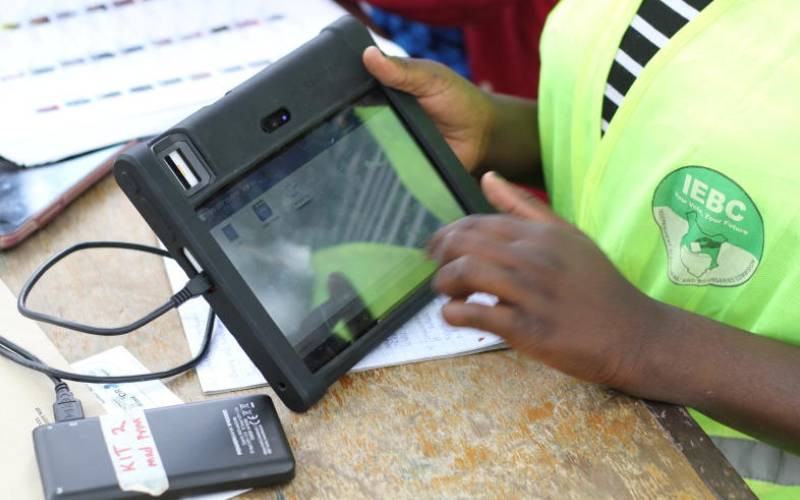
Kenya: Ruto Allies Defend IEBC Tender Amid Gachagua Criticism
Summary
- President William Ruto's allies, led by National Assembly Speaker Moses Wetang'ula, have strongly criticized former Deputy President Rigathi Gachagua and the Opposition.
- The criticism stems from Gachagua and the Opposition's concerns regarding the Independent Electoral and Boundaries Commission's (IEBC) procurement processes for the 2027 General Election.
- Ruto's allies accused the Opposition of blackmail and warned that political interference in IEBC procurement could undermine public confidence in the upcoming election.
- The dispute highlights significant political tensions surrounding the independence and operational integrity of the electoral body in Kenya.
Political Tensions Flare Over IEBC Procurement
Lawyers advising clients involved in electoral technology or materials procurement for the 2027 General Election should closely monitor this political rhetoric surrounding the IEBC's independence and procurement processes.
A significant political confrontation has erupted in Kenya, with key allies of President William Ruto strongly defending the Independent Electoral and Boundaries Commission (IEBC) against recent criticisms. The National Assembly Speaker, Moses Wetang'ula, spearheaded a robust counter-attack targeting former Deputy President Rigathi Gachagua and the broader Opposition. This dispute centers on the electoral body's procurement processes, particularly concerning technology and other essential materials for the upcoming 2027 General Election.
The Ruto allies' response was characterized as a scathing attack, directly addressing the concerns raised by Gachagua and the Opposition regarding the IEBC's operational integrity. Their defense of the electoral agency underscores a growing sensitivity within the ruling coalition to any perceived attempts to undermine the institution responsible for managing future elections. The political rhetoric suggests a deep division over the appropriate level of scrutiny and influence that political actors should exert over the IEBC's internal affairs, especially its tendering activities.
Central to the allies' argument is the assertion that the Opposition's criticisms amount to blackmail. This accusation frames the dissent as a deliberate tactic to exert undue pressure on the IEBC, rather than legitimate oversight. The heightened tension surrounding these **Ruto allies Gachagua IEBC tender** concerns highlights the volatile political landscape in Kenya as the nation approaches its next electoral cycle. The public exchange serves as a clear indicator of the political stakes involved in the management and perception of the electoral body's independence and efficiency.
Warnings Issued Against Undermining Electoral Confidence
Leaders aligned with President Ruto issued a stern warning regarding the potential consequences of political interference in the IEBC's procurement functions. They cautioned that any attempts by politicians to dictate the methods or specifics of how the electoral agency acquires technology and other critical election materials could severely erode public trust in the integrity of the 2027 General Election. This warning from figures like **Moses Wetangula IEBC defense** underscores the perceived fragility of public confidence in electoral processes.
The concern articulated by these leaders is that such political interventions could be interpreted as an effort to manipulate the electoral playing field, thereby casting a shadow over the fairness and transparency of future polls. The procurement of electoral technology and materials is a sensitive area, often subject to intense scrutiny due to its direct impact on the conduct and outcome of elections. Therefore, the public debate surrounding the **Independent Electoral Boundaries Commission Kenya**'s tendering practices is not merely about administrative efficiency but about the foundational principles of democratic governance.
This public admonition serves as a strategic move to insulate the IEBC from what the ruling coalition views as unwarranted political pressure. By framing the criticisms as detrimental to public confidence, the allies aim to delegitimize the arguments put forth by **Rigathi Gachagua IEBC criticism** and the Opposition. The ongoing **electoral agency procurement disputes** are thus not just about specific tenders but about the broader narrative of electoral independence and the legitimacy of the upcoming 2027 General Election in Kenya.
Legal and Regulatory Context for 2027 Election Procurement
The current political skirmish over the IEBC's procurement processes occurs within a critical legal and regulatory framework governing elections in Kenya. The integrity of the **Kenya IEBC 2027 election procurement** is paramount, as the acquisition of technology and materials must adhere to established public procurement laws designed to ensure transparency, fairness, and accountability. Any perceived deviation or political influence in these processes can trigger legal challenges and further erode public trust, as highlighted by the recent political exchanges.
The warnings from President Ruto's allies about undermining public confidence directly relate to the legal and constitutional mandate of the IEBC as an independent body. Its ability to conduct procurement without undue political interference is a cornerstone of its independence. When politicians attempt to dictate these processes, it raises questions about adherence to procurement regulations and the potential for legal disputes that could delay or complicate preparations for the 2027 General Election.
Lawyers advising clients involved in electoral technology or materials procurement for the 2027 General Election should closely monitor this political rhetoric surrounding the IEBC's independence and procurement processes. Such public disputes can indicate potential risks of tender challenges or delays, necessitating a proactive approach to compliance and risk management. The current climate suggests that any future tenders by the IEBC will likely face intense scrutiny, both politically and potentially legally, making robust legal counsel essential for all stakeholders.
Practical Implications
Lawyers advising clients involved in electoral technology or materials procurement for the 2027 General Election should monitor political rhetoric surrounding the IEBC's independence and procurement processes, as such disputes can indicate potential risks of tender challenges or delays.
Source
How does this affect you?
Get an AI analysis of this article grounded in your jurisdictions, practice areas, and any policy documents you've uploaded to Wansom.
Finish Reading the Full Story and the Expert Analysis.
Wansom is AI and can make mistakes.