
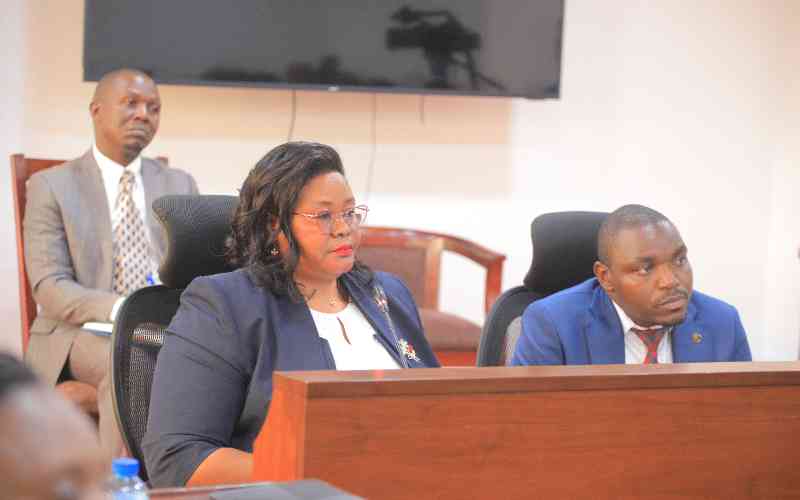
Kenya Parliament: Launches Secondary School Fees Probe Over Irregularities
Summary
- A parliamentary committee is investigating inconsistencies in secondary school capitation funding, student enrollment, and NEMIS data based on an Auditor-General's report.
- Several national schools were found to have charged parents additional fees above the approved Sh53,000 annual amount, contrary to Regulation 44 of the Basic Education Regulation 2015.
- School principals reported receiving an average of Sh15,000 per learner annually, significantly less than the expected Sh22,244, due to NEMIS discrepancies.
- Alliance High School collected Sh17.6 million in irregular fees and reported Sh36 million in arrears, with its principal citing insufficient approved fees to maintain standards.
- The National Assembly Public Investments Committee is considering a review of the secondary school fee structure due to concerns over insufficient capitation and rising operational costs.
What Happened
This practice directly contravenes Regulation 44 of the Basic Education Regulation 2015, which explicitly states that no public school or institution is permitted to issue an alternative fee structure without the express approval of the Cabinet Secretary.
The Kenyan Parliament has initiated a comprehensive **Kenya Parliament secondary school fees probe**, scrutinizing an **Auditor-General report Kenya schools** that reveals significant financial and administrative irregularities within public secondary institutions. The **National Assembly Public Investments Committee on Governance and Education**, under the leadership of Luanda MP Dick Maungu, is spearheading this inquiry. Their investigation has brought to light widespread inconsistencies concerning capitation funding, reported student enrollment figures, and data within the National Education Management Information System (NEMIS).
Concerns have been raised by the committee regarding the detrimental effects of these funding shortfalls on the day-to-day operations of schools. The parliamentary body has called for urgent discussions with officials from the Ministry of Education to address these pressing challenges. Furthermore, the committee is actively exploring the necessity of reviewing the current secondary school fee structure, prompted by worries that existing capitation amounts are insufficient to cover the escalating operational costs faced by these institutions.
The Auditor-General's findings specifically highlighted that several national schools, categorized as C1, had levied additional fees on parents beyond the officially approved annual amount of Sh53,000. These schools cited rising costs and inflationary pressures as justifications for these extra charges. Members of Parliament also questioned significant disparities observed between the capitation funds disbursed to schools and the actual number of students enrolled, a discrepancy that school principals contend has directly led to underfunding.
Legal and Financial Non-Compliance
For the first time, chief principals from prominent national schools, including Alliance High School, Alliance Girls, Bishop Gatimu Ngandu Girls, Limuru Girls, Mang'u High, Kenya High School, Pangani Girls, and Kabare Girls, appeared before a parliamentary committee to respond to audit queries. These administrators uniformly reported difficulties in validating learner data within NEMIS, indicating that the capitation received by their institutions did not adequately cover all enrolled students. They revealed that, on average, schools received approximately Sh15,000 per learner annually, significantly less than the expected Sh22,244.
A key focus of the **Kenya school capitation audit** was Alliance High School, whose audit report flagged an irregular increase in school fees, resulting in the collection of Sh17.6 million from parents. The school was found to have charged Sh68,554, which represents an increase of Sh15,000 per student annually above the approved Sh53,554. This practice directly contravenes Regulation 44 of the **Basic Education Regulation 2015 fees**, which explicitly states that no public school or institution is permitted to issue an alternative fee structure without the express approval of the Cabinet Secretary.
Alliance High School's Chief Principal, David Kamau, acknowledged that the school had sought alternative funding, but asserted that this initiative originated from parents. He argued that the Ministry-approved fee of Sh53,000 was inadequate to sustain the school's budget, particularly given rising costs and the imperative to maintain the institution's established standards. Kamau further explained that parents approved these additional levies at an Annual General Meeting, and the school subsequently submitted a request for approval to the Ministry, though this authorization was never granted. The audit also identified substantial fee arrears across nearly all schools, with Alliance High School alone reporting arrears amounting to Sh36 million. Kenya High School's Chief Principal, Rev Edith Koech, was similarly questioned regarding unapproved fees.
Systemic Challenges and Future Outlook
The parliamentary probe underscores systemic challenges within Kenya's education financing framework, particularly the impact of **NEMIS discrepancies Kenya schools** face. The testimony from school principals highlights a critical disconnect between official data, actual student numbers, and the capitation funds disbursed, leading to chronic underfunding. This situation forces schools to either compromise on educational standards or seek unauthorized additional contributions from parents, placing a burden on households and creating an uneven playing field.
The committee's consideration of a review of the secondary school fee structure indicates a recognition that the current financial model may be unsustainable for schools striving to maintain quality education amidst rising operational expenses. The Auditor-General's report and the subsequent parliamentary inquiry serve as a significant signal to all public secondary schools regarding the strict enforcement of approved fee guidelines and the critical importance of accurate reporting through NEMIS. The ongoing discussions with the Ministry of Education are expected to address these multifaceted issues, potentially leading to policy adjustments or stricter compliance measures to ensure financial transparency and equitable access to education.
Practical Implications
Lawyers advising public secondary schools in Kenya should note the ongoing parliamentary probe into fee structures and capitation, particularly the Auditor-General's findings on non-compliance with Regulation 44 of the Basic Education Regulation 2015. This scrutiny signals potential enforcement actions or policy changes regarding school financing and fee collection, requiring institutions to review their compliance with approved fee guidelines and NEMIS reporting.
Source
How does this affect you?
Get an AI analysis of this article grounded in your jurisdictions, practice areas, and any policy documents you've uploaded to Wansom.
Finish Reading the Full Story and the Expert Analysis.
Get the latest legal & regulatory intelligence in Kenya
Wansom is AI and can make mistakes.