
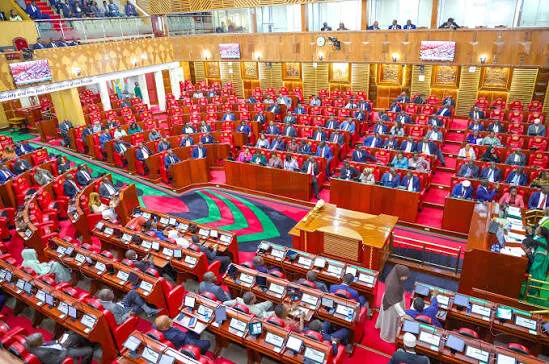
Kenya National Assembly: Approves 1/3 Voter Threshold for MP Recall Bill
In Kenya, the National Assembly recently approved amendments to the Elections Amendment (No. 2) Bill, Senate Bill No. 29 of 2024, establishing a one-third voter threshold for initiating the recall of a Member of Parliament and a simple majority for determining the winner of a recall by-election, sending the Bill back to the Senate for concurrence.
This legislative development is highly significant for Kenya's democratic governance and electoral integrity, as it refines the mechanism for holding elected representatives accountable to their constituents. The establishment of a specific, albeit high, threshold for recall petitions aims to balance the need for accountability with the prevention of frivolous or politically motivated recall attempts that could destabilize parliamentary representation. For political parties and individual Members of Parliament, it introduces a tangible risk of early removal from office if they fail to meet public expectations, potentially influencing their conduct and policy decisions.
The recall provision is rooted in the Kenyan Constitution, which provides for the recall of elected representatives. The Elections Amendment (No. 2) Bill, Senate Bill No. 29 of 2024, seeks to operationalize this constitutional provision by setting out the procedural and substantive requirements. The legislative process involves both the National Assembly and the Senate, with the current stage requiring concurrence between the two Houses. If differences persist, the Bill will proceed to mediation, a critical step in resolving legislative stalemates as outlined in the Constitution and parliamentary standing orders. The proposed thresholds for recall (one-third of registered voters in every ward for an MP, or in every constituency for a Senator) and the simple majority for the by-election are key statutory details.
The key parties involved in this legislative process are the National Assembly, the Senate, and Hon. Kimani Kuria, who moved the amendment to Clause 26A. The Bill ultimately affects all Members of the National Assembly and Senators, as well as the electorate who would initiate or participate in recall elections. The debate surrounding the threshold for recall highlights the differing views within the legislature on balancing accountability with stability.
Electoral law practitioners and political advisors must closely monitor the progress of this Bill through the Senate and any subsequent mediation, as its final form will significantly impact electoral strategies and the legal framework for challenging or defending parliamentary seats. Businesses and civil society organizations involved in governance and advocacy should understand these new accountability mechanisms. The precise wording of the final legislation will be crucial for advising clients on the feasibility and legal requirements of initiating or defending against recall petitions. The outcome of the Bill's passage through the Senate and potential mediation is yet to be determined.
How does this affect you?
Get an AI analysis of this article grounded in your jurisdictions, practice areas, and any policy documents you've uploaded to Wansom.
Finish Reading the Full Story and the Expert Analysis.
Get the latest legal & regulatory intelligence in Kenya
Wansom is AI and can make mistakes.