
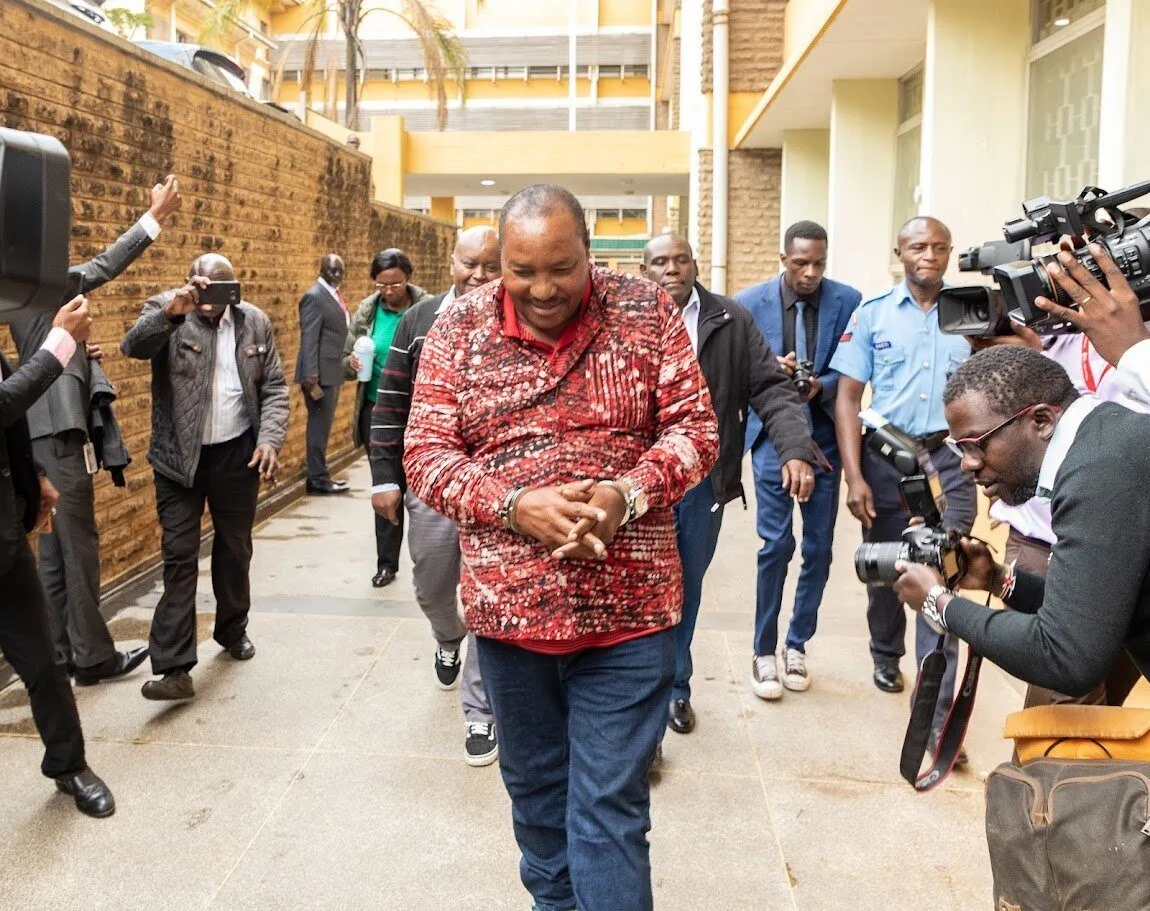
Kenya High Court: Waititu Money Laundering Charges Reinstated
Summary
- The Kenya High Court reinstated money laundering charges against former Kiambu Governor Ferdinand Waititu and co-accused on October 14, 2026.
- The court also upheld their corruption convictions related to a Sh588 million Kiambu County road tender from 2017/2018.
- The Ethics and Anti-Corruption Commission (EACC) lauded the reinstatement, viewing it as crucial for tracing proceeds of corruption.
- Waititu and his associates were initially convicted on February 12, 2025, for offenses including conflict of interest and abuse of office.
- The EACC is separately pursuing Sh170 million in civil recovery and has secured Sh131.2 million in asset forfeiture against Waititu and associated parties.
High Court Reinstates Money Laundering Charges Against Former Kiambu Governor
The High Court's decision to reinstate the money laundering charges against Ferdinand Waititu and his co-accused holds significant implications for anti-corruption enforcement in Kenya.
In a significant legal development, the High Court in Kenya has reinstated money laundering charges against former Kiambu Governor Ferdinand Waititu, his wife Susan Wangari Ndungu, and two associates. This decision, delivered on October 14, 2026, by Justice Rose Ougo of the Anti-Corruption and Economic Crimes Court, simultaneously upheld their prior corruption convictions and sentences. The charges are linked to alleged irregularities surrounding a Sh588 million road tender awarded by the Kiambu County Government during the 2017/2018 financial year, a contract that involved upgrading gravel roads to bitumen standards across several sub-counties including Thika, Limuru, Gatundu North, Juja, and Ruiru.
The Ethics and Anti-Corruption Commission (EACC) has expressed strong approval for the court's decision, particularly highlighting the reinstatement of the money laundering counts. The commission views this aspect of the ruling as crucial for its ongoing efforts to trace and recover suspected proceeds of corruption, emphasizing its strategy to "follow the money" in such investigations. This judicial action effectively overturns a lower court's previous acquittal of the accused on these specific financial charges, intensifying the legal scrutiny on the financial trail associated with the controversial road contract.
Unpacking the Corruption Convictions and Legal Framework
The High Court's recent judgment affirms convictions initially handed down on February 12, 2025, against Waititu and his co-accused. These prior convictions encompassed a range of serious offenses, including conflict of interest, dealing with suspicious property, abuse of office, fraudulent procurement practices, and wilful failure to comply with established procurement laws and regulations. Besides Governor Waititu and his wife, those whose convictions were upheld include Luka Mwangi Wahinya, who served as the former Kiambu County Chief Officer for Roads, Transport, Public Works and Utilities, and Charles Chege Mbuthia, a director of Testimony Enterprises Limited, the company at the center of the Sh588 million tender.
The legal proceedings stemmed from investigations initiated in 2019, which focused on allegations that Testimony Enterprises Limited had been improperly awarded the substantial contract to upgrade roads within Kiambu County. The Anti-Corruption and Economic Crimes Court, presided over by Justice Ougo, has been central to these complex cases, ensuring that accountability is pursued through the judicial system for alleged misuse of public funds and breaches of public trust. The reinstatement of money laundering charges Kenya now adds another layer of legal consequence to these already established corruption findings.
EACC's Multi-Front Battle for Asset Recovery
Beyond the criminal convictions and the reinstated money laundering charges, the Ethics and Anti-Corruption Commission is actively pursuing several separate legal avenues to recover assets and funds believed to be illicitly acquired. One such ongoing effort is a civil case where the EACC seeks to recover Sh170 million from Ferdinand Waititu and Testimony Enterprises Limited, which the commission alleges represents proceeds of corruption. This civil recovery suit remains pending determination, indicating the EACC's persistent strategy to reclaim public resources.
Furthermore, the EACC successfully secured forfeiture orders in December 2025 in an unrelated unexplained wealth case. This action resulted in the forfeiture of assets valued at approximately Sh131.2 million, which were linked to Waititu and his associated parties. The forfeited properties included assets in Thindigua worth about Sh64 million, a Caterpillar machine valued at approximately Sh11 million, two motor vehicles, property associated with Susan Wangari Ndungu valued at about Sh3 million, and property connected to Saika Two Estate Developers Limited amounting to approximately Sh52 million. These distinct legal actions underscore the EACC's comprehensive approach to combating corruption, extending beyond criminal prosecution to robust asset recovery efforts.
Implications for Anti-Corruption Enforcement
The High Court's decision to reinstate the money laundering charges against Ferdinand Waititu and his co-accused holds significant implications for anti-corruption enforcement in Kenya. It reinforces the EACC's ability to pursue the financial aspects of corruption cases, even after initial acquittals, thereby strengthening the framework for asset tracing and recovery. The commission's emphasis on "following the money" is central to dismantling corruption networks and ensuring that illicit gains are not retained.
This ruling also sets the stage for further legal proceedings, with the matter scheduled to return to court on October 19, 2026, for mitigation and sentencing specifically on the reinstated money laundering charges. The persistent pursuit of these charges, alongside the upheld corruption conviction and ongoing EACC asset recovery efforts, signals a robust and sustained commitment by Kenyan authorities to combat financial crimes and public sector graft. This outcome serves as a clear indication of the high stakes involved in cases of Kiambu County road tender fraud and the comprehensive legal tools being deployed to address them.
Practical Implications
Lawyers and compliance officers should note the EACC's persistent strategy to pursue asset recovery and money laundering charges, even after initial acquittals, indicating a high risk of continued legal action and forfeiture proceedings in corruption cases. This ruling reinforces the need for rigorous financial due diligence and robust anti-corruption compliance frameworks, particularly concerning public procurement contracts in Kenya.
Source
How does this affect you?
Get an AI analysis of this article grounded in your jurisdictions, practice areas, and any policy documents you've uploaded to Wansom.
Finish Reading the Full Story and the Expert Analysis.
Get the latest legal & regulatory intelligence in Kenya
Wansom is AI and can make mistakes.