
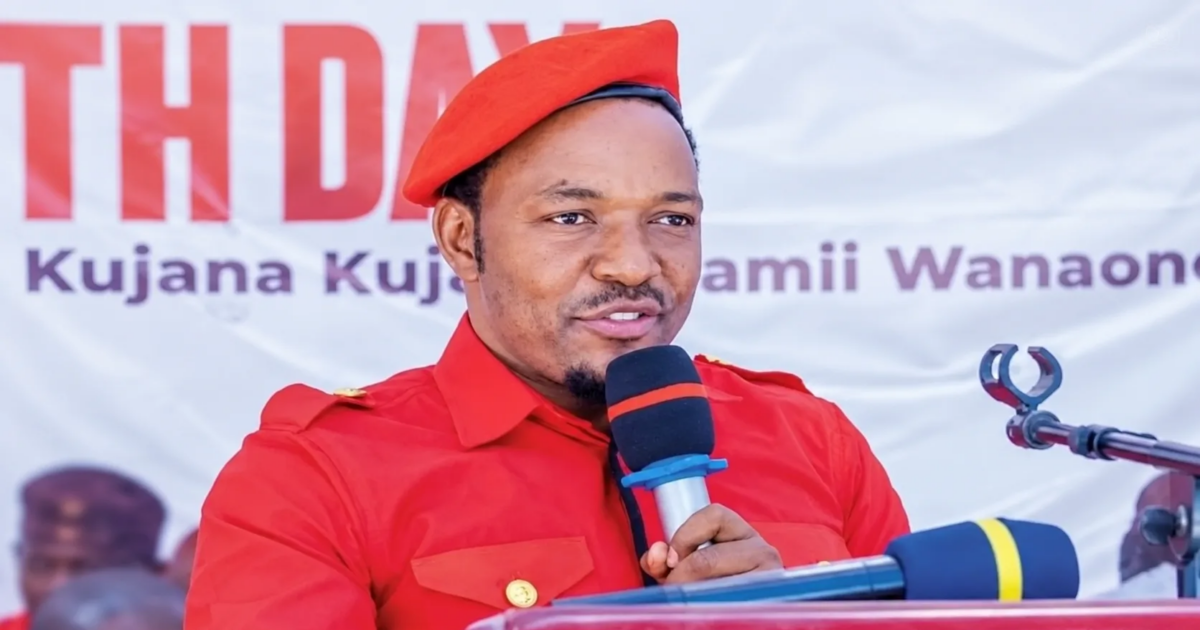
Kenya High Court Twaha Mwaipaya Order: Agencies Must Produce Activist
Summary
- The High Court of Kenya has ordered security agencies to produce missing Tanzanian activist Twaha Mwaipaya, dead or alive, by November 2.
- Justice Alexander Muteti issued the urgent directive following a petition filed by human rights organization Vocal Africa.
- Mwaipaya was reportedly abducted in Kamulu, Machakos County, on October 25, prompting concerns from Amnesty International Kenya and the Defenders Coalition.
- The court demands security chiefs explain the circumstances of Mwaipaya's arrest and detention and why he should not be released.
- Fellow Tanzanian activist Maria Sarungi expressed fears that Mwaipaya could be forcibly returned to Tanzania, where she believes his life would be at risk.
Court Mandates Production of Missing Activist
Justice Muteti's order underscores the judiciary's commitment to due process, demanding that security chiefs appear before the court to clarify the reasons behind Mwaipaya's arrest and detention, and to justify why he should not be granted immediate release.
The High Court of Kenya has issued a directive compelling national security agencies to present Tanzanian activist Twaha Mwaipaya, either alive or deceased, before the court by Monday, November 2. This urgent order, handed down by Justice Alexander Muteti on Friday, October 30, also demands a comprehensive explanation regarding the circumstances of Mwaipaya's reported arrest and subsequent detention. The directive follows an application lodged by the human rights organization Vocal Africa on October 27, 2026, which sought the activist's immediate production.
The court's mandate specifies that Mwaipaya must appear by 11 am on November 2, accompanied by his original detention warrant. Furthermore, the security agencies are required to demonstrate why he should not be released from custody. This judicial intervention comes amidst growing alarm from various human rights groups concerning Mwaipaya's whereabouts after he was reportedly abducted in Kamulu, Machakos County, on October 25.
Reports from organizations like Amnesty International Kenya and the Defenders Coalition indicate that Mwaipaya was seized around 2 pm while en route to visit friends via taxi. Eyewitness accounts suggest that the alleged abductors were traveling in three distinct vehicles, one of which was identified as a Toyota Land Cruiser hardtop. While these organizations have voiced grave concerns and called for immediate action to ascertain his location and ensure his safety, the precise details surrounding the abduction, the identities of those involved, and Mwaipaya's current status have not been independently verified by them.
Judicial Scrutiny and Due Process
Justice Muteti's order underscores the judiciary's commitment to due process, demanding that security chiefs appear before the court to clarify the reasons behind Mwaipaya's arrest and detention, and to justify why he should not be granted immediate release. The court instructed that all respondents and any interested parties be served with the application and the court order by the close of business on Friday, with their formal responses mandated by 9 am on Monday, November 2.
The case is slated for further directions and orders at 11 am on November 2, coinciding with the deadline for Mwaipaya's production. This stringent timeline reflects the urgency with which the High Court is treating the matter, emphasizing accountability for state actors in cases of alleged forced disappearance or unlawful detention. The order explicitly states that the respondents must produce the activist "live or dead" and "show cause why the subject should not be immediately released from custody," reinforcing the gravity of the situation.
Cross-Border Concerns and Activist Safety
The disappearance of Twaha Mwaipaya has ignited significant apprehension among human rights advocates, particularly given the historical context of similar incidents involving Tanzanian government critics in Kenya. Maria Sarungi, a prominent Tanzanian activist known for her criticism of President Samia Suluhu Hassan, voiced profound concerns that Mwaipaya could face forced repatriation to Tanzania, where she fears for his life. Sarungi herself was reportedly abducted in Nairobi in January 2025, only to be released later the same day, and subsequently attributed her abduction to the Tanzanian government.
Sarungi alleged that Mwaipaya had previously sought refuge in Kenya after enduring abduction and severe torture at the hands of Tanzanian police. While her claims regarding his past mistreatment and the specifics of the current incident remain unverified independently, her stark warning, "If Twaha is crossed to Tanzania they will kill him!", has amplified calls for heightened vigilance at the border. Her use of the hashtag #FreeTwahaMwaipaya highlights the broader implications for the safety of Tanzanian human rights defenders and government critics operating within Kenya, raising questions about cross-border cooperation and the protection of asylum seekers.
Practical Implications
This ruling reinforces the High Court's commitment to due process and the right to liberty, signaling that lawyers can effectively leverage habeas corpus applications to challenge unlawful detentions and forced disappearances by state agencies in Kenya. It also highlights potential cross-border human rights implications for foreign nationals, requiring vigilance from compliance officers regarding the treatment of individuals across borders.
Source
How does this affect you?
Get an AI analysis of this article grounded in your jurisdictions, practice areas, and any policy documents you've uploaded to Wansom.
Finish Reading the Full Story and the Expert Analysis.
Wansom is AI and can make mistakes.