
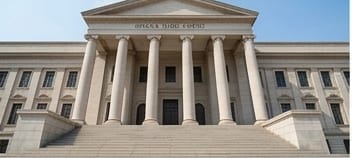
High Court: Dismisses LSK Boycott Objection, Constitutional Challenge Proceeds
Summary
- The High Court dismissed the Law Society of Kenya's (LSK) preliminary objection, allowing a constitutional challenge against its judicial boycott directives to proceed.
- Justice David Mburu ruled that the petition, filed by lawyer Dr. Adrian Kamotho Njenga, raises constitutional questions beyond the scope of LSK's internal dispute resolution mechanisms.
- The LSK had initiated a nationwide and targeted boycott in July, citing concerns over judicial accountability and alleged misconduct by specific judges.
- The court found that the dispute affects a wide range of stakeholders, including advocates, litigants, and judicial officers, and falls under the High Court's constitutional jurisdiction.
- The ruling ensures that the legality of professional body directives impacting access to justice and judicial independence will be fully examined.
High Court Paves Way for Constitutional Challenge to LSK Boycott
Justice Mburu's ruling ensures that the substantive issues raised regarding the professional body's conduct and its impact on the justice system will be thoroughly examined.
The High Court has rejected a preliminary objection filed by the Law Society of Kenya (LSK), thereby clearing the path for a full constitutional challenge against the Society's directives concerning judicial boycotts. Justice David Mburu delivered the ruling on Thursday, dismissing the LSK's attempt to strike out the case at an early stage. This decision means that a petition brought by lawyer Dr. Adrian Kamotho Njenga, which questions the legality and constitutionality of the LSK's actions, will now proceed to be heard on its merits.
LSK's Boycott Directives and Their Rationale
The legal dispute originates from a series of resolutions and communications issued by the LSK in July, which included a nationwide court boycott on July 22. Additionally, the Society initiated an indefinite targeted boycott against specific judges and judicial officers. The LSK justified these measures by citing concerns over judicial accountability, alleged misconduct, and persistent delays in the administration of justice, alongside other challenges impacting both the legal profession and court users.
The targeted boycott specifically focused on judicial officers and judges who, according to the LSK, had obtained court orders to prevent the Judicial Service Commission (JSC) or the Ethics and Anti-Corruption Commission (EACC) from processing complaints lodged against them. Under the guidelines issued by the LSK, advocates appearing before these targeted judicial officers were instructed to seek adjournments, request case transfers, or move for recusal. Furthermore, the LSK directed that affected judges should only deliver pending rulings and judgments, refraining from presiding over new hearings until the disciplinary issues surrounding them were resolved.
Legal Arguments: Internal Mechanisms vs. Constitutional Rights
The LSK's preliminary objection hinged on the argument that Dr. Kamotho Njenga should have first exhausted the internal dispute-resolution mechanisms outlined in Regulations 95 and 96 of the Law Society of Kenya (General) Regulations, 2020. The Society contended that these provisions offer avenues such as negotiation, conciliation, mediation, and arbitration for resolving disputes involving the LSK, its members, and its governance functions. Consequently, the LSK asserted that the High Court had been approached prematurely and therefore lacked the necessary jurisdiction to hear the petition.
However, Justice Mburu rejected this argument, emphasizing that the dispute, as presented, transcended a mere disagreement between the LSK and one of its members. The court found that the petition raises fundamental constitutional questions affecting a broad spectrum of stakeholders, including advocates, litigants, judges, judicial officers, and other court users. The judge clarified that an arbitrator operating under Regulation 96 would not possess the jurisdiction to address the constitutional questions or grant the comprehensive constitutional remedies sought. Therefore, the court concluded that the doctrine of exhaustion did not preclude Dr. Kamotho from bringing the matter before the High Court, especially given that the petition involves parties beyond the LSK and its membership, such as the Judicial Service Commission.
Implications for Professional Body Directives and Judicial Independence
This ruling signifies a crucial development for the legal profession in Kenya, ensuring that the legality and constitutionality of the LSK's targeted judicial boycotts will be thoroughly litigated. Dr. Kamotho Njenga's challenge argues that the boycott measures threaten fundamental principles such as access to justice, the right to legal representation, and the independence of the judiciary. He further contended that these directives could impede judges and judicial officers from fulfilling their constitutional duties.
Justice Mburu's decision to allow the case to proceed underscores the High Court's constitutional jurisdiction under Article 165 to interpret the Constitution and determine potential violations of rights and freedoms. The outcome of this case could establish a significant precedent regarding the boundaries of professional bodies' powers to issue directives that impact the broader justice system, particularly when such directives are perceived to infringe upon constitutional guarantees. It transforms what the LSK argued was an internal governance matter into a public constitutional dispute, with far-reaching implications for professional conduct and the administration of justice in Kenya.
Practical Implications
This development signals that the legality of the LSK's targeted judicial boycotts will be fully litigated, setting a potential precedent for challenges to professional body directives. Lawyers and compliance officers should monitor this case for implications on professional conduct during boycotts and the boundaries of internal dispute resolution for constitutional matters in Kenya.
Source
Source: Original reporting via The Star
How does this affect you?
Get an AI analysis of this article grounded in your jurisdictions, practice areas, and any policy documents you've uploaded to Wansom.
Finish Reading the Full Story and the Expert Analysis.
Get the latest legal & regulatory intelligence in Kenya
Wansom is AI and can make mistakes.