
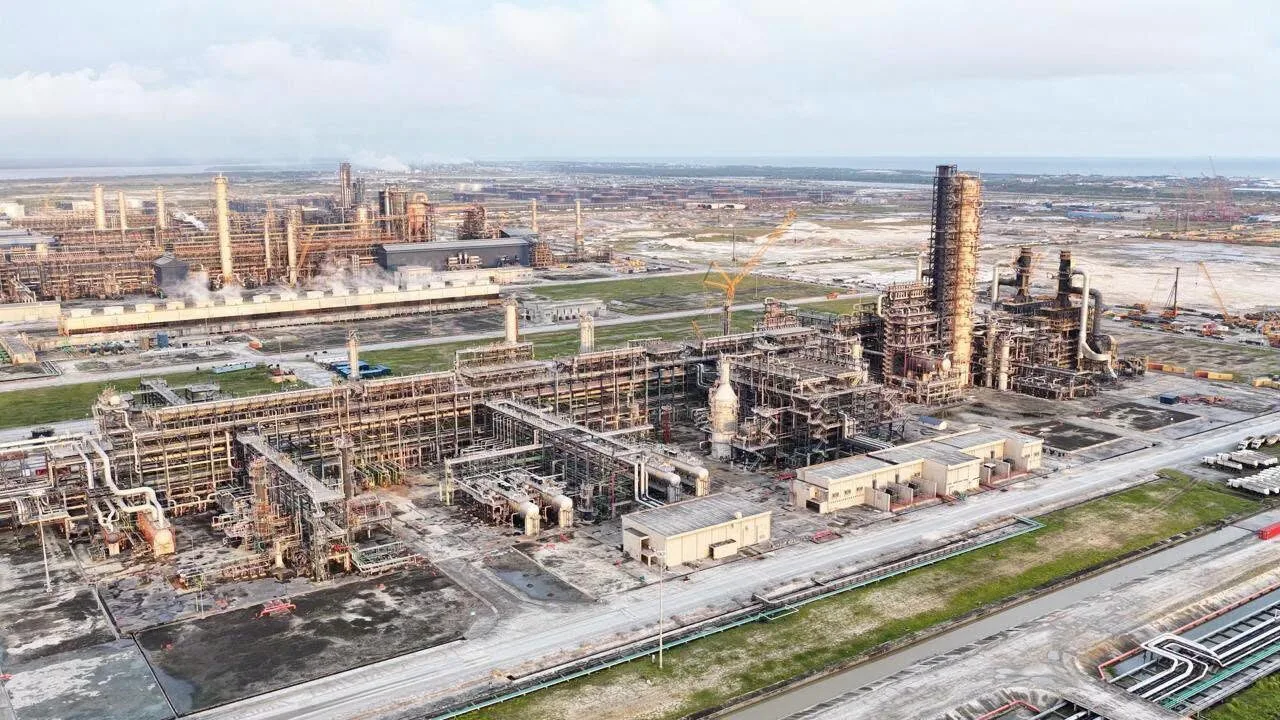
Kenya High Court: Clears Dangote Lamu Groundbreaking Despite Land Dispute
Summary
- The Kenya High Court declined to block the planned Dangote refinery project in Lamu, allowing its groundbreaking ceremony to proceed.
- The court's decision preserves the legal rights of all parties in an ongoing land dispute involving at least 133 Chandavai residents.
- Residents claim generations of occupation and use of land identified as LR No. 13061, asserting it holds homes, community structures, and ancestral graves.
- Defendants in the lawsuit include various government entities, the LAPSSET Corridor Development Authority, Dangote Industries, and two contractor companies.
- Plaintiffs had sought to stop construction, arguing that monetary compensation would be insufficient for the destruction of ancestral homes and graves.
High Court Allows Dangote Project to Proceed
The court's decision, rendered on September 29, allows the significant infrastructure development to move forward, even as a substantial land dispute involving at least 133 local residents remains unresolved.
The Kenya High Court has declined to issue an injunction that would have halted the planned Dangote refinery project in Lamu, effectively clearing the path for its scheduled groundbreaking ceremony. This decision, rendered on September 29, allows the significant infrastructure development to move forward, even as a substantial land dispute involving at least 133 local residents remains unresolved.
The court's ruling permits the project to commence while explicitly preserving the legal rights of all parties involved in the ongoing dispute. This means that while the physical development can begin, the fundamental claims regarding land ownership and usage are still subject to future judicial determination. The groundbreaking event, slated for the following Wednesday, was thus given the green light despite the pending litigation.
This development underscores a critical juncture for the Dangote Refinery Lamu land dispute, as it highlights the judiciary's approach to balancing large-scale economic development with community land rights. The Kenya High Court injunction refusal ensures that construction and related activities can proceed, but it does not extinguish the underlying legal challenges brought forth by the affected community members.
The Underlying Land Rights Challenge
The legal challenge against the project was initiated by at least 133 residents of Chandavai, who sought to prevent what they characterized as an unlawful appropriation and destruction of land. These residents assert that their families have continuously occupied and utilized these specific parcels for generations, establishing deep historical ties to the area.
Their court filings detail claims of long-term occupation, cultivation, and development of identifiable portions of land, specifically within LR No. 13061 in Chandavai. The residents contend that their families have relied on this land for farming and livestock keeping over many generations, building homes, mosques, shrines, and other essential community structures. Furthermore, some plaintiffs have stated that their relatives are interred on the disputed land, adding a profound ancestral dimension to their Lamu Chandavai land rights claims.
In their lawsuit, the residents named a wide array of defendants, including the Office of the President, the Cabinet Secretary for Defence, the State Department for Lands and Physical Planning, the Attorney General, the National Land Commission (NLC), the Lamu Port-South Sudan-Ethiopia Transport (LAPSSET) Corridor Development Authority, and the Lamu County Government. Dangote Industries, alongside two unnamed contractor companies, were also included as defendants in the LAPSSET Corridor Authority lawsuit, highlighting the broad scope of entities implicated in the LR No. 13061 land dispute.
Ongoing Legal Battle and Project Risks
The plaintiffs had specifically requested court orders to halt ongoing construction and excavation activities, expressing concerns that such works could lead to irreversible damage. They warned of potential destruction to crops, trees, homes, and other property, arguing that certain affected assets, including ancestral homes, graves, and long-standing community structures, possess intrinsic value that cannot be adequately compensated through monetary payments alone.
Despite the Kenya High Court's decision to allow the Dangote Lamu groundbreaking, the residents' substantive claims regarding their land rights are yet to be fully adjudicated. The court's refusal to grant an immediate injunction means the project can proceed, but the underlying land dispute remains active and subject to further legal proceedings. This situation underscores the critical importance for developers and their legal advisors to conduct thorough due diligence and implement robust risk management strategies, even after initial court hurdles are cleared.
The ongoing nature of this legal battle, even as the project commences, highlights that an initial court refusal to block a project does not extinguish underlying land ownership disputes. This necessitates continuous engagement with affected communities and a proactive approach to resolving land rights issues to mitigate future litigation and ensure long-term project viability.
Practical Implications
Lawyers advising large-scale infrastructure projects in Kenya must note that initial court refusals to block projects do not extinguish underlying land ownership disputes, necessitating robust due diligence and ongoing risk management for potential future litigation and community engagement, even after groundbreaking.
Source
How does this affect you?
Get an AI analysis of this article grounded in your jurisdictions, practice areas, and any policy documents you've uploaded to Wansom.
Finish Reading the Full Story and the Expert Analysis.
Get the latest legal & regulatory intelligence in Kenya
Wansom is AI and can make mistakes.