
KUPPET, KNUT: Kenya Junior Schools Autonomy Debate Heats Up
Summary
- KUPPET and KNUT disagree on the management structure of junior schools, with KUPPET advocating for autonomy and KNUT supporting integration within comprehensive schools.
- KUPPET proposes junior schools be led by post-primary trained teachers, arguing against supervision by P1 certificate holders.
- KNUT supports the Presidential Working Party on Education Reform's model, citing benefits for learner transition and teacher knowledge sharing.
- KMTC Kapenguria Campus called for equitable financing access for its students under the Tertiary Education, Placement and Funding Bill, 2026.
- KMTC students proposed HELB repayment should begin only upon securing employment and be capped at four percent of basic salary, rather than the current 25 percent of emoluments.
Controversy Over Junior School Autonomy
The ongoing public participation underscores a critical juncture for Kenya's education system, with stakeholders actively shaping the future of school administration and student financial aid.
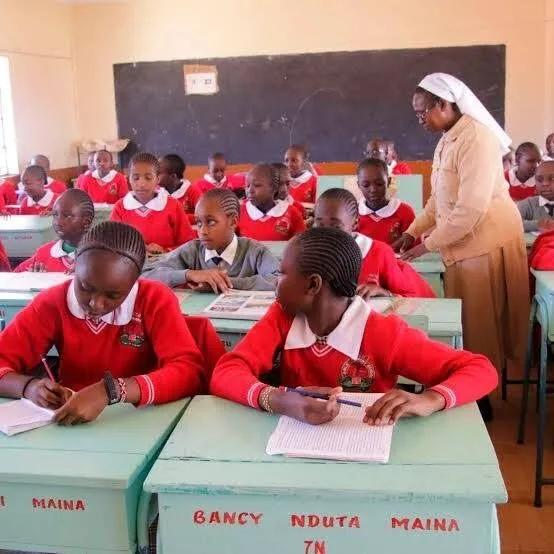
A significant divergence of opinion has emerged between the Kenya Union of Post Primary Education Teachers (KUPPET) and the Kenya National Union of Teachers (KNUT) regarding the proposed administrative framework for junior schools in Kenya. The two prominent teacher unions hold contrasting views on whether these institutions should operate independently from primary schools, a debate that unfolded during a recent public participation forum hosted by the National Assembly Departmental Committee on Education in West Pokot, focusing on amendments to education laws.
KUPPET advocates for junior schools to be established as autonomous entities, even if physically located within existing primary school compounds. Their proposal stipulates that these schools should be led by educators specifically trained for post-primary level instruction. Alfred Kamuto, KUPPET's West Pokot Executive Secretary, articulated the union's stance, arguing that teachers holding P1 certificates, diplomas in primary education, or Early Childhood Development Education qualifications are not suitably qualified to oversee, evaluate, or mentor teachers who possess university degrees and are trained for secondary school teaching. He emphasized that a supervisor must possess qualifications commensurate with the responsibilities they manage, asserting that a junior school manager should hold a degree with a secondary education specialization, not merely any degree.
Conversely, KNUT has expressed support for the model put forth by the Presidential Working Party on Education Reform, which recommends that junior schools remain integrated within a comprehensive school structure. Dorcas Lotome, KNUT's West Pokot Executive Secretary, contended that separating junior schools from primary schools would impede the seamless transition of learners between educational levels. Furthermore, she argued that such a separation would diminish opportunities for teachers across different levels to collaborate and share their knowledge and skills, thereby potentially exacerbating existing knowledge gaps within the education system. This fundamental disagreement highlights the complexity of defining the Kenya junior schools management structure.
Proposed Changes to Student Financing
Beyond the debate on school management, the National Assembly committee also received crucial input on the Tertiary Education, Placement and Funding Bill, 2026, from the Kenya Medical Training College (KMTC) Kapenguria Campus. The institution underscored the necessity for the proposed legislation to guarantee fair and equitable access to financial support for KMTC students, acknowledging the inherently practical and often high costs associated with training for health professions. This input is vital for ensuring KMTC student financing access is adequately addressed in future policy.
Further proposals from students centered on the Higher Education Loans Board (HELB) repayment mechanism. Andrew Pkemoi, the student president at KMTC Kapenguria, advocated for a system where loan repayment does not automatically commence one year after a student completes their studies, unless the graduate has successfully secured employment. He highlighted the reality that employment is not guaranteed within a fixed post-graduation period, suggesting that repayment obligations should be contingent upon the borrower obtaining either formal or informal employment. This directly addresses concerns about HELB loan repayment proposals Kenya.
Additionally, the students put forth a proposal to cap loan repayment deductions at four percent of a borrower's basic salary. This stands in contrast to the current provision, which allows for deductions of up to 25 percent of an employee's total emoluments. Their recommendation aims to establish a clear and manageable percentage for loan repayment, preventing potentially burdensome deductions for graduates as they begin their careers.
Implications for Kenya's Education Sector
The ongoing public participation underscores a critical juncture for Kenya's education system, with stakeholders actively shaping the future of school administration and student financial aid. The discussions surrounding the KUPPET KNUT junior schools autonomy Kenya are particularly significant, as they will determine the operational independence and leadership qualifications for a crucial segment of the education pipeline. The outcomes of these consultations will directly influence how junior schools are integrated into the broader educational landscape, impacting teacher supervision, curriculum delivery, and student progression.
Similarly, the deliberations on the Tertiary Education, Placement and Funding Bill, 2026, and the specific HELB loan repayment proposals Kenya, carry profound implications for tertiary education access and affordability. The suggestions from KMTC students, particularly concerning employment-contingent repayment and a capped deduction percentage, reflect a broader call for more flexible and realistic financial aid policies. The National Assembly Education Committee public participation process, encompassing these six education Bills, serves as a vital democratic mechanism for incorporating diverse perspectives into legislative reforms that will shape the educational experiences and financial burdens of future generations of Kenyan students.
Practical Implications
Lawyers advising educational institutions or student bodies in Kenya should closely monitor the ongoing public participation on education laws, particularly concerning the proposed management structure of junior schools and the Tertiary Education, Placement and Funding Bill, 2026. The outcomes of these discussions could lead to significant legislative changes affecting school administration, student financing, and loan repayment terms, requiring proactive advice to clients on compliance and strategic adjustments.
Source
How does this affect you?
Get an AI analysis of this article grounded in your jurisdictions, practice areas, and any policy documents you've uploaded to Wansom.
Finish Reading the Full Story and the Expert Analysis.
Get the latest legal & regulatory intelligence in Kenya
Wansom is AI and can make mistakes.