
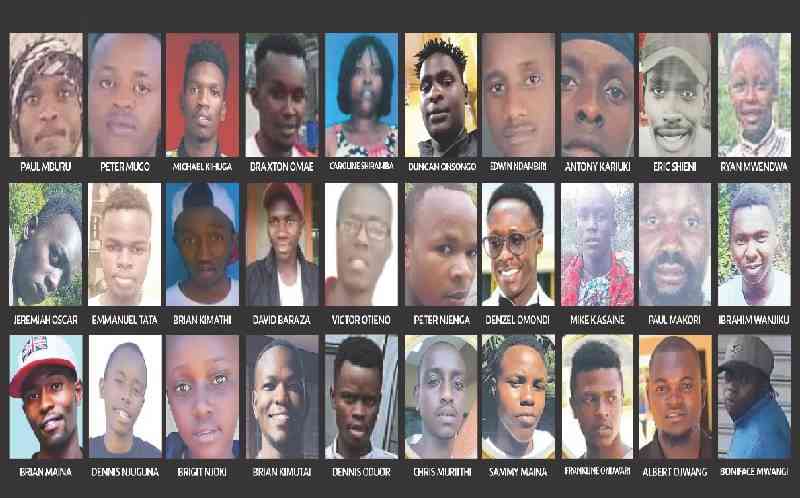
Kenya: Gen Z Protest Compensation Bribery Allegations Spark Fury
Summary
- A government-commissioned report on human rights violations from the 2024 Gen Z protests has sparked widespread public anger.
- The Panel of Experts' report controversially verified only a single fatality from the protests.
- Grieving families allege that officials are demanding bribes of up to Sh150,000 to access promised compensation.
- The protests, which are a focal point of the report, occurred along Moi Avenue in Nairobi on June 25, 2025.
Controversy Over Compensation for Gen Z Protest Victims
Families of victims, already grappling with loss, are reportedly being subjected to demands for bribes amounting to as much as Sh150,000.
A government-commissioned report, specifically designed to offer a measure of closure to individuals affected by human rights violations, has instead ignited a significant wave of public fury across Kenya. This official document, which was widely anticipated to address the aftermath of the 2024 Gen Z protests, has drawn sharp criticism from various quarters, with many accusing the designated Panel of Experts of disrespecting the Kenyan populace through its findings and methodology. The core of the controversy centers on the report's conclusions regarding fatalities that occurred during the demonstrations.
The public's anger has been further fueled by deeply troubling allegations emerging from families who tragically lost loved ones during these protests. These grieving relatives claim they are being subjected to undue pressure and demands for substantial sums of money from government officials. These alleged demands for payment are reportedly presented as a prerequisite for accessing the financial compensation that had been officially promised to them as part of the redress process.
This unfolding situation highlights a significant and concerning challenge in the administration of justice and the provision of redress for victims of state actions. The very mechanism intended to offer solace and support is now widely perceived by many as a source of further distress, exploitation, and bureaucratic indifference, thereby severely undermining public trust in official processes. The protests themselves saw youth marching along Moi Avenue in Nairobi on June 25, 2025, an event that remains a poignant focal point of public discourse and memory.
Disputed Findings of the Panel of Experts
The primary source of the widespread public discontent stems directly from the Panel of Experts' official verification of only a single fatality directly linked to the 2024 Gen Z protests. This particular finding stands in stark contrast to broader public perception and the deeply personal experiences of numerous families who believe more lives were lost. Critics vehemently argue that by acknowledging such a limited number of deaths, the panel has effectively trivialized the profound suffering and irreparable losses experienced by many Kenyans, transforming a solemn process of reconciliation into what some describe as a callous bureaucratic slight.
The report's notably narrow scope regarding Nairobi Gen Z protests fatalities has consequently led to accusations that the panel is, in essence, mocking those who sought genuine accountability and recognition for their grievances. This specific detail from the Panel of Experts Gen Z report has rapidly become a major flashpoint, intensifying the ongoing national debate over the government's true commitment to genuinely addressing human rights violations compensation. The significant disparity between official figures and community accounts raises serious and pressing questions about the thoroughness, impartiality, and overall credibility of the investigation conducted.
Allegations of Kenya Gen Z Protest Compensation Bribery
Compounding the existing controversy surrounding the report's findings are deeply disturbing reports of widespread Kenya government compensation corruption. Families of victims, already grappling with the immense emotional and financial burden of loss, are reportedly being subjected to explicit demands for bribes amounting to as much as Sh150,000. These illicit payments are allegedly required by officials to process and subsequently release the compensation funds that were officially designated for them by the government. This Sh150,000 bribe Gen Z victims are being asked to pay represents a significant and often insurmountable financial burden, especially for those already in a state of profound distress and vulnerability.
Such alleged corrupt practices fundamentally transform a system initially designed for redress and healing into an insidious avenue for exploitation, directly impacting those who are most vulnerable and in need of support. The persistent claims of bribery within the Kenya human rights violations compensation framework strongly suggest a systemic issue that profoundly undermines the integrity and ethical foundation of the entire process. This alleged corruption not only delays the delivery of justice but also inflicts additional emotional and severe financial hardship on the affected families, further eroding public confidence in governmental institutions and their ability to act with integrity.
Legal and Ethical Concerns
The current situation presents significant and complex legal and ethical challenges for all stakeholders involved, from government bodies to legal practitioners and civil society. Lawyers representing victims of human rights violations in Kenya must be acutely aware of these alleged bribery demands operating within government compensation schemes. Advising clients on potential legal recourse against corrupt officials becomes an absolutely paramount duty, as does exploring the possibility of challenging the Panel of Experts' findings and the overall compensation process through appropriate legal channels. The fundamental integrity of the compensation mechanism is undeniably at stake, requiring robust legal scrutiny and intervention.
The pervasive allegations of Kenya Gen Z protest compensation bribery underscore an urgent need for enhanced transparency, stringent accountability, and rigorous oversight in all government-led initiatives specifically aimed at addressing past injustices and providing reparations. A failure to decisively address these corruption claims risks perpetuating a damaging cycle of mistrust, further marginalizing those who have already suffered immensely, and undermining the very principles of justice. Ensuring that compensation genuinely reaches its intended recipients without illicit deductions or demands is absolutely crucial for upholding fundamental human rights principles and ultimately restoring public faith in the rule of law and governmental fairness.
Practical Implications
Lawyers representing victims of human rights violations in Kenya should be aware of alleged bribery demands within government compensation schemes, which may necessitate advising clients on legal recourse against corrupt officials or challenging the Panel of Experts' findings and compensation process.
Source
How does this affect you?
Get an AI analysis of this article grounded in your jurisdictions, practice areas, and any policy documents you've uploaded to Wansom.
Finish Reading the Full Story and the Expert Analysis.
Get the latest legal & regulatory intelligence in Kenya
Wansom is AI and can make mistakes.