
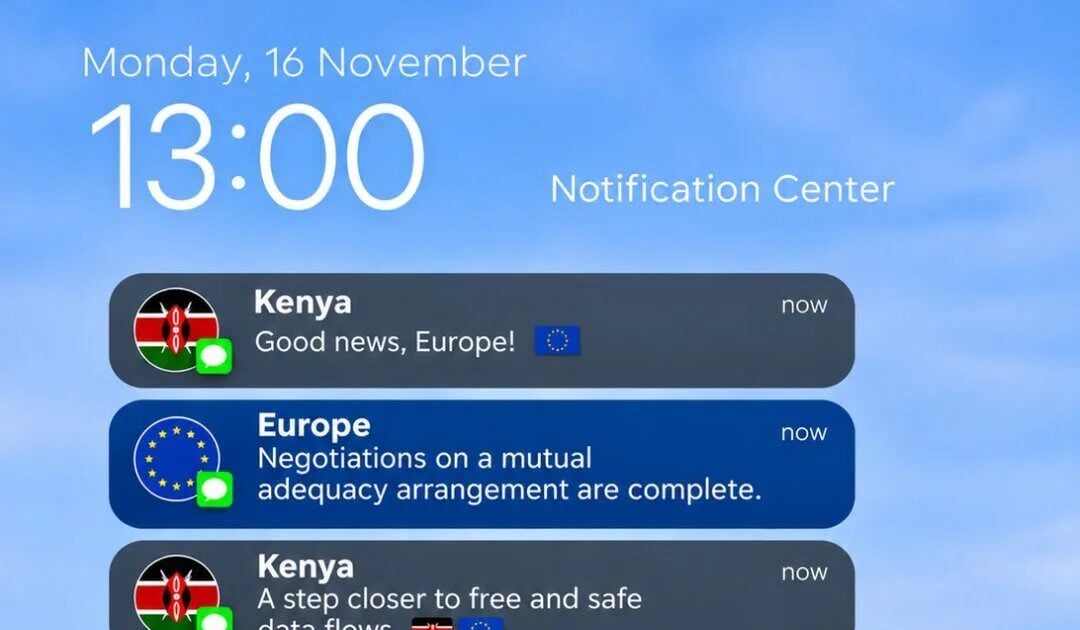
Kenya, EU Conclude Negotiations for Data Adequacy Agreement
Summary
- Kenya and the European Union have concluded negotiations for a mutual data protection adequacy arrangement.
- This agreement aims to facilitate the secure movement of personal data between Kenya and the EU, opening new business opportunities.
- European Commissioner Michael McGrath and then Kenya's Data Commissioner Immaculate Kassait welcomed the conclusion of negotiations, which began in 2024.
- The arrangement is expected to unlock new investments in digital services and BPO, support digital exports, and improve data access for research.
- If adopted, Kenya would become the first African country to establish such a mutual data adequacy arrangement with the European Union.
A Landmark Agreement Reached
Should the proposed Kenya EU data adequacy agreement be formally adopted, Kenya is set to achieve a unique distinction as the first African nation to establish a mutual data adequacy arrangement with the European Union.
Kenya and the European Union have successfully concluded negotiations for a data protection adequacy arrangement, a development poised to significantly impact the flow of personal data between the two regions. This proposed mutual agreement aims to ensure the secure transfer of personal data, thereby fostering new opportunities for businesses operating in both the Kenyan and EU markets. The conclusion of these crucial discussions was jointly welcomed by European Commissioner for Democracy, Justice, the Rule of Law and Consumer Protection, Michael McGrath, and then Kenya's Data Commissioner, Immaculate Kassait, during a meeting held to assess the progress of the arrangement.
The extensive negotiations, which commenced in 2024, involved direct engagement between the European Commission's Directorate-General for Democracy, Justice, the Rule of Law and Consumer Protection and Kenya's Office of the Data Protection Commissioner. Both parties acknowledged a growing convergence in their respective data protection frameworks throughout the negotiation process. This alignment is a critical precursor to the formal adoption of adequacy decisions by both jurisdictions, marking a significant step towards deeper digital cooperation.
Facilitating Secure Data Flows
The core objective of the recently concluded Kenya EU data adequacy agreement is to establish a robust mechanism for the secure and streamlined movement of personal data across borders. This arrangement will significantly reduce the complexities associated with Kenya cross-border data transfer EU regulations, creating a more predictable environment for businesses. The acknowledgment by both the European Commission and Kenya's Office of the Data Protection Commissioner regarding the increasing compatibility of their data protection frameworks underscores the foundation upon which this mutual adequacy is built.
This mutual recognition is not merely a procedural step but a strategic move to ensure that personal data transferred between Kenya and the EU adheres to high standards of protection. The next phase involves the formal adoption of adequacy decisions by both the European Union and Kenya, which will solidify the legal basis for these enhanced data flows. Once these decisions are in place, they will provide legal certainty for organizations handling data between the two jurisdictions, particularly those in sectors like Kenya BPO digital services data.
Economic and Digital Growth Prospects
The implications of the Kenya EU data protection adequacy agreement extend far beyond regulatory compliance, promising substantial economic benefits for Kenya. This landmark arrangement is expected to unlock significant new investment opportunities, particularly within Kenya's burgeoning digital services sector and Business Process Outsourcing (BPO) industry. By facilitating the secure and efficient transfer of personal data, the agreement creates a more attractive environment for European companies looking to invest in or partner with Kenyan enterprises.
Furthermore, the agreement is projected to play a pivotal role in supporting the expansion of Kenya's digital services exports, enhancing its position as a regional digital hub. It is also designed to complement the existing EU-Kenya Economic Partnership Agreement, reinforcing the overall business environment and generating additional avenues for trade and investment between the two entities. This synergy between data protection and economic partnership aims to foster a more integrated and prosperous relationship.
A Precedent for Africa
Should the proposed Kenya EU data adequacy agreement be formally adopted, Kenya is set to achieve a unique distinction as the first African nation to establish a mutual data adequacy arrangement with the European Union. This pioneering status highlights Kenya's commitment to robust data protection standards and could serve as a model for other African countries seeking to deepen their digital ties with the EU. The agreement's scope also includes improving access to data for research purposes, fostering innovation and knowledge exchange.
The collaborative effort between European Commissioner Michael McGrath and then Kenya's Data Commissioner Immaculate Kassait in welcoming the conclusion of negotiations underscores the high-level commitment to this initiative. This development not only streamlines Kenya cross-border data transfer EU processes but also signifies a broader strategic alignment that could pave the way for enhanced digital cooperation and economic integration across continents.
Practical Implications
This development signals a significant reduction in compliance complexity for businesses engaged in cross-border personal data transfers between Kenya and the EU. Lawyers should advise clients, particularly those in BPO and digital services, to prepare for streamlined data flows and potential new investment opportunities, while closely monitoring the final adoption of the formal adequacy decisions by both jurisdictions.
Source
How does this affect you?
Get an AI analysis of this article grounded in your jurisdictions, practice areas, and any policy documents you've uploaded to Wansom.
Finish Reading the Full Story and the Expert Analysis.
Get the latest legal & regulatory intelligence in Kenya
Wansom is AI and can make mistakes.