
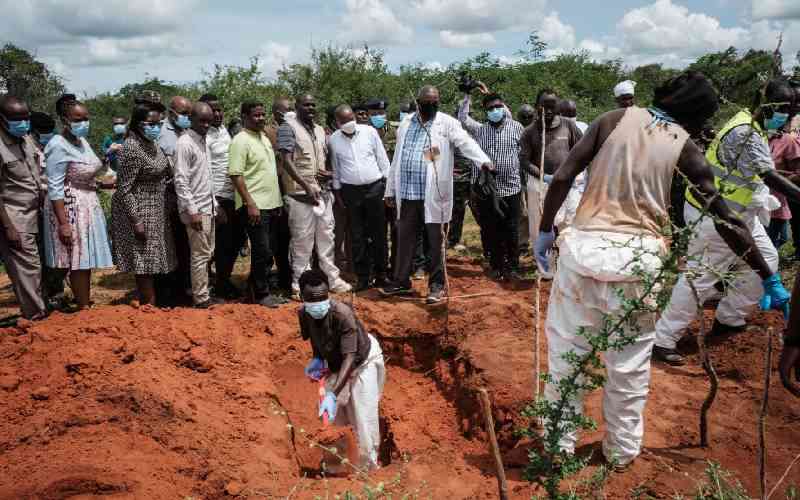
Justice Kavedza: Paul Makenzi Shakahola Fasting Regime Verdict Names Him 'Overall Head'
Summary
- Controversial preacher Paul Makenzi appeared before Justice Kavedza Mochache for her verdict on the Shakahola forest deadly fast.
- Justice Kavedza Mochache's ruling established Makenzi as the "overall head" of the "fasting regime."
- The court found that Makenzi determined how his followers would undertake the deadly fasts.
- This verdict is a significant development in the legal proceedings related to the Shakahola cult deaths.
What Happened
The court's explicit finding that Makenzi was the "overall head" of the fasting regime sets a critical benchmark for how judicial systems may approach similar cases in the future.
Controversial preacher Paul Makenzi appeared before Justice Kavedza Mochache today as she delivered her verdict concerning the tragic fasting regime in Shakahola forest. The court's decision marks a significant development in the ongoing legal proceedings related to the Shakahola cult deaths. Justice Kavedza, in her initial highlights of the ruling, explicitly stated that the judicial body had definitively established Makenzi's role as the "overall head" of what she formally designated as the "fasting regime." This finding is central to understanding the court's attribution of responsibility.
The judgment underscored that it was Makenzi who held the authority to dictate the methods and conditions under which his followers would undertake these deadly fasts. This direct control over the practices that led to the fatalities in Shakahola forest was a key element in the court's determination of his leadership position within the group. The verdict from Justice Kavedza Mochache on the Paul Makenzi Shakahola fasting regime is being closely watched for its implications on religious freedom and criminal accountability.
Legal Context of the Makenzi Ruling
The finding by Justice Kavedza Mochache that Paul Makenzi was the "overall head" of the Shakahola fasting regime carries substantial legal weight. This determination by the court establishes a clear line of command and responsibility, directly linking Makenzi to the actions and outcomes of the deadly fasts. The court's emphasis on Makenzi's role in determining how followers would engage in these fatal practices highlights the judicial scrutiny applied to the organizational structure and leadership within such groups.
This specific declaration in the Paul Nthenge Makenzi judgment is crucial for attributing direct culpability in cases where harm occurs under the guise of religious or spiritual practices. By identifying Makenzi as the ultimate authority who prescribed the deadly fasts, the court has laid a foundation for holding leaders accountable for the direct consequences of their directives. The Justice Kavedza Mochache Makenzi ruling provides a precedent for future prosecutions involving organized harm, particularly within the context of religious cults.
Why It Matters
The Paul Makenzi Shakahola fasting regime verdict holds profound significance for the legal landscape surrounding religious cults and the attribution of criminal responsibility in Kenya. The court's explicit finding that Makenzi was the "overall head" of the fasting regime sets a critical benchmark for how judicial systems may approach similar cases in the future. This ruling clarifies that individuals who exert ultimate control over dangerous practices within an organized group can be held directly responsible for the resulting harm, irrespective of the spiritual or religious claims made.
This Shakahola cult deaths court decision could significantly influence prosecution strategies, enabling legal authorities to more effectively pursue charges against leaders who orchestrate harmful activities under religious pretexts. It underscores the principle that leadership comes with accountability, especially when directives lead to severe consequences such as death. The judgment reinforces the legal system's capacity to penetrate the organizational layers of such groups to identify and prosecute those at the apex of command, ensuring that the tragic events of Shakahola forest serve as a stark reminder of the boundaries of religious practice when it infringes upon human life and safety.
Practical Implications
Lawyers should note the court's finding that Makenzi was the 'overall head' of the fasting regime, as this establishes a precedent for attributing direct responsibility in cases involving organized harm under religious guise. This could impact future prosecution strategies for similar cult-related offenses and inform defense arguments regarding command responsibility.
Source
How does this affect you?
Get an AI analysis of this article grounded in your jurisdictions, practice areas, and any policy documents you've uploaded to Wansom.
Finish Reading the Full Story and the Expert Analysis.
Get the latest legal & regulatory intelligence in Kenya
Wansom is AI and can make mistakes.