
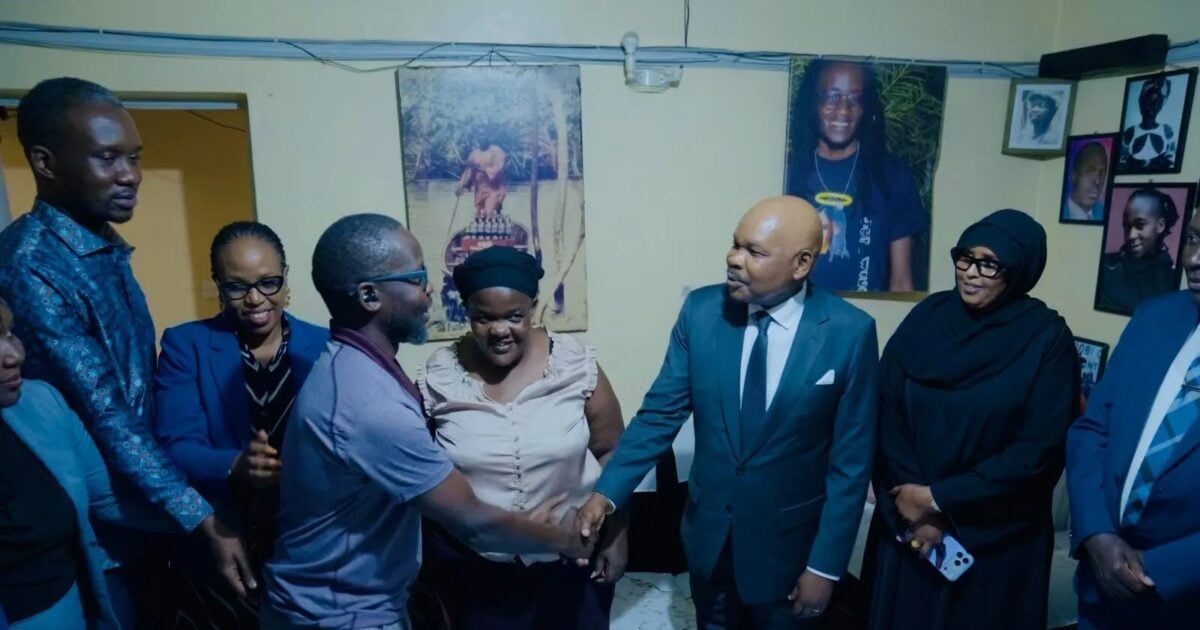
Kenya Compensation Panel: Fredrick Ojiro Bribery Claims Challenged
Summary
- The Panel of Experts on Compensation of Victims of Human Rights Violations announced two individuals retracted bribery allegations against officials.
- Margaret Onyango Okitch withdrew her claim that an IPOA officer demanded KSh150,000 for fatality compensation, citing misinformation.
- Stellamaries Nthenya also retracted her accusation that a Panel staff member requested KSh1,200 for affidavit notarization, a service the Panel does not provide.
- The Panel challenged Fredrick Ojiro to provide evidence or report his allegation that a Panel Member received a KSh100,000 bribe.
- Chairperson Professor Makau Mutua reiterated that the Panel's services are free and warned against fraudsters exploiting victims.
Allegations and Retractions Rock Compensation Panel
Professor Mutua urged Mr. Ojiro to either report these allegations immediately to the appropriate authorities or to publicly disclose all details and evidence related to his claims.
The Panel of Experts on Compensation of Victims of Human Rights Violations, led by Chairperson Professor Makau Mutua, recently addressed a series of bribery allegations, confirming that two complainants have withdrawn their claims. This development comes as the Panel continues its work overseeing compensation for individuals affected by human rights violations in Kenya, including those stemming from public protests and demonstrations. The integrity of the victim compensation panel is a critical focus for its leadership, especially given the sensitive nature of its mandate.
One significant retraction involved Margaret Onyango Okitch, who had previously accused an officer from the Independent Policing Oversight Authority (IPOA) of soliciting KSh150,000. This sum was allegedly demanded to facilitate the processing of her fatality compensation claim. Following an internal investigation initiated by the Panel, Ms. Okitch contacted Panel staff at the KICC to retract her accusation, subsequently also withdrawing the claim directly to IPOA. She attributed her initial false accusation to misinformation received within a WhatsApp group for victims, expressing regret for the misguidance.
In a separate incident, Stellamaries Nthenya also withdrew her allegation against a Panel staff member. Ms. Nthenya had claimed that a KSh1,200 fee was requested to notarize her affidavit. Professor Mutua clarified that the notarization of affidavits is an external service not provided by the Panel, and Ms. Nthenya has since repudiated her earlier accusation. These retractions underscore the challenges faced by the Panel in distinguishing legitimate concerns from unfounded claims, often fueled by external pressures or misunderstandings.
However, not all allegations have been withdrawn. The Panel has issued a direct challenge to Fredrick Ojiro, who claims a Panel Member received a KSh100,000 bribe and asserts possession of evidence to support this serious accusation. Professor Mutua urged Mr. Ojiro to either report these allegations immediately to the appropriate authorities or to publicly disclose all details and evidence related to his claims.
Upholding Integrity in Victim Compensation
The Panel of Experts on Compensation of Victims of Human Rights Violations operates under a strict policy that all its services are provided free of charge. This fundamental principle is consistently emphasized by Professor Makau Mutua, who has repeatedly warned victims and the public against various "malevolent actors." These include fraudsters, imposters, and brokers who attempt to exploit vulnerable individuals by demanding money under the guise of facilitating compensation claims, contributing to the broader issue of Kenya human rights compensation fraud.
The Panel's proactive approach to investigating and publicly addressing allegations, such as the Professor Makau Mutua bribery allegations, is crucial for maintaining public trust and the integrity of the compensation process. By challenging individuals like Fredrick Ojiro to provide concrete evidence or report to authorities, the Panel demonstrates its commitment to a fair and transparent system. This also serves as a deterrent to those who might seek to undermine the process with unsubstantiated claims, ensuring that genuine victims are not further victimized.
The Panel's mandate extends to processing a significant number of claims, with 236 fatality claims already processed. Despite these efforts, the Panel acknowledges and is actively working to address concerns regarding potential delays and alleged irregularities within the compensation process. This ongoing commitment to efficiency and fairness is vital for delivering justice to victims of human rights violations across Kenya.
The Broader Implications for Justice
The incidents surrounding the Panel of Experts on Compensation of Victims of Human Rights Violations highlight the complex environment in which victim compensation programs operate. The Panel's firm response to both retracted and outstanding bribery claims, particularly the challenge issued to Fredrick Ojiro regarding his KSh100,000 bribery allegation, sets a clear precedent. It signals that while the Panel is dedicated to investigating integrity concerns, it also expects accusers to substantiate their claims through official channels or public disclosure.
This situation underscores the importance of vigilance for both victims and legal practitioners involved in human rights cases in Kenya. The Panel's explicit warnings against individuals demanding fees for its free services are critical for protecting victims from exploitation. Lawyers advising clients on compensation claims must ensure they guide them through legitimate avenues, reinforcing the message that no payments are required for the Panel's assistance.
The Panel's commitment to addressing alleged irregularities and delays, alongside its robust response to bribery claims, is essential for the credibility of the entire human rights compensation framework in Kenya. By processing a substantial number of fatality claims and actively confronting issues of fraud and corruption, the Panel strives to ensure that justice is not only served but also perceived as fair and accessible to all legitimate victims.
Practical Implications
Lawyers advising victims of human rights violations in Kenya should be aware of the Panel's strict stance against bribery and fraud, and its call for concrete evidence for any such allegations. This reinforces the need to guide clients through legitimate channels and protect them from 'malevolent actors' demanding fees for services the Panel provides for free, while also noting the Panel's commitment to investigating and publicly addressing integrity concerns.
Source
How does this affect you?
Get an AI analysis of this article grounded in your jurisdictions, practice areas, and any policy documents you've uploaded to Wansom.
Finish Reading the Full Story and the Expert Analysis.
Get the latest legal & regulatory intelligence in Kenya
Wansom is AI and can make mistakes.