
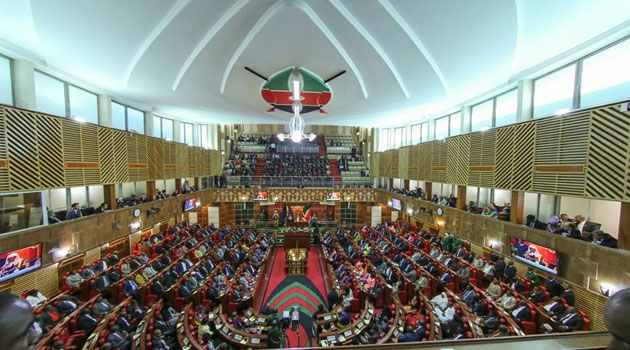
Kenyan National Assembly: Passes Kenya Air Passenger Service Charge Bill 2026
Summary
- The Kenya National Assembly has passed the Air Passenger Service Charge (Amendment) Bill, 2026, sponsored by Majority Leader Kimani Ichung'wah.
- The Bill aims to reallocate revenue from the Air Passenger Service Charge more directly towards aviation safety and tourism promotion.
- Proposed changes include supporting institutions responsible for aviation safety and increasing funding for tourism promotion efforts.
- The current charge is Sh600 for domestic passengers and US$50 for international travelers, with the Cabinet Secretary empowered to vary these rates.
- This marks the second amendment to the Air Passenger Service Charge Act in less than a year, following a 2025 change that designated the Tourism Fund as a beneficiary.
Legislative Progress on Passenger Charge
For legal professionals advising airlines, travel agencies, or tourism operators in Kenya, close monitoring of the Senate's review and the Bill's eventual enactment is paramount.
The Kenyan National Assembly recently advanced significant legislation, passing the Kenya Air Passenger Service Charge Bill 2026. This proposed law, officially titled the Air Passenger Service Charge (Amendment) Bill, 2026, was championed by Majority Leader Kimani Ichung'wah. Its primary objective is to fundamentally reshape the administration and allocation of revenue generated from the existing Air Passenger Service Charge.
Following its successful passage through the Committee of the Whole House, the Bill now proceeds to the Senate for further deliberation. Should it secure approval from the upper house, it will then be presented for presidential assent, thereby becoming law. This legislative action signals a concerted effort to ensure that funds collected from air travelers are more directly channeled towards critical sectors that underpin Kenya's air transport and tourism industries.
New Allocation Framework
Under the proposed amendments, the revenue collected through the passenger charge would be strategically directed to bolster aviation safety initiatives and enhance tourism promotion efforts. A portion of these funds is earmarked to support institutions responsible for maintaining and improving aviation safety standards, alongside measures designed to boost the overall efficiency of air transport operations. This focus aligns with Kenya's broader ambition to fortify its aviation infrastructure and regulatory systems, thereby solidifying its status as a pivotal regional air transport hub, reflecting the intent of the Kenya aviation safety funding bill.
The Bill also seeks to significantly increase financial backing for tourism promotion, a sector intrinsically linked to robust international and domestic air connectivity. Enhanced air links are crucial for attracting international visitors to Kenya's diverse tourism destinations and facilitating seamless travel between the nation's key business and tourist centers, aligning with Kenya tourism promotion levy changes. The current charge stands at Sh600 for domestic passengers and US$50 for international travelers, a levy collected from individuals departing Kenya and incorporated into air ticket costs. The Cabinet Secretary retains the authority to adjust these rates via a Gazette notice, underscoring the charge's role as a substantial source of sector-specific revenue.
Evolution of the Levy
This legislative initiative marks the second amendment to the Air Passenger Service Charge Act in less than a year, highlighting an ongoing parliamentary focus on the optimal utilization of these funds. The prior amendment, enacted in 2025 and effective from November of that year, notably replaced the Tourism Promotion Fund with the Tourism Fund as a designated beneficiary of the levy. This earlier change stemmed from extensive parliamentary discussions concerning the equitable distribution of the charge among various institutions overseeing aviation and tourism.
Lawmakers have consistently advocated for revenue allocation that directly supports key sector agencies while simultaneously preventing any duplication in funding efforts. The Air Passenger Service Charge Act amendment embodied in the 2026 Bill aims to further refine this framework, providing clearer guidelines for the administration of collected revenue. This ongoing legislative scrutiny reflects a broader governmental drive to enhance revenue collection mechanisms and ensure that sector-specific charges are reinvested directly into the industries from which they originate.
Implications for Aviation and Tourism
The passage of the National Assembly passenger charge bill signifies a critical step towards a more transparent and targeted approach to funding vital sectors. By strengthening the direct link between the levy paid by travelers and strategic investments in air transport and tourism, the amendments are poised to foster greater accountability. Travelers may gain increased clarity on how the levy imposed on their air travel is ultimately utilized, promoting public confidence in the system.
For legal professionals advising airlines, travel agencies, or tourism operators in Kenya, close monitoring of the Senate's review and the Bill's eventual enactment is paramount. The proposed changes will fundamentally alter the existing allocation framework for the Air Passenger Service Charge, necessitating a thorough understanding of new financial compliance requirements and potential adjustments to operational strategies related to this significant levy. The Kimani Ichung'wah aviation bill’s enactment would redefine how these crucial funds are deployed, with aviation safety and tourism promotion emerging as primary beneficiaries.
Practical Implications
Lawyers advising airlines, travel agencies, or tourism operators in Kenya should monitor the Senate's consideration and final enactment of this Bill, as it will alter the allocation framework for the Air Passenger Service Charge, potentially impacting financial compliance and operational strategies related to this levy.
Source
How does this affect you?
Get an AI analysis of this article grounded in your jurisdictions, practice areas, and any policy documents you've uploaded to Wansom.
Finish this article free. Just your email for instant unlock.
Wansom is AI and can make mistakes.